Hungary’s 21st century shift from liberal democracy into a “hybrid regime” – or a competitive authoritarianist state, as the phenomenon is also sometimes known – has been well-studied and quite heavily maligned by political science thinkers while it has been continuing to unfold and progress, or regress, rather, in real time.
Despite the shift continuing to run its course, Hungary’s upcoming parliamentary election (set in fact to occur tomorrow, April 12th, at the time of writing) is seen as posing the strongest and most legitimate challenge to prime minister Viktor Orbán and his power in well over a decade. Polls run across the last week’s time forecast that Orbán’s right-wing Fidesz party will trail the upstart center-right Peter Magyar and his center-right Tisza party. Tisza and Magyar himself take stances which are not necessarily seen as extremely desirable in and of themselves, but nonetheless seen at the very least as being a better and less corrupt alternative to those of Fidesz.
Yet, even as the Tisza party is expected to end up prevailing over Orbán and Fidesz, a potential victory for Magyar and Tisza in this election should not be viewed as rendering a fast return to liberal democracy for Hungary a foregone conclusion.
As the phenomenon of democratic backsliding itself is seen typically as being a slow, gradual process rather than simply happening overnight, national leaders who engage in democratic backsliding most commonly do so through using an assortment of tactics across many years while in office (see Nicaragua with president Daniel Ortega, and the USA with president Donald Trump). During his long run in office, which has dated all the way back to 2010 up until the current day, Orbán has been no exception to these phenomena, and has spent this time mining away at Hungary’s status as a full, liberal democracy in various ways.
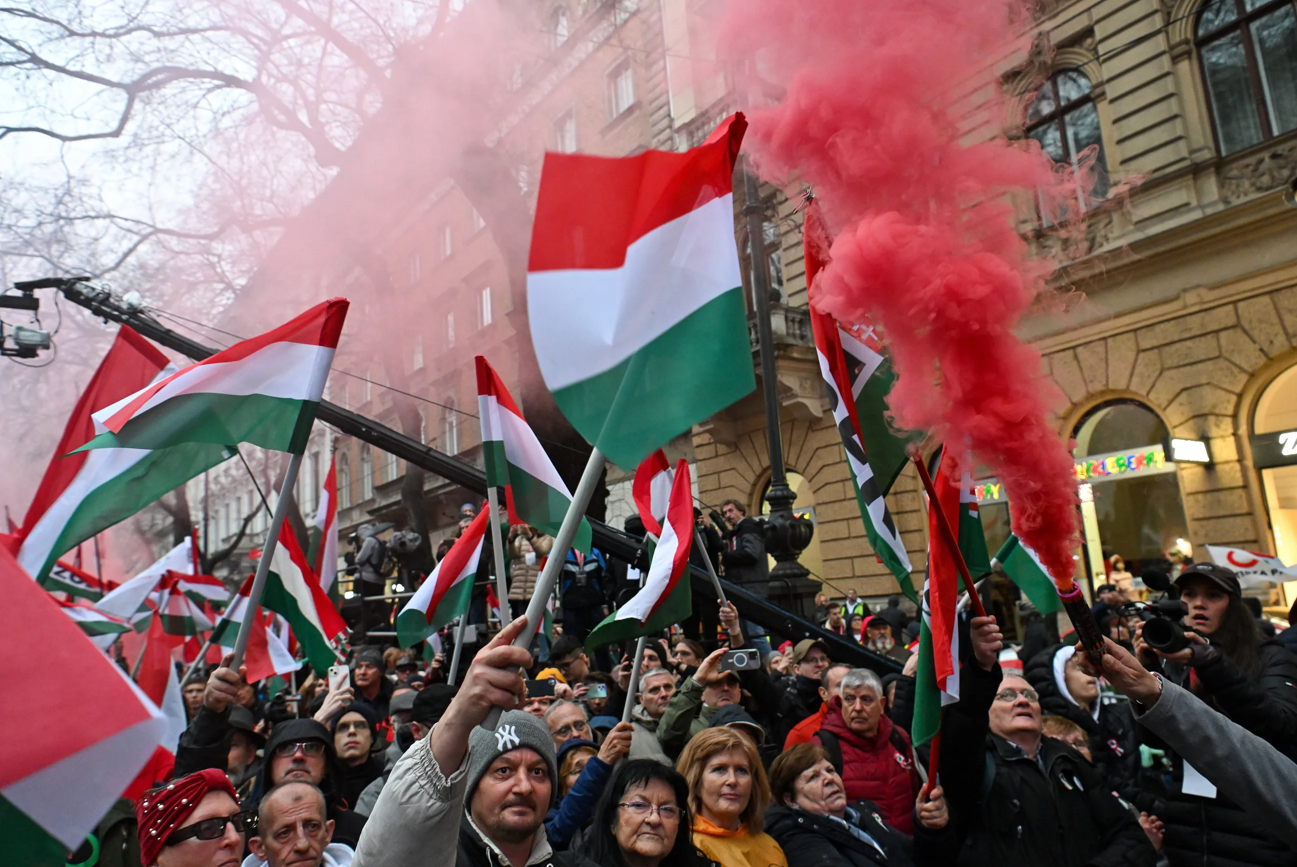
Image source: https://www.politico.eu/article/hungary-viktor-orban-fidesz-peter-magyar-tisza-5-key-questions-election-2026/
One of these key tactics which Orbán has used to undermine Hungarian democracy during his time in office has been his manipulation of the local electoral system to be biased towards his Fidesz party. Noted by political scientist Ozan Varol as being a common mechanism of “stealth authoritarianism,” Orbán has altered Hungary’s electoral system through gerrymandering the region in such ways that Fidesz candidates prevail in the vast majority of electoral districts, and the continued use of the “compensation mechanism” which electorally over-rewards the largest and most powerful party at any given time. As such, even with the forecasted support for Orbán’s opposition, it remains that A) the election will likely be a challenging one to win in the first place, and B) should the opposition end up winning the popular vote, they may still lose the election overall, or only win a narrow majority with limited subsequent parliamentary power as a result thereafter.
The calculus of Orbán’s slow and deliberate corroding of democracy does not end there, however. Another way in which he has consolidated political power for himself and Fidesz overall is his tampering with Hungary’s judicial system; done through the loading of the country’s courts with Fidesz loyalists, in addition to reducing the freedom of expression that the judges have in the first place. By gaining control of Hungary’s rule of law in this way, the Fidesz party will likely continue to be able to block many future reforms and pieces of legislation that the opposition may come up with (having already done so poignantly during Orbán’s time in office). And, as alluded to earlier, this will not be an issue that can be solved in a speedy manner (in this regard, it should also come as no surprise that the calculated use and abuse of the judiciary/judicial review is another common form which Varol postulates that “stealth authoritarianism” often takes).
Now stepping outside of formal government institutions and mechanisms, a third and final avenue for Orbán’s democratic erosion journey has been Fidesz’s increasing control of Hungarian media. Media manipulation is by no means a new or novel tool for dismantling democracy, as political scientists Maja Adena et. al have previously published their studies on the roles of mass radio in allowing Adolf Hitler and his Nazi party to rise into power in post-Weimar Germany. Even so, this has not stopped Orbán from utilizing this tactic. In addition to an estimated 80% of Hungary’s media outlets being controlled by the Fidesz party as of 2024 (this being TV networks/radio/print media) to promote their directives, Orbán has also influenced media’s role throughout his time in office by his passing of the Media Act in 2011 (the setting up of a Fidesz-run government body to essentially act as a means of enforcing self-censorship among dissenting Hungarian citizens), and the firings within, and shutdowns of, major news outlets due to such political pressures. These various actions have enabled Orbán and the Fidesz party as a whole to incrementally – but tangibly – tilt the information being consumed by Hungarian citizens in favor of themselves, as well as fabricating unequal campaigning conditions for anybody who would like to oppose. As a result thereafter, it becomes substantially more difficult for such opposition(s) to convince enough of the Hungarian populace that what the ruling party is doing should be stopped – a challenge which in turn has worked in Orbán’s favor throughout the course of his time in power.
This is all to say that, in his pursuit of transforming Hungary into an authoritarian state, Viktor Orbán did not simply waltz right in and do it overnight, so to speak. He and his party have been extremely calculating and deliberate with their actions over the past decade-and-a-half that have dug the sizable hole that Hungarian democracy currently faces. A potential opposition victory against him in the ensuing election may serve as a way for the country to stop digging, but the hole that has been made will likely take a considerable amount of time to fill.
*ADDENDUM: After the time of writing, the results of the election have now been released, and Viktor Orbán has just conceded to and congratulated Péter Magyar on the victory of his Tisza party*
Hi Will! I think your insight has been very informative and resourceful in showing how Viktor Orban, when met with a fierce and legitimate opponent, led to his downfall, and how his erosion of democratic norms posed an intense challenge. Following Mygar’s victory, I can’t wait to see what he accomplishes as he steps into political office as Prime Minister.