Oftentimes to an outside, democratically minded observer, the durability of authoritarian rule seems perplexing. After all, why would anyone not rise up against a tyrant or dictator when their rights are infringed? The answer is simple: the economy. Looking at states such as Russia and its authoritarian allies, the central argument of state economies driving regime durability is based on two concepts: First, the consolidation of power through resource exportation securely removes citizen input. Second, authoritarian regimes with strong economies can afford exuberant measures to preserve regime stability, while those with poor economies can not.
The Economics of Authoritarianism
To start, the first concept, which is often coined “petropolitics,” is most often associated with the exportation of oil, however it can be generalized to other strategic resources like rare earth metals. It essentially revolves around a state’s ability to centralize the economy around a specific resource in order to gain government control over the production and remove the regime’s dependence on tax revenue to fund it. This diminishes the entitlement citizens have for their own rights and as rentier states frequently prove, Oil-backed regimes that do not have to tax their people in order to survive, because they can simply drill an oil well, also do not have to listen to their people or represent their wishes. One only has to look at the prodigal son of the authoritarian world, Russia, to see that, “Oil and gas revenues provide centralized financial flows that allow the federal government to pose as a kind of charitable organization that is the primary font of popular well-being.” (Inozemtsev 2017, 83). If people find themselves totally dependent on the government, how can they claim the right to influence it? Beggars have no right to challenge the community of givers, and this is how the elite has positioned itself in Russia from the Middle Ages to the present.” (Inozemtsev 2017, 83) The instability of repression, poor decision making, and oppression is negated, thus increasing the longevity of the regime even through immense strain.
This leads to the second point: when an economy is doing well in an authoritarian regime, it allows the state to afford more extensive tools to control the population. Russia, and Russian friendly states often use the influx of money for repression by paying more salaries for their respective security apparati, whether they be police, military, or intelligence. Even in less repressive regimes, more money can be used in bribery or other procedures that undermine democratic processes. Even buying the loyalty of your citizens instead of reformations is a popular tactic. Iran itself used this when it utilized $36 billion in oil export revenues to help buy loyalty by building 300,000 housing units, two-thirds of them outside big towns, and to maintain energy subsidies that amount to a staggering 10% of gross domestic product.
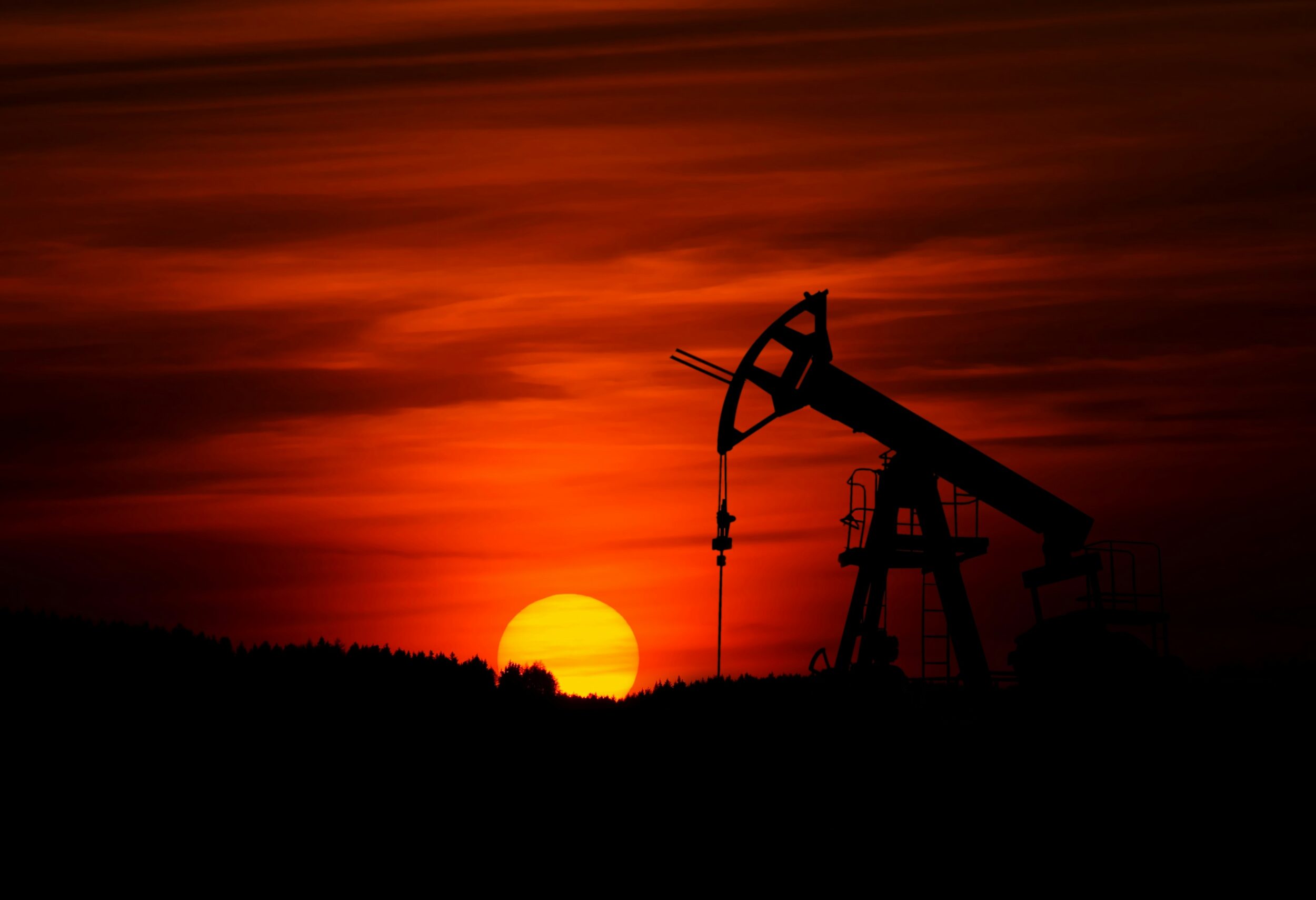
Photo by Zbynek Burival via Unsplash
A strong economy means that even if a populace has legitimate grievances that could lead to instability and possible revolution against an authoritarian regime, they are either suppressed by agents salaried by the state, removed from the political sphere by the lack of monetary contribution, or paid off by the government.
Nations Big and Small
Across the Red Sea to another Russian ally, Eritrea, despite its small size, has the distinctive feature of hosting one of the most repressive regimes in contemporary Africa. Among its impressive achievements of total media suppression lies the notable feature of the ongoing cannibalism of its own economy to bolster a bloated military, which is equally as aggressive as it is unnecessary in scale. Outside of its military, Eritrea as a state is extremely economically underdeveloped. It has one of the world’s worst Internet connections, and rurally it does not fare much better as millions of people are at risk of starving due to a single poor harvest. With such an economy in such poor sorts as Eritrea, it begs the question of why and how Isaias Afwerki has stayed in power for 30 years? The answer is rooted in the idea that, “Income per capita does not help much in understanding persistent authoritarianism in the Middle East and North Africa, where authoritarian regimes govern countries with very different levels of per capita income.” (Draper and Ramsay 2016, 140). So the answer likely lies not in the devastated Eritrean economy, but in the Eritrean military. In contrast to the somewhat narrow lens of being oil and gas exporters, the broader traits of large and powerful militaries is possibly a more determining factor relating to the durability of authoritarian regimes today. This begs the question: as a factor, is it the economy that increases durability or is it the economy’s ability to more readily facilitate large militaries which truly determine a regime’s longevity? As can be seen with Eritrea, a country with both the second largest amount of soldiers per capita (Second only to North Korea) and the largest army in sub-Saharan Africa yet a stagnant economy which has shops full of empty shelves, citizens lining up with ration cards, shortages of basic goods, and no hard currency to buy imports. With this in mind, surely some other factor must be preventing the complete implosion of the Afewerki regime.
Concluding Thoughts
While the arguments of scholars prove that the economy is an insightful and important factor in the durability of authoritarian rule, it must not be viewed as the sole factor that defines durability, especially not in Russia’s case. While numerous states show that economic prosperity is an indicator of longevity, anomalous states like Eritrea show that this trend is not absolute, and warrants further discussion is a deeper understanding is to be reached.
Further References:
Draper, Alan and Ansil Ramsay. 2016. The Good Society: An Introduction to Comparative Politics, 3rd Ed. Hoboken, NJ: Pearson
Inozemtsev, Vladislav.2017”The Kremlin Emboldened: Why Putinism Arose.” Journal of Democracy 28, No.4, (October): 80-85
0 Comments