Democracy erodes gradually, with institutions weakening over time until they no longer function. This process was clearly visible in the Philippines under former president Rodrigo Duterte. He was elected in 2016 on a platform centered around law and order, Duterte quickly became one of the most controversial leaders globally. While he maintained broad public support throughout much of his presidency, his administration significantly weakened democratic institutions, undermined the rule of law, and restricted press freedom. While the Philippines remained democratic on paper, Duterte’s presidency is a good example of how democratically elected populist leaders can erode the institutions supporting democracy from within.
Duterte rose to power by presenting himself as an outsider as many populists do. Many Filipinos were frustrated with the problems happening in the country such as crime, corruption, and economic inequality. His tough-on-crime rhetoric spoke to the people. His promise of a war on drug was one of the contributing factors to his eventually election in 2016. This served as the key point to his populist campaign. Duterte also often portrayed democratic institutions, courts, and the media as obstacles preventing effective governance. This language is common among many populist leaders who contribute to democratic backsliding. This populist style rhetoric frames checks on democracy as a barrier and opens the door for the public to support anti-democratic action when those actions are eventually taken.
Duterte’s populist leadership style further contributed to democratic decline. He often presented himself as the person that could fix the problem. He painted his critics as wrong and unable to solve the problems in the Philippines. This framing is dangerous because democracy requires room for dissent. Populist leaders frequently divide society into the people and the elites, delegitimizing opposition in the process often painting the opposition as the problem. Duterte’s rhetoric was often openly hostile toward democratic norms. While elites and people in the middle class fell in love with him and his populism, his language undermined democratic norms and paved a way for the erosion of democratic institutions after his rise to power.
The clearest example of democratic erosion under Duterte was his so-called war on drugs. Shortly after taking office, Duterte encouraged police and even civilians to kill suspected drug dealers and users. Thousands were killed. The reported death toll numbers are likely higher as some deaths may have gone unreported. Many victims were never given trials or even charged with crimes. Similarly, the vigilantes committing the Extrajudicial Killings were never arrested or put on trial representing a direct violation of the rule of law. In a properly functioning democracy, the state cannot bypass the legal system and execute citizens based on suspicion with no supporting evidence. Duterte’s willingness to encourage and allow for such violence to occur directly lead to the erosion on democratic norms in the Philippines.
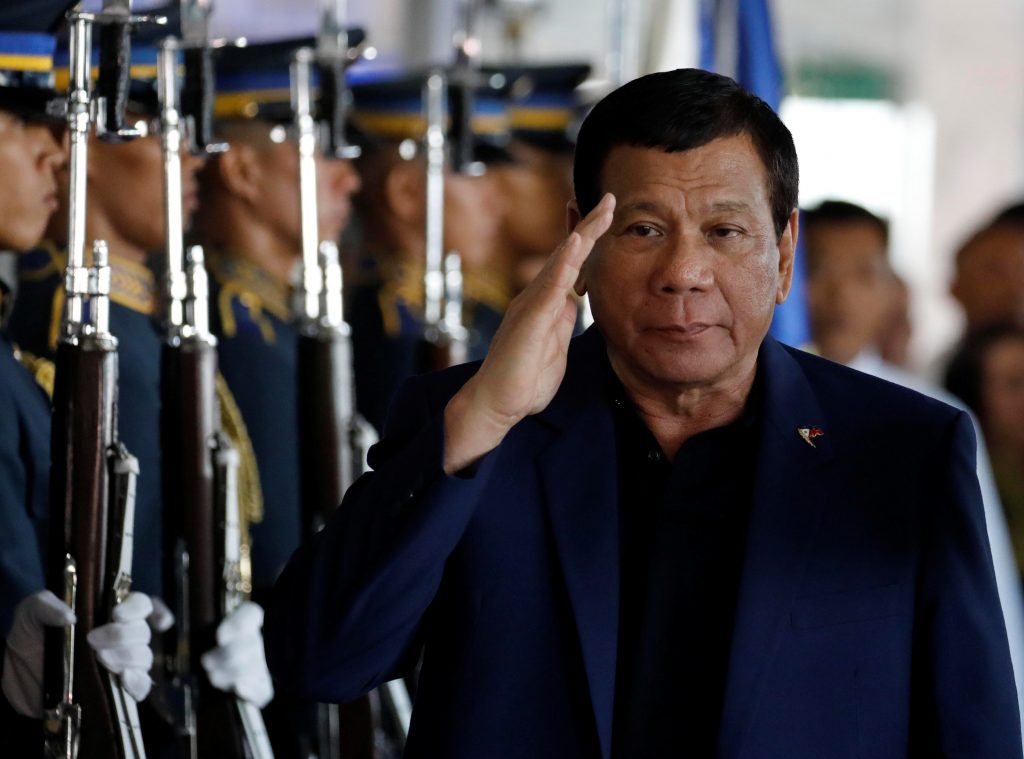
Duterte also targeted political opponents. One of the most notable examples was Senator Leila de Lima, a vocal critic of the war on drugs. She was arrested in 2017 on drug-related charges that many international observers viewed as politically motivated. Her arrest sent a chilling message to other opposition figures. Democracy depends on political competition for accountability and overall effectiveness, but Duterte treated opposition as illegitimate. Rather than engaging critics in a productive way to support democracy, he attempted to silence or intimidate them to prevent dissent. His treatment of political opponents is a major violation of horizontal accountability.
The treatment and imprisonment of political opponents is not the only weakening of horizontal accountability. Another important aspect of democratic erosion under Duterte was the weakening of the institutions in place to put check on the executive. Over time during his presidency these institutions struggled to check executive power. Duterte appointed allies to key positions and used his popularity to pressure other branches of government. The removal of Chief Justice Maria Lourdes Sereno in 2018 raised serious concerns about judicial independence. Courts have to remain neutral in order to maintain democratic norms and serve as an effective check to the rule of law. When they become corrupted by political pressure, they can no longer function and lose their ability to be a check on the executive.
Horizontal accountability is not the only thing that suffered under Duterte. Freedom of the press also suffered during Duterte’s presidency. Independent media outlets faced harassment and attacks from the government in an attempt to regulate what was reported about them. One premiant case involved Maria Ressa and the news organization Rappler. Ressa was repeatedly arrested and charged with a variety of offenses. Many saw this as retaliation for the reporting of Rappler on the Duterte Regime. This was not uncommon. In fact, Duterte regularly attacked journalists attempting to paint them as bias or corrupt. Freedom of the press is critical to democracy. The press can serve as a watchdog for democracies keeping citizens in the loop about a nondemocratic action being taken. The media is one of the most useful tools at highlighting democratic erosion. Without the presence of media to resist people may not be able to see their what is happening right in front of them is wrong and a cause for concern preventing them from being able to resist against the erosion taking place. These attacks on the press are an example of violations of Diagonal accountability.
Some basic democratic functions continued to exist such as elections. However, democratic erosion today does not look like an immediate dictatorship with all other democratic functions thrown out, but rather a slow erosion of democratic norms and practices By the end of Duterte’s presidency, many Filipinos had become accustomed anti-democratic practices such as the silencing of pollical opponents and journalists.
The long-term consequences of Duterte’s presidency remain uncertain. His successor, Bongbong Marcos, inherited institutions already weakened by years of democratic backsliding. Rebuilding public trust in the institution that Duterte worked to destroy. Democratic are fragile, especially when leaders exploit public frustration and fear for their own gain.
The Philippines is another example of how Democratic erosion does not occur through military coups anymore. It arrives through elections and promises of security. Duterte was elected democratically, but his actions demonstrated how elected leaders can undermine democracy while claiming to defend it. The Philippines experience reminds us that democracy cannot function correctly without the proper checks in place. The rule of law and the protection of civil rights are very important to a democracy that is functioning properly.
0 Comments