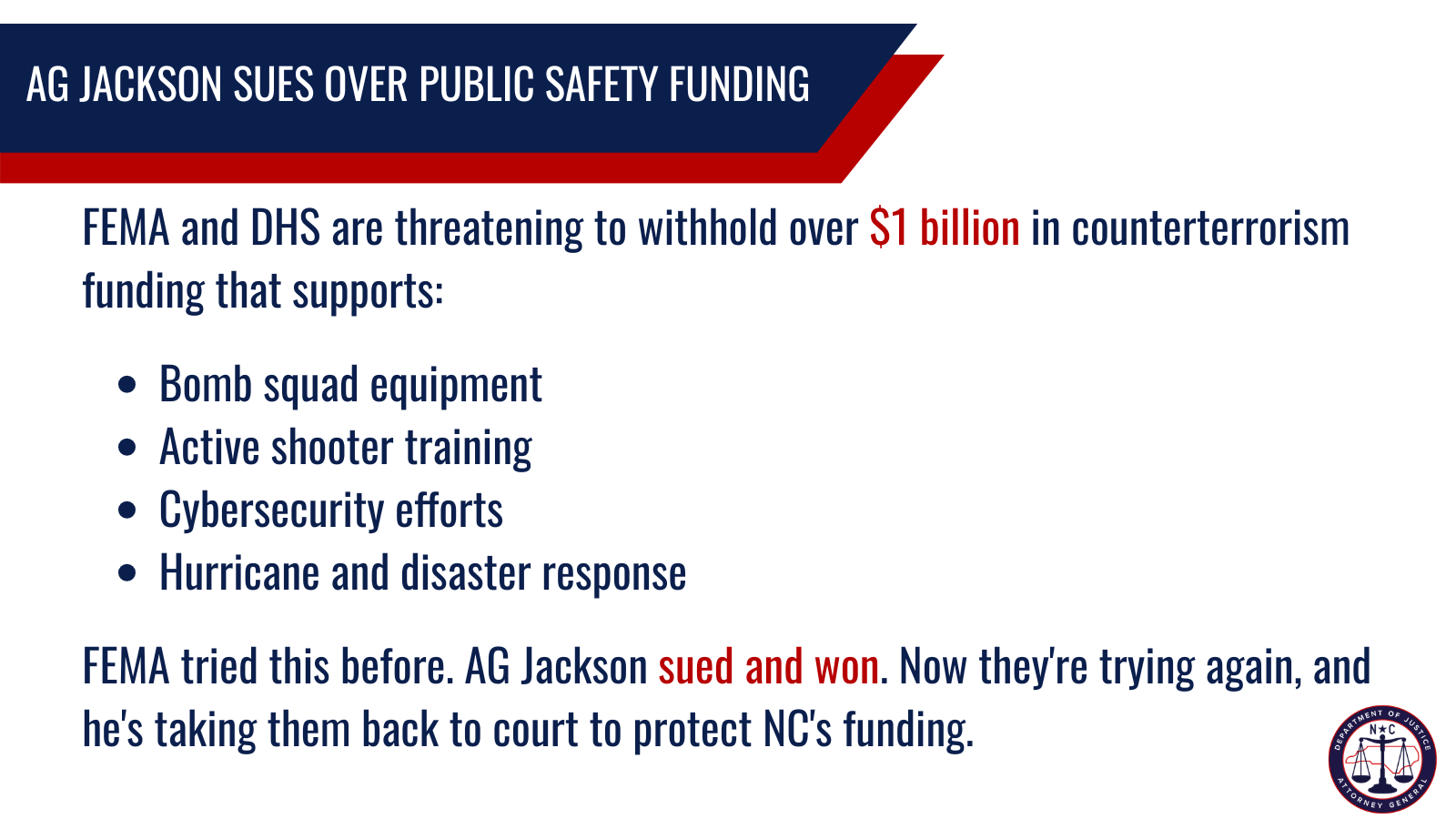
 In June 2026, the Department of Homeland Security (DHS) and the Federal Emergency Management Agency (FEMA) announced new conditions for states and local governments receiving federal counterterrorism grants. The grants, which provide more than $1 billion for protecting communities against terrorism and other threats, would have 20 percent withheld from jurisdictions that did not comply with several new election-related requirements. These included verifying the citizenship of registered voters and election workers through a federal database, changing certain voting equipment, and adopting specific ballot-auditing procedures. On September 28, a federal judge blocked the policy, ruling that FEMA did not have the authority to condition counterterrorism funding on changes to election administration.
At first glance, this might appear to be a relatively ordinary dispute over federal authority. The administration argued that the requirements would improve election security, while states and local governments argued that FEMA had exceeded its authority. But viewed through the lens of democratic erosion, the episode illustrates a more fundamental problem: that democratic institutions can become vulnerable when an executive branch uses its control over government resources to pressure other institutions into adopting policies that Congress has not authorized.
American elections are largely administered by states and local governments, while Congress has constitutional authority to regulate federal elections. FEMA, by contrast, was created to administer programs related to emergency preparedness and counterterrorism. The federal judge who blocked the policy, Amir Ali, concluded that Congress had not authorized FEMA to use these grants to force states and localities to implement the administration’s preferred election reforms.
This distinction is important because it demonstrates one mechanism through which democratic erosion can occur without eliminating elections or formally changing the Constitution. Political scientists often describe executive aggrandizement as the gradual expansion of executive power at the expense of institutional constraints. Rather than openly abolishing democratic institutions, executive aggrandizement can occur when elected executives increasingly attempt to accomplish political goals through unilateral action, weakening the authority of legislatures, courts, or other institutions that are supposed to constrain them.
The FEMA case fits this framework because the administration attempted to achieve changes to election administration without going through the ordinary legislative process. Congress had established the counterterrorism grant programs for a particular purpose, but FEMA attempted to make a portion of the funding conditional on compliance with election policies. In doing so, the executive branch was effectively attempting to turn control over federal funding into leverage over state election administration. Judge Ali’s ruling specifically emphasized that Congress had authorized FEMA to fund projects, not to use those funds to induce states to carry out federal policy preferences at their own expense.
The episode also demonstrates why federalism can function as a democratic safeguard. Election administration is decentralized across thousands of state and local governments. That system can be inefficient and produce significant differences between states, but decentralization also makes it more difficult for one political actor to impose uniform election rules across the country. The administration’s attempt to use federal grants as leverage would have reduced that institutional independence without Congress first changing the underlying legal framework.
At the same time, the outcome demonstrates that democratic erosion is not necessarily inevitable. The cities and counties affected by the policy challenged it in court, and the judiciary ultimately prevented FEMA from enforcing the conditions. The ruling therefore represents an example of a democratic check functioning as intended. The question raised by the case is whether that check will remain sufficient when executive branches increasingly test the limits of their authority.
The broader significance of the FEMA dispute is that the executive branch attempted to use an unrelated area of federal power (control over counterterrorism funding), to influence how states administer elections. If democratic erosion involves the gradual weakening of institutional constraints on executive power, then this episode provides a concrete example of that process. The fact that a federal court stopped the policy does not erase the underlying concern; instead, it shows both sides of democratic erosion at work: an executive attempting to expand its authority and another institution attempting to constrain it.
The central challenge to democracy is therefore not whether the administration’s proposed election reforms were substantively good or bad. It is that political actors should not be able to achieve major changes to the rules of democratic participation through powers that Congress never granted them. Preserving democratic institutions requires not only free elections, but also maintaining the institutional boundaries that determine who gets to make the rules governing those elections.
Source:
https://www.brennancenter.org/our-work/analysis-opinion/trump-administrations-election-conditions-anti-terrorism-funding-struck
0 Comments