Usually, breaking campaign promises consistently leads to the end of political careers. However, for Donald Trump, it seems that he is exempt from this fate. His polarizing rhetoric and constant violations of democratic norms have actually bolstered his support base rather than driven supporters away.
Trump’s success stems from his violations of democratic norms through tactics such as fear-based rhetoric and partisan polarization, which reshape voter priorities and reward democratic backsliding rather than punish it. These methods, which make voters feel like there is a threat that requires norm-breaking, diminish democracy by normalizing this behavior.
Defying Expectations
Trump is an interesting case. Despite facing serious lawsuits and investigations, challenging the electoral system, and consistently going against democratic norms, Trump remains popular among millions of people in the United States. For any previous president, this behavior would have been widely scrutinized and likely led to resignation or impeachment.
Trump continues to be a major figure in American politics; he maintains a strong hold over members of his party and his supporters across the nation. But why?
To answer this question, we must look beyond “voters just like him and like what he does” – we need to understand how Trump employs this support and why voters remain engaged.
What are Democratic Norms?
According to political scientists Steven Levitsky and Daniel Ziblatt, democracies not only rely on formal rules set in place, but also informal norms. Two of these norms include: mutual toleration and institutional forbearance.
Mutual toleration is the acceptance of political opponents as rivals rather than enemies. It promotes democratic procedures because both sides acknowledge the fairness and legitimacy of the system, and neither would work to destroy this. Institutional forbearance is when politicians choose not to exploit their power to the fullest extent. This protects the fairness of political order.
Trump has repeatedly violated both of these democratic norms. He portrays his opponents as threats to the very livelihoods of Americans and has challenged the integrity of our electoral process, including the transition of power, because of his loss.
Violations of these norms instill fear, make people feel threatened by a specific political party, and cause polarization. Norm violations come to be seen as necessary to counter perceived threats.
Populism and Fear
Trump’s rhetoric fits into the category of populism – the separation of people into two groups, the commoners and the elite. Trump expands this idea by dividing people not only between elites and “commoners,” but also against immigrants, political opponents, and other perceived threats.
In the 2024 presidential campaign, Trump’s statements to the public regarding his Democratic opponent, Kamala Harris, were constant warnings about the consequences that would occur if she were to become president. While giving a speech to Pennsylvania – a crucial swing state – in the month prior to the election, Trump claims that if Harris were elected, it would be guaranteed that World War III would ensue.
This type of rhetoric instills fear in the people, draws them to vote a certain way, not because of facts, but to avoid the consequences they are warned about. One of the reasons Trump was elected was because of the promise that he would be the president to end wars, not start them.
Trump used the fear of war to bolster voter support and turn voters against Harris and the Democrats, who he claimed would threaten livelihoods and foreign relations by starting a war. Trump used this argument of Republican versus Democrat and peace versus war to inflict fear and stir votes in his corner.
Polarization and Accountability
An effect of the use of a populist strategy is the pitting of two sides against one another. The danger that comes with a politician like Trump is the increase in the distance that he intentionally creates between these groups of people. Throughout his political career and both presidencies, Trump has worked to establish the two major political parties against each other.
At his recent State of the Union speech – a speech meant to be given to the entire nation as a whole and unify – Trump stated that “these people are crazy,” remarking Democrats, and further asserted that “Democrats are destroying our country.” This rhetoric splits the nation into distinct parties and promotes affective polarization between groups. Such polarization is driven by emotions rather than just by ideas. Instead of parties trying to understand and work together, they view them as threats and the target of their emotions (fear, anger, etc.) – leaving voters to choose one party to stand with and the other to antagonize.
When polarization intensifies, the concern of voters for holding their own party accountable decreases. It becomes a matter of “my side versus theirs” instead of the nation together holding our government officials accountable for their actions. People become so concerned with preventing the “other side” from gaining power that they become less inclined to worry about the means taken by their own side.
Trump has benefited from the polarization he has worked for years to instill. Despite many voters believing Trump would be the president to end wars and voting against Harris because she would start foreign conflict, they still appear to approve of Trump’s decision to engage in conflict with Iran. According to a survey conducted by Public First, 81% of MAGA Trump supporters and 61% of non-MAGA Trump supporters approve of the strikes on Iran.
So how is it that Trump could win voters over by promising not to involve the United States in foreign conflict, even going as far as to say he would end conflicts, and end up striking Iran while being supported by his voters?
Polarization helps explain this dynamic. Once deeply polarized, voters become attached to their parties and the actions taken by these parties. They will go along with the behaviors and actions because that is their side, and if their side does not win, the other side who will “destroy” them will win.
Could this be going too far?
Many argue that Trump’s success has derived simply from his policy alignment with voters. They claim Trump’s “America First” commitments that hold domestic issues at the forefront are the reason for his continuous support from voters.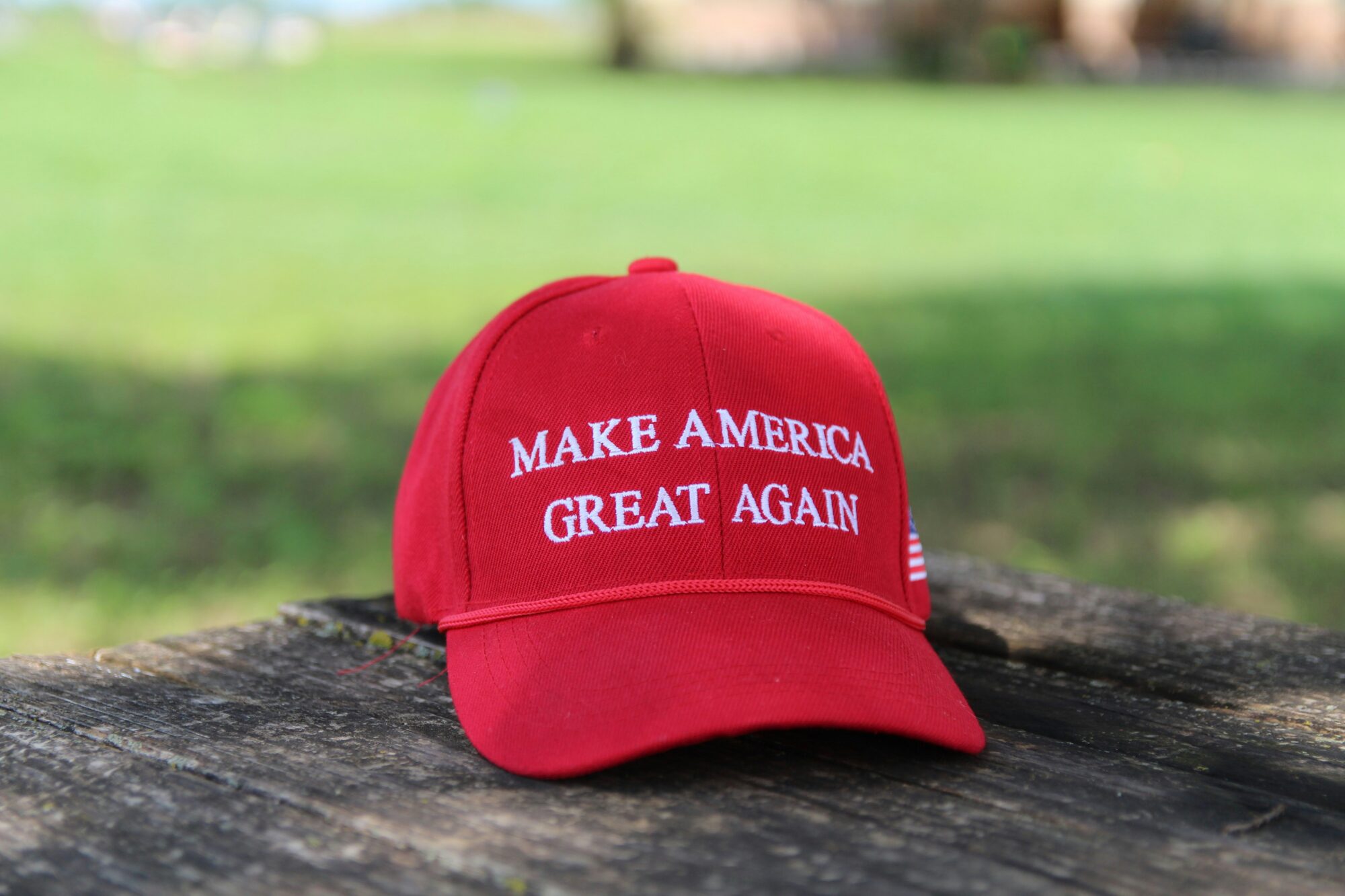
Trump’s claim that his job is to “represent the United States of America” and not represent the whole world, reflects the nationalistic approach that supporters claim appeals to voters.
However, this explanation only counts for a minimal portion of his unwavering support. It does not explain how his voters willingly overlook or defend his actions that challenge democratic norms. If we accepted this claim as the entire explanation, it would fail to account for voters’ tolerance of democratic norm violations.
Conclusion
Fear-inducing rhetoric and increasing polarization are not the only factors that explain Trump’s success, but they are crucial in understanding it. Trump’s case is alarming and important when analyzing democratic erosion. Democratic norms can quickly lose their force once voters feel threatened and populist strategies can reduce voters’ concern for holding their own party accountable. Democracy erodes not only when officials violate norms, but when voters allow it.
*Photo by Natilyn Hicks Photography (Unsplash), Creative Commons Zero License
0 Comments