A country does not have to cancel elections to weaken democracy. Sometimes leaders keep elections in place but make it harder for the opposition to compete fairly. I argue that Turkey’s crackdown on Istanbul mayor Ekrem İmamoğlu shows this clearly. This is not just one legal case against one politician. It is part of a broader pattern in which the government uses courts, media pressure, and repression to weaken a strong political rival while still keeping the appearance of democracy. If this argument is wrong, then we should expect the Turkish government to let İmamoğlu participate freely in politics, allow open criticism, and avoid using state institutions against him. Instead, the evidence suggests the opposite.
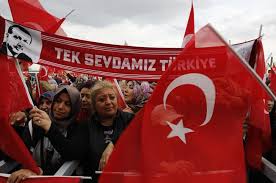
The basic timeline is important. Human Rights Watch shows that the pressure on İmamoğlu did not begin all at once in March 2025, but built over time through a series of legal and political actions against him and the CHP. The main escalation came on March 19, 2025, when Turkish authorities detained İmamoğlu, and on March 23, 2025, when a court ordered his pretrial detention. Human Rights Watch argues that these moves were part of a broader pattern of politically motivated cases aimed at weakening the opposition. İmamoğlu’s detention sparked the largest anti-government protests in Turkey in more than a decade, and by March 2026, he was still in jail as he and 406 municipal officials and others stood trial in a major case tied to the Istanbul municipality. Looking at this sequence of events, it becomes hard to see the case as a normal legal process. It looks much more like an effort to sideline a major opposition figure.
The readings by Berk Esen and Sebnem Gumuscu on Turkey is epsecially helpful here. They describe Turkey as moving toward competitive authoritarianism, which means elections still exist, but the ruling party uses state power to make competition unfair. That idea fits this case very well. Turkey has not gotten rid of elections, but it has made it harder for the opposition to challenge the government on equal terms. İmamoğlu is not some minor politician. He is one of the few opposition figures with real national appeal, and many people see him as someone who could seriously challenge Erdoğan in a future presidential race. That makes the crackdown especially significant. When a government uses the legal system to weaken its strongest rival, democracy becomes less meaningful even if voting still takes place.
Jan-Werner Müller’s work on populism in his book, What is Populism?, also helps explain what is happening. Müller argues that populist leaders claim that they alone represent the “real people,” while their opponents are treated as corrupt or illegitimate. That logic is visible in Turkey. Government officials have not treated İmamoğlu like a normal democratic opponent. Instead, he has been framed as a threat, and protests in his support have been described as hostile. This matters because democracy depends on the idea that your opponent has a legitimate right to compete for power. When leaders stop accepting that idea, they create a political environment where repression becomes easier to justify.
Another important part of this story is the media. Scott Gehlbach’s reading on media and authoritarian politics shows that governments do not always need total censorship. Sometimes they just need enough control to shape what people see and hear. During the protests after İmamoğlu’s arrest, opposition groups criticized pro-government media for ignoring the demonstrations. During the protests, seven journalists, including AFP photojournalist Yasin Akgul, were jailed pending trial before later being released. This matters because if people do not get full information, they are less able to judge what the government is doing. Media pressure helps governments manage the political story while making repression look more acceptable or less visible.
Jennifer McCoy and Murat Somer’s work on pernicious polarization is useful, too. They argue that when politics becomes deeply divided into hostile camps, democracy suffers because political rivals stop seeing each other as legitimate. That idea helps explain why this case matters beyond just one mayor. The crackdown on İmamoğlu suggests that the government sees a strong opposition victory not as part of democracy, but as something dangerous that needs to be blocked. In that kind of system, elections still happen, but they become less about fair competition and more about protecting the ruling side from losing.
At the same time, the public response also shows that democratic erosion is not uncontested. Maria Stephan and Erica Chenoweth argue that nonviolent protest can be an important way to resist anti-democratic behavior. The large protests after İmamoğlu’s arrest show that many people in Turkey still reject this kind of repression and are willing to push back. That does not mean resistance will definitely succeed. But it does show that erosion is a struggle, not something that happens automatically without opposition.
Overall, Turkey’s treatment of Ekrem İmamoğlu shows how democracy can weaken even when elections are still being held. The problem is not simply that one politician was arrested. The deeper problem is that the government appears to be using legal institutions, media pressure, and repression to make political competition less fair. Through the lens of our class readings, this looks less like ordinary democratic conflict and more like a clear case of competitive authoritarianism. Turkey still has elections, but if the strongest opposition leaders are targeted in this way, then the ballot box alone is no longer enough to protect democracy.
References:
Esen, B. (2020). Why did Turkish democracy collapse? A political economy account of AKP’s authoritarianism. Party Politics. https://doi.org/10.1177/1354068820923722
Gehlbach, Scott. “Reflections on Putin and the Media.” Post-Soviet Affairs, vol. 26, no. 1, Jan. 2010, pp. 77–87, https://doi.org/10.2747/1060-586x.26.1.77. Accessed 29 May 2019.
McCoy, Jennifer, et al. “Polarization and the Global Crisis of Democracy: Common Patterns, Dynamics, and Pernicious Consequences for Democratic Polities.” American Behavioral Scientist, vol. 62, no. 1, Jan. 2018, pp. 16–42, journals.sagepub.com/doi/10.1177/0002764218759576.
Müller, Jan-Werner. 2016. What Is Populism? Philadelphia: University of
Pennsylvania Press
Stephan, Maria J., and Erica Chenoweth. “Why Civil Resistance Works: The Strategic Logic of Nonviolent Conflict.” International Security, vol. 33, no. 1, July 2008, pp. 7–44.
Timeline of Key Actions Since 2024 against Ekrem İmamoğlu and the Republican People’s Party. (2026, March 3). Human Rights Watch. https://www.hrw.org/video-photos/interactive/2026/03/03/timeline-of-key-actions-since-2024-against-ekrem-imamoglu-and
0 Comments