“Us” Versus “Them”
In the context of modern politics in the United States and around the world, an increasingly worrying factor that plays a role in the phenomenon of democratic erosion is polarization. Polarization is a process through which the civil and political society becomes divided into “us” versus “them”, or into ingroups and outgroups. Through polarization, key informal norms that ensure the correct functioning of democracy–what Levitsky and Ziblatt define as forbearance and mutual toleration–are lost. Since formal, written rules are evidently not enough to protect a democracy from autocrats, there are shared codes of conduct that become accepted and enforced to prevent political competition from becoming a conflict. This is not the case when polarization is affecting the political behavior of both the opposing parties and of the voters.
As parties become increasingly polarized, aligning along single dimensions, reinforcing the ideal and cultural differences between each other, partisans follow along. Their ideals are completely eclipsed by the party, and as everyone is surrounded by like-minded individuals, their views become extreme. The consequence is a polarized society, where the shared party identity affects policy views, rather than the other way around, and citizens start feeling an emotional, social, and logical connection to the party. This dynamic can be observed all around the world, including in the United States, where not only the party leaders are displaying an attitude of distrust towards the opposition, but also the voters are starting to dislike those who do not share their same political views. The “other party” becomes hypocritical, selfish, and close minded–a true enemy. This collective behavior of polarization, enforced by political actors through a multitude of outlets, is particularly threatening to the norm of mutual toleration.
The Feeling Thermometer’s Cooling Trend
Mutual toleration is the collective agreement among political actors to view their rivals as legitimate, and to recognize their equal right to exist, compete for power, and govern. Polarization causes the exact opposite of what should happen in order for democracy to survive–political competition becomes a war that goes beyond the political realm, as it often interferes with ideological, moral, cultural, and religious values of people. In the United States, this political and social divide has a significant toll on the population, as demonstrated by self-report surveys conducted by the American National Election Study (ANES), using the “feeling thermometer”, which asks respondents to rate parties on a scale from 0 degrees (cold/unfavorable) to 100 degrees (warm/favorable). While it was originally created by Weisberg and Rusk as a method to calculate a candidate’s popularity, it eventually became a useful tool to measure the deepening social divide in American politics. The results show that affective polarization has dramatically increased since 1980, with the scores falling to 26 degrees during the presidential elections of 2016. An important aspect of these findings is what mainly drives the change in ratings, which is the growing animosity towards the opposing parties. Moreover, according to the latest ANES data, the “rival-party” feeling declined to a record low of 19.3 degrees surrounding the 2020 election, and has since hovered around 20 degrees.
The Algorithm of Polarization
The question is: what makes modern society so prone to polarization? How is the political realm becoming a battlefield between parties and contrasting ideologies? There are several factors that justify the existence and escalation of affective polarization, which has behavioral consequences and leads to social distance between individuals with opposing ideologies. However, many experts believe that the main catalyst of polarization is social media. Today, with more than 5 billion people active on online platforms every day, social media is of vital importance to political parties and their electoral agenda; aware that their presence on those platforms may very well be the most effective outlet of publicity. But the politicians’ use of social media goes beyond simple publicity; political parties are using social media as a tool to enforce the pre-existing beliefs of their followers, molding them to match as closely as possible the party’s ideology. Instead of trying to ensure a fair and peaceful competition between policy proposals, they are feeding the polarization that grows in the society by creating content that defames their competitors and depicts them as enemies to be wary of. In addition, social media itself acts as a reinforcer of polarization, through the so-called “information bubbles” that are created around users.
People believe that nowadays it is getting easier to be well informed, being able to choose from countless media outlets to gather information from. They are mistaken. It is actually becoming harder to play an active role in deciding what to read and see, especially when using social media as a source of information. Software algorithms are actually determining what to show, and people are often being exposed to sources that confirm what they already think. Not only do people seek out politically congruent information, but they also update their beliefs based on information that supports what they already believe. The consequence of this phenomenon, also known as “asymmetric updating”, is that a person’s political views become affected and enforced–to the point of resulting rigid and inflexible–by an algorithm that selects content that fits exclusively into pre-existing values and influences.
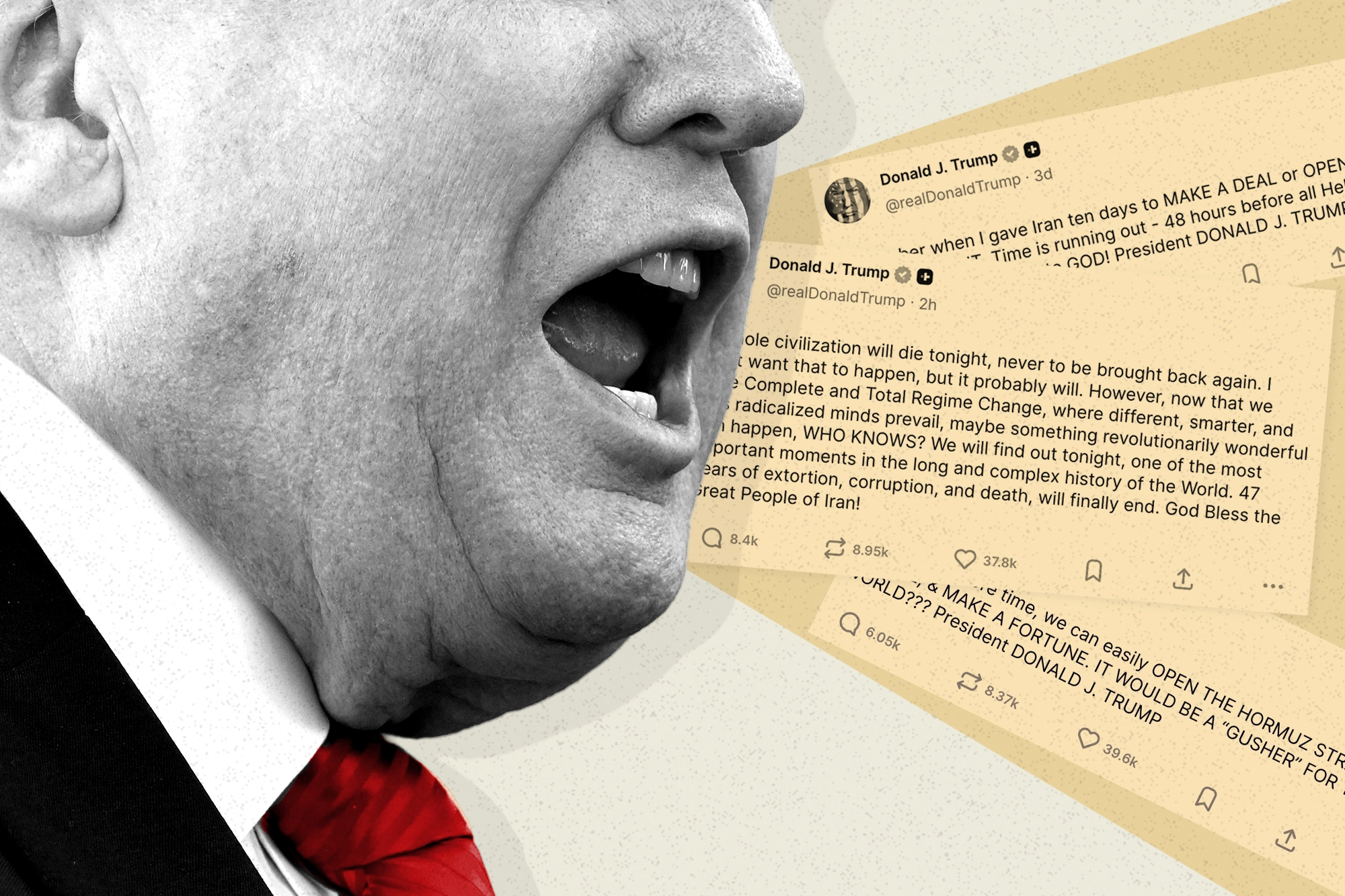
An analysis conducted by the National Academy of Sciences of nearly 3 million social media posts found that posts mentioning the political outgroup were more likely to be shared by ingroup members than those about the political ingroup itself. Each additional outgroup word–for example ‘liberal’ or ‘Democrat’ for a Republican post–increased the odds of that post being shared by 67% and increased the volume of ‘angry’ reactions. The evidence suggests that social media itself is developed and has an intrinsic power of enforcing social and political polarization. What is even more concerning is frequently seeing media platforms being used by prominent political figures to create a social divide, as a tactic to gain popular support. In the United States, there have been many examples of public intolerance and humiliation of political opponents, a trending behavior among politicians that unfortunately seems to be increasingly normalized and accepted by the public. President Donald Trump is anything but immune to this trend, as he actually appears to frolic in humiliating rivals both domestically and abroad. He has mocked European allies as “weak” and “stupid”, he has called women reporters “stupid,” “ugly,” and “piggy,” he has stated on several occasions that political opponents and socially marginalized groups have “low IQs”. He has created AI-generated images with the specific aim of polishing his own image while portraying others negatively, reflecting an attitude of prejudice and superiority.
In the 1950s, Seymour Martin Lipset observed that “inherent in all democratic systems is the constant threat that the group conflicts which are democracy’s lifeblood may solidify to the point where they threaten to disintegrate society.” This is the reason why polarization is one of the most worrying factors contributing to democratic erosion. In order to ensure the future of modern democracy, it is therefore of the utmost importance to safeguard an open-minded and inclusive arena of political debate, founded on mutual toleration and unaffected by prejudice and bigotry.
References
https://www.sciencedirect.com/science/article/pii/S1364661321001960
https://www.annualreviews.org/content/journals/10.1146/annurev-polisci-051117-073034
https://journals.sagepub.com/doi/full/10.1177/0002764218759576
https://www.journalofdemocracy.org/articles/polarization-versus-democracy/
https://goodauthority.org/news/humiliation-is-pervasive-in-politics-good-chat/
I really enjoyed your piece! I think the data you presented was definitely helpful in putting the stark partisan divide in the US into perspective. Your description of mutual toleration was especially interesting, I think the use of the “feeling thermometer” is beneficial in targeting changing trends in terms of partisan attitudes. Reading your post makes me wonder what we should expect to come next. If, as Lipset says, a partisan fight to the death is what can truly bring down a regime, where does that leave the US? I’m interested to see how these guardrails adapt and interact as time goes on and even after Trump’s presidency.