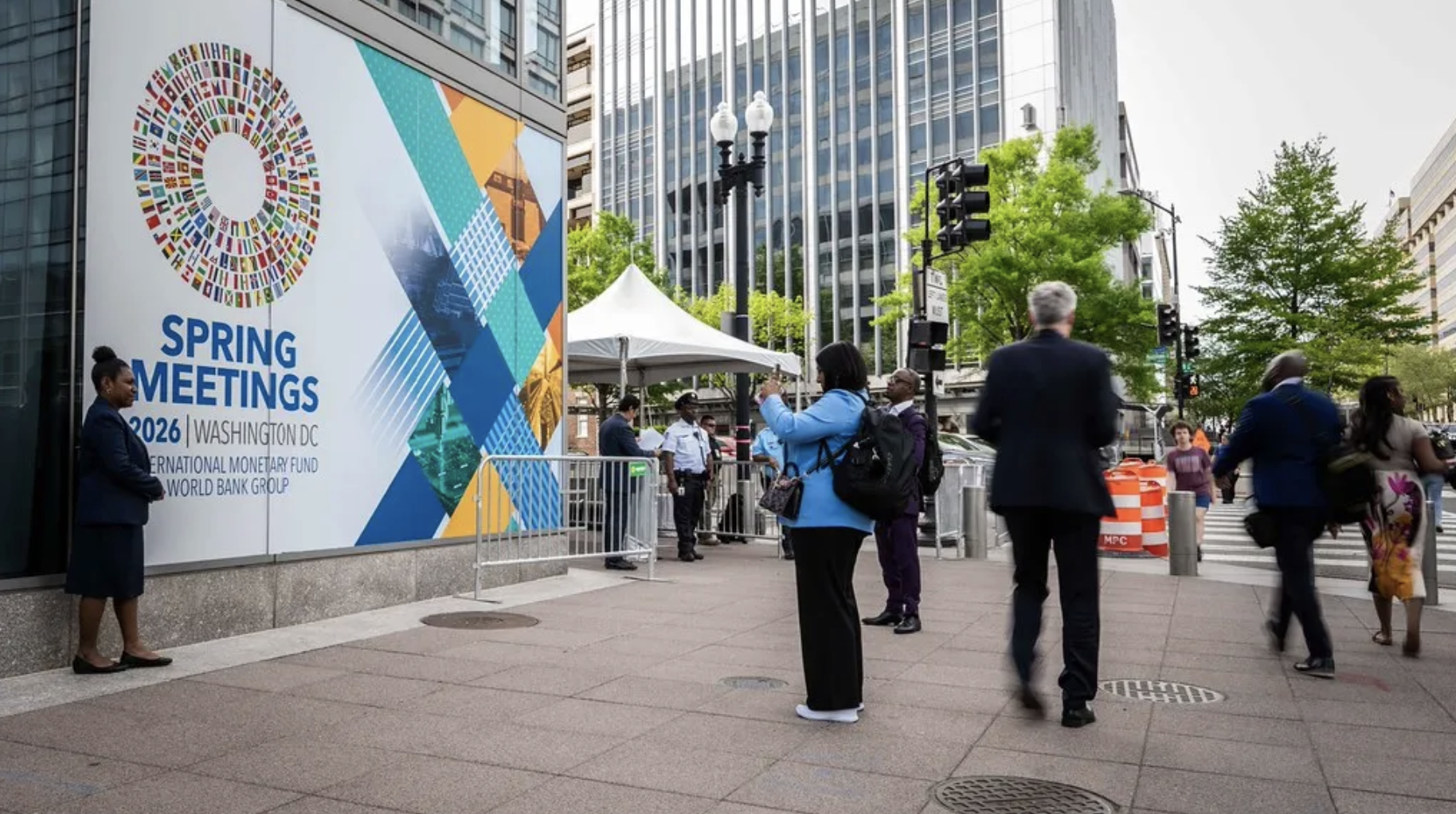
Democratic backsliding is often seen as a political problem, a phenomenon that manifests itself in elections, courts, or constitutions. But what if its effects reach well beyond the realm of politics to the global economy? The piece “Why Democratic Backsliding Should Be on World Bank and IMF Agendas” asks just that question. If democracy is eroding around the world, can entities like the World Bank and IMF continue to pretend that governance and economic stability are two independent things? Or is the dividing line itself a problem anyway? What the article argues is a simple but profoundly unsettling one: the decline of democracy is not simply a normative imperative, but an economic threat.
If governments weaken the rule of law, limit accountability, and concentrate power, these impacts are not limited to political life. Corruption surges, investment becomes unstable, and long-term development is stymied. In other words, democratic backsliding isn’t just bad for citizens, it’s bad for markets. But this begs a bigger question: Should global financial institutions recognize this linkage, or are they obliged to take action? And if they don’t, how does that explain their complicity in perpetuating, or ignoring, democratic decay?
What makes this dilemma particularly tricky is that today’s democratic breakdown rarely presents itself as a dramatic collapse. As Ozan Varol’s idea of stealth authoritarianism tells us, it takes place through legal, incremental adjustments that mask the façade of legitimacy while eliminating accountability. Leaders are not openly anti-democratic, but manage the levers of democracy from within. This forces institutions such as the IMF and World Bank to respond to governance failures that are, by virtue of nature, legally sound but substantively corrupting, making it easy for this to operate. We don’t have a problem of breaking a rule, we just have a problem where it is bent so completely that its proper goal is obliterated. The article is an implicit challenge to the long-established norm of institutional restraint. Traditionally, institutions such as the IMF and World Bank have stayed away from engaging directly with domestic political systems, prioritizing sovereignty and neutrality. But neutrality is hard to justify when the conditions underpinning it, transparency, stability, and rule of law, are falling apart.
This is where Levitsky and Ziblatt’s theory of forbearance comes in. Just as domestic institutions can decide not to play in accordance with the extent to which they legally can exercise their legal power, international institutions can choose to do so or not. The issue is no longer whether they can intervene, but whether continued restraint leads to extended democratic decline. But intervention isn’t a clean solution in the meantime. Conditioning loans or financial support on democratic performance risks being painted as outside meddling, which may bolster the same leaders involved in backsliding. That creates a paradox: Protecting democracy can be weaponized against it. Leaders can project themselves as defenders of national sovereignty, citing international pressure as justification for more consolidation of power. In this way, the devices that have been designed to defend democratic norms become embedded in the logic of authoritarian resilience.
What emerges from this tension is a larger pattern that replicates Nancy Bermeo’s description of what democratic erosion looks like, not as an instant breakdown but rather as a kind of accretion of little movements. Not every instance of backsliding, every moment of institutional hesitation, every decision about the importance of neutrality over accountability can feel manageable in isolation. But in concert, they redefine the limitations of reasonable governing. Then, through time, the lack of response, in the absence of response, is of its own sort. In the end, this article is not only about the World Bank and the IMF. It is about the growing field of democratic responsibility. If democracy is associated with economic stability, then institutions that determine the global economy can no longer afford to be politically indifferent. But stepping into that position requires abandoning the myth that economics and governance can coexist. The true threat is not simply that democracy is backsliding, but that the systems that can respond to that regression are still acting as if nothing has changed.
Sources:
https://www.idea.int/news/why-democratic-backsliding-should-be-world-bank-and-imf-agendas
I think it is an important question to wonder the effects democratic backsliding has on the global economy. As countries back out of international institutions due to the desire for independence, this can impact trade patterns and worsen the global economy. The ways in which unstable investment and worsening economic relationships between countries destabilize the economy are undeniable. The question of whether the IMF or World Bank should directly intervene with economic conditions is an important question to ask when faced with countries violating international norms or institutions and damaging the economy as a result. With regard to forbearance, the question of whether institutions can intervene is a crucial question to ask because they could help with democratic backsliding but they still may not intervene. However, if the IMF or World Bank intervenes, a country can claim this to be foreign interference and place them as elitist and controlling of the ‘people.’ Overall, this is a very interesting topic and I would love to hear more about it.