13 and 9. These numbers are of coups d’état that happened in Thailand since adopting the constitutional monarchy in 1932: 13 were successful, and 9 were unsuccessful. Democracy and the political landscape have been turbulent in Thailand, and they still are. However, there have been two major political crises around the position of the Prime Minister since 2023, bringing a decline in democracy in Thailand. What brought the decline in democracy, even though Thailand holds regular elections, is the bare minimum of what democracy demands?
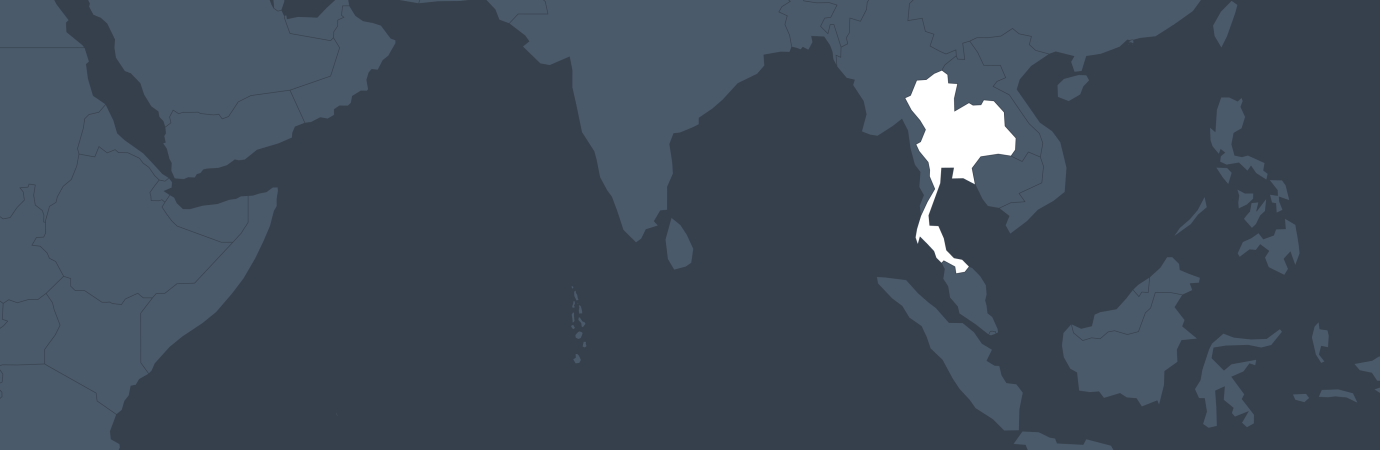
Thailand I Source: https://freedomhouse.org/country/thailand/freedom-world/2026
Before figuring out why Thailand is still classified as a hybrid regime, it is crucial to understand where it stands. According to Freedom House, political rights and civil liberties are rarely guaranteed, so it was regarded as a not-free country, scoring 33 points out of 100. Freedom House indicates that, behind the surface of democracy in Thailand, the military remains a stealthily influential force that controls the political landscape of Thailand.
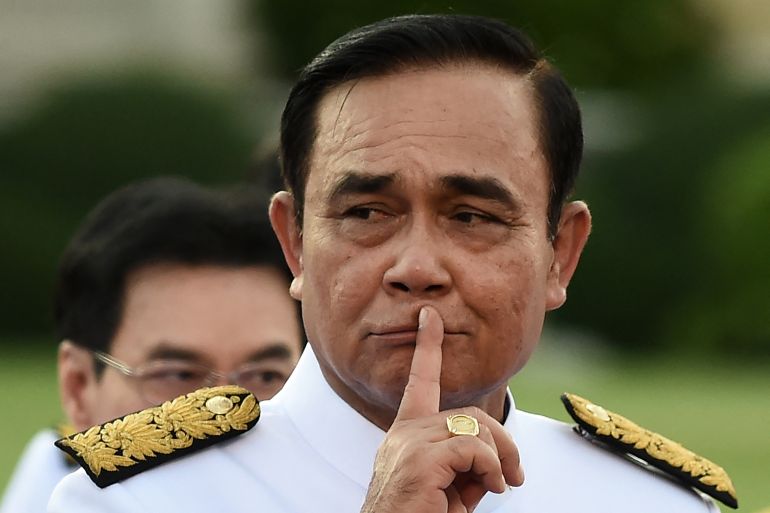
Prayut Chan-o-cha I Source: https://www.aljazeera.com/news/2022/9/30/thai-court-to-rule-on-prime-minister-prayuths-political-future
After the coup in 2014 by Prayut Chan-o-cha, the military seized political power by reducing the political influence of Thaksin’s family. It drafted a transitional constitution that gave the military the jurisdiction to appoint the transitional Senate. The transitional Senate, which was appointed by the military, could also recommend the list of judges of the Constitutional Court to the Monarch. Thus, the military could consolidate its power by controlling the legislative branch and exploiting the institution of the Constitutional Court.
The Thai political landscape evidently falls short from both perspectives of viewing democracy: minimalist and maximalist. It is apparent that the military and political elites impede the freedom of speech, and there is no secure protection of human rights or checks and balances. Even from Przeworski’s minimalist standard – where democracy “is simply a system in which incumbents lose elections and leave when they lose” (Przeworski 2019) – democracy in Thailand is not guaranteed. If people choose a candidate and a free election is held, the Constitutional Court could override the election results and install another candidate whom the military favors.
This structural abuse of power is an example of “Stealth Authoritarianism” (Varol 2015). It refers to the way that authoritarian leaders perpetuate their power through the existing democratic procedures. They hold regular elections, and the constitution proclaims that it has a democratic regime with the Monarch as Head of State, but in reality, the military and the Constitutional Court exploit the democratic institutions to legitimize their power.

Pita Limjaroenrat I Source: https://www.publicpolicy.cornell.edu/events/the-future-of-thailand-a-fireside-chat-with-pita-limjaroenrat/
There are two major examples where the military used the democratic institution of the Constitutional Court to consolidate its power. First, Pita Limjaroenrat, a defender of reform of the current constitution and monarchy, and his party, Move Forward Party, won the election in May, 2023. However, to become Prime Minister, he had to pass the Senate’s approval, which he could not get. Despite the opposition of the military and Senate, he tried to assemble a coalition, but the nomination of the Prime Minister was eventually thwarted by the denial of the Senate, composed of the conservatives appointed by the military.
Furthermore, the Constitutional Court, which serves the interests of the monarch and the military, decided that the attempt to amend the lèse-majesté law had the intent to undermine the current constitution, ruling that the party sought to overthrow the constitutional monarchy itself. Through this judgment, Pita and the leaders of the party were banned from politics for 10 years. The decisions were criticized outside of Thailand: The Foreign, Commonwealth and Development Office of the UK argued that the dissolution of the Move Forward Party is a serious setback for democracy, as freedom of speech and pluralism are indispensable in a democratic society.
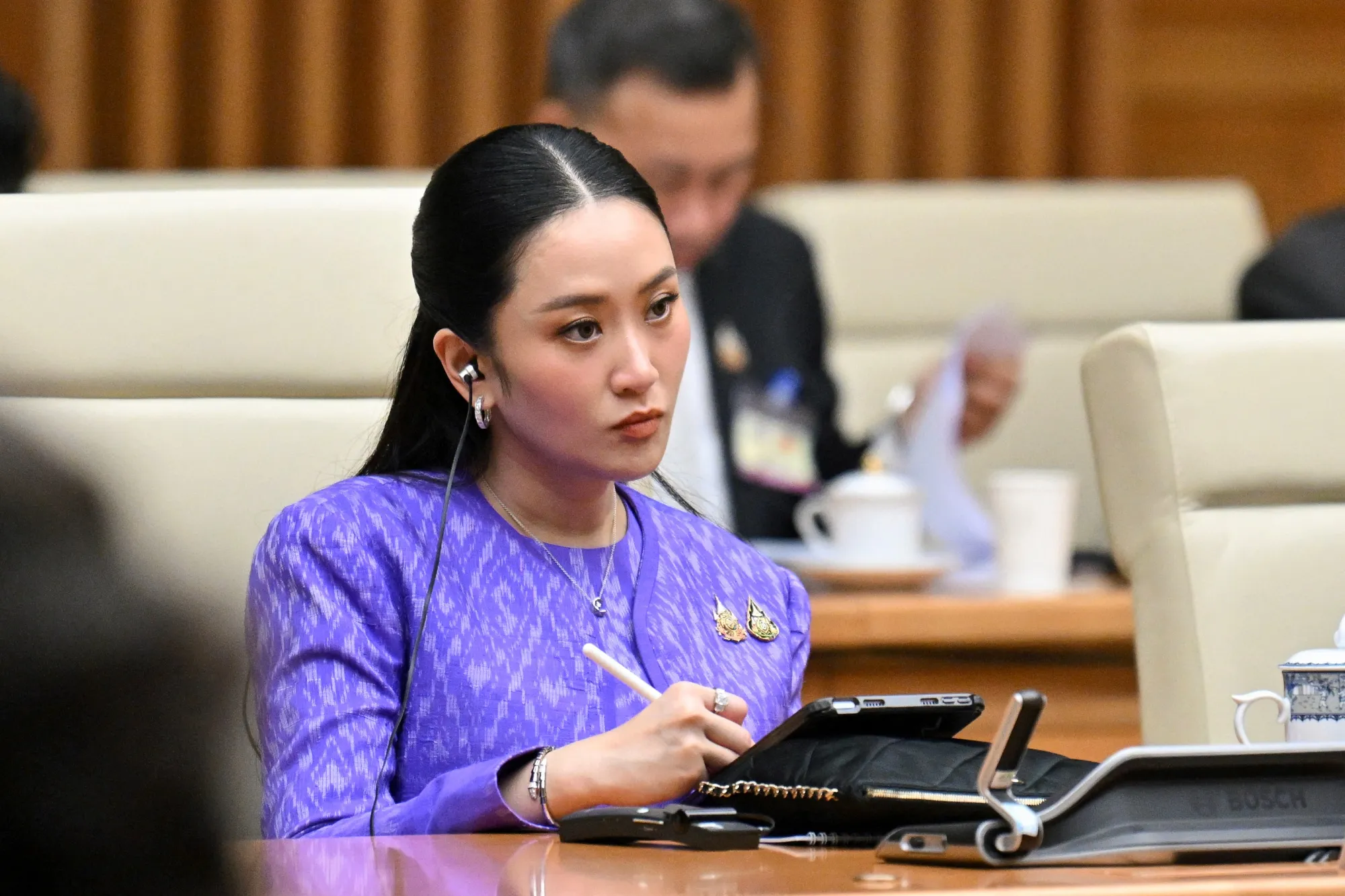
Paetongtarn Shinawatra I Source: https://www.bloomberg.com/news/articles/2025-07-23/suspended-thai-pm-gets-more-time-to-file-defense-in-ethics-case
This pattern of using power to eliminate political threats did not stop with the MFP case. Recently, another Prime Minister was also kicked out of office, while Pita Limjaroenrat could not get into office, so to speak. It was Paetongtarn Shinawatra who was removed, and the Constitutional Court said that Paetongtarn “lacks the qualifications and possesses prohibited characteristics”. She was the youngest prime minister in Thailand, and as the name implies, she is the daughter of Thaksin Shinawatra, who is a political rival of the military.
The reason why she was removed is that a record of the phone call between Paetongtarn Shinawatra and Hun Sen was leaked, and within the phone call, she, as the Prime Minister of Thailand, called Hun Sen ‘uncle’ and criticized Thai army commanders, even though they were having border conflicts with Cambodia at that time. The Shinawatra family and Hun Sen have long maintained a close relationship, and referring to him in a friendly way could be an attempt to mitigate the tension along the border and try to resolve the conflict.
The behavior of Paetongtarn as the Prime Minister of a country could show a lack of leadership and responsibility for her nation. One could argue that the Court’s decisions were only to remove a leader who violated ethical and legal standards, fulfilling its constitutional mandate. This argument suggests that the decisions were made not politically, but based on the principle of checks and balances. However, Khemthong Tonsakulrungruang, an assistant professor of political science at Chulalongkorn University, argued that the Court’s power has grown so expansive that its members can dismiss fairly elected leaders – and crucially, the Court operates without any accountability. When the institution designed to check others is itself unchecked, it becomes a tool of power, not a guardian of democracy.
Constitutional Court of the Kingdom of Thailand I Source: https://www.europeanlawinstitute.eu/membership/institutional-members/constitutional-court-of-the-kingdom-of-thailand/
This case highlights the extraordinary power of the Constitutional Court and the exploitation of power to protect the interests of the military, which has been consistent since the Court’s creation in 1997. The Court has dissolved parties and eliminated political figures, no matter how influential and popular they are among the people. Yet despite wielding such massive power over political opponents, the Court itself has never been subject to meaningful scrutiny. The military abused the institution, which was created to promote democracy in Thailand, as a weapon to empower itself, which in turn undermined democracy in Thailand.
The main critiques drawn from the two examples are that the military and the Constitutional Court do not resort to direct authoritarian means to consolidate their power. Rather, they maintain the façade of democratic institutions and procedures, but stealthily undermine democracy by manipulating the existing institutions. There have been waves from civilians toward a democratic society, but the primary force holding it back is the military and the Constitutional Court, the so-called elites.
The political landscape in Thailand is complicated because the very institutions designed to protect democracy have been turned against it, with the military and the Court deeply entrenching their influence, leaving little room for genuine democratic reform from within. The efforts and vigilance of ordinary people are essential for Thailand to become a truly democratic society. Nevertheless, there is no doubt that hope for democracy exists among the people. They came into the streets to demand the reform of the structural problems, and they participated in elections, showing that they are in need of progress and change. The question is no longer whether Thais want democracy. The question is whether the system will ever let them have it.
0 Comments