Introduction
Did Bolivia’s democracy advance or retreat? Answering this question requires not just looking at the election results but also understanding the two conflicting trends of institutional collapse and social inclusion. Originally, I only knew the name of a country called Bolivia, but I did not know its context, social background, or political system. However, knowing that Bolivia has suffered from various political unrest and military dictatorships since its independence from Spain in the past, I thought it was similar to the political pain that Korea experienced between the 1960s and 1990s, and I became interested. If you look at the historical context of Bolivia, there were several indigenous people living in the country, including the Aymara and the Quechua. Although it gained independence from Spain in 1825, it experienced political instability due to a military coup and the influence of local authorities. The 1952 Revolution attempted to lay the foundation for social justice and economic growth by introducing universal suffrage, reforming land, and nationalizing major industries.
However, after the revolutionary government collapsed in a coup in 1964, until it was democratized in 1982, there was a period of instability where civil and military governments intersect.(An international idea, https://www.idea.int/democracytracker/country/bolivia) Korea also underwent similar problem that how Bolivia has overcome this crisis from the perspective of its citizens and whether Bolivia is currently experiencing democratic aeronautics since the Korean War, as people’s rights have been violated in the military dictatorship from Rhee Syngman’s government to Chun Doo-hwan’s government.
Body 1: past to today’s Bolivia politics.
Before the mid-1980s, Bolivia was experiencing chaos, military regimes, and hyperinflation. In 1985, President Víctor Paz Estensoro, advised by Jeffrey Sachs, implemented an economic policy in which a foreign investor bought and took control of 50 percent of the state-owned enterprises, but vested the remaining 50 percent in a Bolivian pension fund to pay the elderly a pension called Bonosol. At the time, coalition politics took place, which was possible thanks to a constitutional provision that elected the president in parliament if there was no majority vote. This brought political stability, but at the same time made political parties focus on patronage rather than ideology. Meanwhile, in the mid-1990s, he introduced the German Mixed Proportional Representation (MMP). This expanded voters’ options, but eventually paved the way for anti-establishment figures such as Evo Morales to enter institutional politics. Bolivia has succeeded in bringing the marginalized indigenous public into the center of politics, but in return has sacrificed the liberal values of constitutional checks and balances. Underlying countries of the political violence of 2019 still pose a threat to the country’s political stability. Child labor and violence are women.
Body 2 : How has Evo Morales affected the politics of Bolivia?
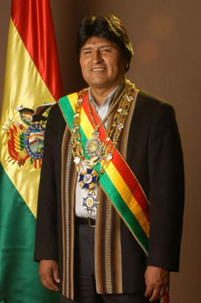
The rule of Evo Morales and the Socialist Movement Party (MAS) hasfundamentally reshaped Bolivian politics. Evo Morales was the first president of Bolivia’s indigenous people, a member of the poor Aymara tribe and a leader of the Coca-growing union. This means that he had a strong legitimacy representing the marginalized majority, not the establishment. This background of his origin, therefore, can be seen as an opportunity to secure legitimacy in democratic solidarity (Britannica, 2026, https://www.britannica.com/biography/Evo-Morales)). For example, he has substantially improved the lives of the poor by enacting a new constitution that specifies indigenous rights. The achievements made in this process are obvious. The voices of indigenous and lower classes, which had been excluded from past politics, began to be reflected in national policy. However, inclusivity has paradoxically meant less liberalism. The ruling forces have weakened the independence of the judiciary, neutralized the president’s two-term limit, and undermined the horizontal accountability. In other words, he emphasized the vertical responsibility that he believes that the president elected through voting is delegated full power by the people and therefore does not need to be checked by Congress or the judiciary and ignored the horizontal responsibility. This laid the groundwork for realizing a kind of health autocraticism, as he significantly strengthened the president’s power in the 2009 constitutional amendment, allowing him a second term as president and granting him the right to dissolve parliament. After he was elected to his second presidential election in 2009, Bolivia revealed the characteristics of a devolved democracy until 2014. (Santiago Anria, 2016 Delegative Democracy in Bolivia) An elected president regards himself as a delegated agent from the people and tends to govern with little horizontal checks. The core elements of liberal democracy, such as hostility to opponents and the media, politicization of the judiciary, and infringement of civil liberties, have weakened. Bolivia has maintained a very strong social organizing power. It has actively exerted its influence on politics through large-scale street protests as well as elections.In addition, despite the fact that the removal of the two-term limit was rejected in the 2016 referendum, he overturned it through the Constitutional Court and challenged a fourth term in 2019. Eventually, he went into exile in 2019 due to allegations of presidential election fraud, criticism of illegal elections by the Organization of American States (OAS), and pressure from the military to resign. In the Aug. 17, 2025, election, Bolivians ousted the country’s MAS, which had been in power for about 20 years. It has been evaluated as a shocking and historic event in modern Bolivian political history.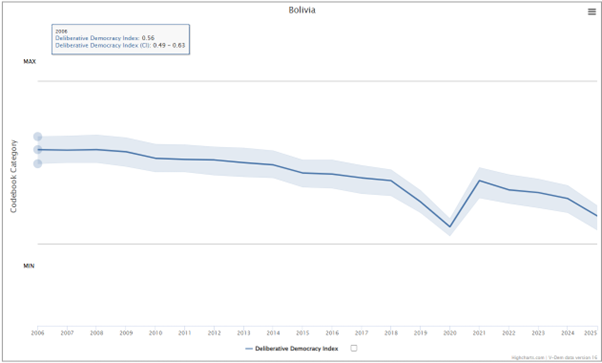
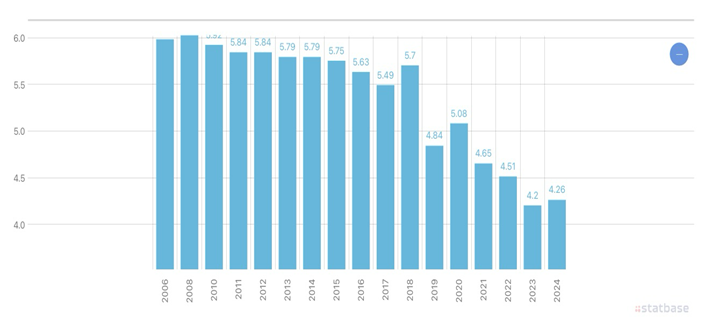
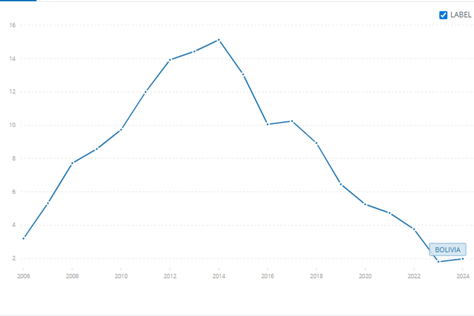
This indicator reveals Bolivia’s index of liberal democracy from the beginning of Morales’s presidency in 2006 to 2024. When social rights expanded in the early days of power, the index was high. However, as the Morales government gradually solidified its power using a judicial review, the figures decreased as the year passed. This can be seen that inclusivity paradoxically caused the weakening of liberalism.
Body 3: Citizens’ effort and future challenges
As the economy of people’s livelihoods crumbled, with soaring food and medicine prices and extreme inflation, people’s patience turned into anger. On the political side, MAS was corrupted by an internal power struggle, and turned into an oppressive party, destroying the democratic system. When MAS became a dominant party with long-term rule and monopolizing state resources, the checks within the party disappeared and a kind of guardianship emerged that rewarded only certain support groups. Former President Evo Morales, who was an indigenous pride, was reduced to a “narcissistic dictator,” obsessed with power. Rather than nurturing young leaders, he undermined the party’s trust by disrupting them to defend his position. After all, Rodrigo Paz Pereira, the Christian Democratic candidate, remained in the single-digit approval rating until just before the election, but with his centrist and moderate style, he topped the first ballot with 31 percent of the vote from independents. After all, Bolivia’s case suggests that democracy is not complete with majority support. Real democracy requires a sophisticated balance between inclusion that ensures public participation and constitutional procedures that prevent the country from gaining power. The challenge facing Bolivia at the moment will depend on how to restore this broken balance.
This is total reserves (includes gold, current US$) – Bolivia. This indicators that in 2013 was the peak of Bolivia’s resource-dependent economy, which heavily depends on the country’s natural gas exports. At this time, the Morales government nationalized the gas industry and paid high taxes to foreign companies by promoting resource nationalism. In the beginning, inclusions succeeded, such as lowering the poverty rate due to the abundance of state coffers. However, due to excessively high taxes and regulations, foreign companies stopped exploring new gas fields or investing in technology. As a result, the existing gas fields are aging, and production has halved compared to 2014.
References
https://www.idea.int/democracytracker/country/bolivia
https://www.britannica.com/biography/Evo-Morales
Https://constitutionnet.org/country/constitutional-history-bolivia
Https://www.policycenter.ma/publications/bolivia-end-political-era
0 Comments