Italy is no stranger to political upheaval. But today, many scholars and democratic organizations are asking the question: is Italy experiencing democratic backsliding?
Under Prime Minister Giorgia Meloni, Italy’s government has introduced a series of reforms and policies that weaken democratic institutions. These changes aren’t outright authoritarianism, but reflect something more subtle and potentially more dangerous: a gradual erosion of democracy from within.
A New Kind of Democratic Decline
Democracies rarely collapse overnight. Political scientists increasingly describe decline as a slow process known as democratic backsliding. A key sign of democratic backsliding is when elected leaders use legal means to expand their power while weakening institutional checks. This appears to be what is happening in Italy.
One of the controversies is a proposed reform to allow the direct election of the prime minister. This might sound democratic at first, but critics of the proposal argue it would fundamentally shift Italy’s balance of power.
This reform would weaken Parliament, as well as diminishing the influence of their president. Therefore, allowing the executive to dominate over the other branches of government. In short, more power would be concentrated in fewer hands.
Why Is This Happening?
To understand these changes, we need to examine beyond individual policies.
Meloni’s rise is tied to broader political trends: economic frustration, distrust of institutions and backlash against globalization and immigration. These conditions make it easy for populist leaders to rise to power.
Populism often frames politics as a battle between “the people” and “the elite.” Once in power, however, populist leaders frequently justify expanding authority in the name of representing the will of the people. This dynamic is why institutional constraints (courts, media, civil society) are often targeted. They switch the view of them being safeguards into being obstacles.
Pressure on Media and the Judiciary
A key sign that democracy is weakening is pressure on independent institutions. In Italy, concerns have emerged about government influence over public broadcaster RAI. The current leadership changes and editorial pressure risk has turned public media into a political tool.
At the same time, proposed judicial reforms could increase the justice ministry’s control over prosecutors.
This matters because independent courts are essential to the rule of law. When governments gain influence over legal processes, accountability weakens. Even small changes can have long-term consequences.
Restricting Rights and Redefining Citizenship
Democratic backsliding is not only institutional, but it happens through policies that redefine who belongs and who doesn’t.
Meloni’s government has begun to restrict LGBTQIA+ rights, including restrictions on surrogacy and recognition of same-sex parenthood. In addition to that, access to abortion services has also become more difficult in practice, despite being legal.
At the same time as women and LGBTQIA+ individuals rights are being threatened, immigration policies have tightened. NGOs conducting migrant rescue operations in the Mediterranean have faced new restrictions, which hinder their ability to operate.
These policies all reflect a broader pattern: narrowing the boundaries of inclusion. When human rights become conditional, democracy becomes less equal.
Civil Society Under Pressure
Healthy democracies rely on active civil societies: journalists, activists, and organizations that hold power accountable.
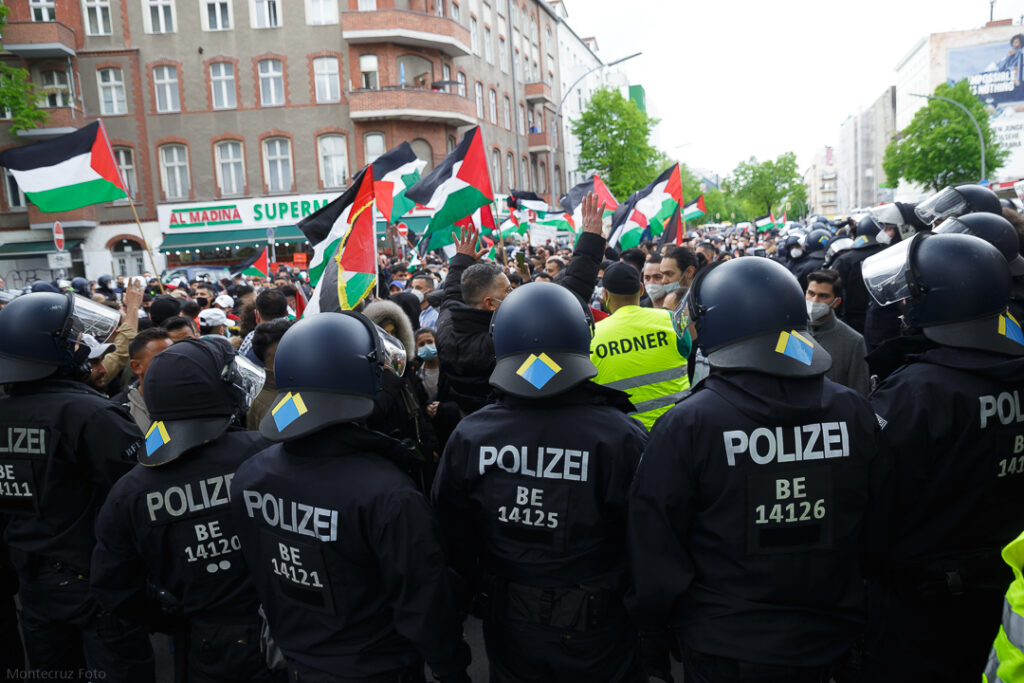
In Italy, there are growing concerns about the restrictions on protests and activism. Demonstrations have faced increased scrutiny, as seen with those tied to environmental and infrastructure issues like the Winter Olympics.
On top of this, there are new debates over education and history, including attempts to reshape how facism and anti-facism are taught in schools.
Together, these efforts showcase the government’s desire to influence how citizens understand their past and their political identity.
Surveillance and Political Trust
The scandal in 2024, “Striano gate,” added another layer of concern.
Reports revealed that members of Italy’s Finance Police accessed confidential data from an anti-mafia database, including information related to political figures.
Even if not directly ordered by political leadership such incidents raise serious questions about surveillance and the misuse of state power.
Trust in democratic institutions depends on transparency and accountability. So when citizens suspect that data is being used politically, that trust erodes.
What Does This Mean for Europe?
Italy is not alone in this. Across Europe, similar patterns are visible in countries like Hungary, Poland, and Croatia.
But Italy matters for a different reason. It is a founding member of the European Union and one of the bloc’s largest economies. The political trajectory of Italy carries significant weight across the continent.
If democratic norms weaken in Italy, the effects could ripple across the EU. This raises a difficult question: how would supranational institutions respond when member states drift away from democratic standards?
Democracy at a Crossroads
So, is Italy undermining democracy? The answer is not simple or straightforward.
Italy is still a democracy with competitive elections, opposition parties, and active civil society. However, democratic erosion is not about sudden collapse, rather it is about gradual change. Piece by piece. Law by law. Norm by norm.
Italy today reflects a global trend: democracy is being reshaped. Often that reshaping happens in ways that are legal, incremental, and difficult to reverse.
The real danger is that democracy is slowly becoming something else.
I really enjoyed your article. It a very clear explanation of all the “small” policy changes affecting Italy that increase the risk of democratic erosion. I also published a blog analyzing the controversy sparked by a reform bill proposed by Meloni’s administration following a series of high-tension protests. This bill has provoked a strong reaction from the opposition and has been criticized as unconstitutional and anti-democratic. I believe that the current Italian government is showing increasing detachment from norms essential to guarantee our right as citizens to freely practice democracy. As an Italian, I see many people starting to realize this, and I hope that they are ready to take a step forward to defend our democracy.
Gradual backsliding is just as dangerous as outright democratic collapse because it is being weakened from within. Leaders like Giorgia Meloni use law itself to consolidate power whether it is through judicial reform, manipulating media, and executive expansion. These tactics are deceptive and, if anything, more corrupt than completely overthrowing democracy. Democratic erosion is harder to detect in cases like Italy because the actions of their leaders automatically appear legitimate. Nonetheless, it is important to note that democracy is not just elections, it includes rights, equity, and the rule of law. Italy’s restrictions on LGBTQIA+ rights, abortion access, and immigration policies explicitly portrays narrow inclusion, thus showing that democratic backsliding can be both institutional and social. Democracy should depend on a free and independent public sphere where people feel safe to express their individual opinions and engage in respectful discourse. Pressure on RAI undermines this concept. With a manipulated, heavily influenced media, this creates a political climate where accountability is significantly weakened. Your argument raises an important awareness in modern democracy: the greatest political threats are often incremental, hence making it more difficult to detect and resist them early enough before they reshape the system.