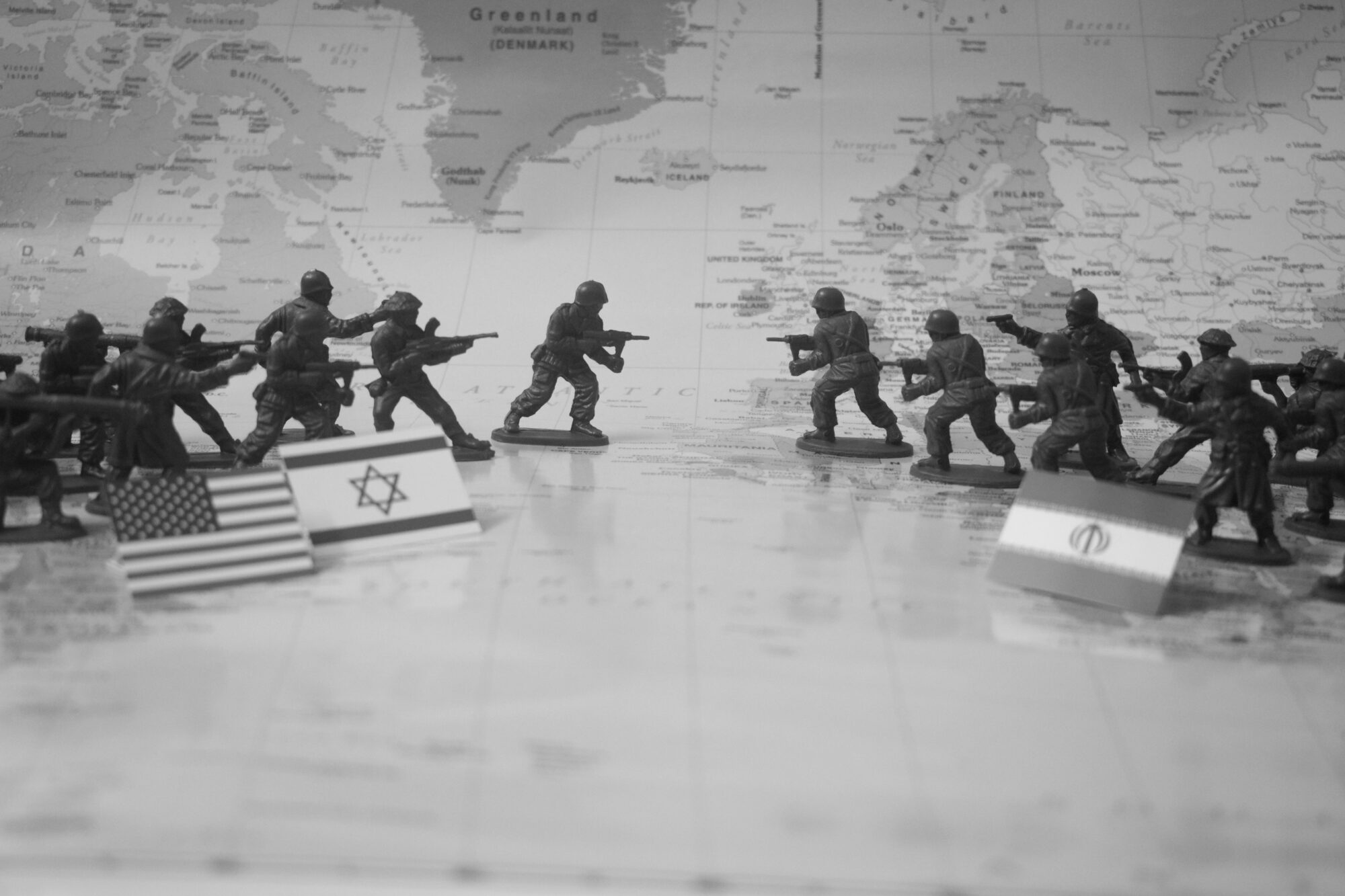
The U.S. response to the Iran conflict demonstrates how propaganda and narrative manipulation transform foreign policy into a domestic political tool, contributing to democratic erosion by undermining informed citizenship, weakening accountability, and expanding executive power.
Background
Recent tensions between the United States, Iran, and Israel quickly escalated into direct conflict, raising fears of a wider regional war. After a period of military strikes and heightened instability, a ceasefire was announced to pause the fighting. But rather than bringing clarity, the ceasefire has left behind a murky and contested outcome.
Each side has framed the result differently. U.S. officials present it as a strategic success, Iran portrays it as proof of resilience, and even within Israel, there are differing narratives. With no clear or agreed-upon narrative, the conflict has shifted beyond the battlefield and into the realm of public perception.
This uncertainty has created the perfect conditions for political messaging to take over. Instead of a shared understanding of what happened, the war is now being interpreted, and reinterpreted, through competing narratives. In that sense, the conflict is no longer just about military power, but about who gets to define reality.
What is propaganda?
Propaganda is not simply false information, but the strategic presentation of information, true, misleading, or incomplete, to shape public perception. In the context of the Iran conflict, political leaders are not just responding to events, but actively shaping how those events are understood. By emphasizing favorable details and downplaying contradictions, they guide the public toward particular interpretations of success, failure, and responsibility.
The result is a fragmented information environment. Citizens are no longer working from a shared set of facts, but from competing narratives that frame reality in different ways. In this environment, perception can begin to matter more than objective outcomes. “Success” becomes less about measurable results and more about which narrative is most widely accepted.
As the conflict moves from the battlefield to the information space, propaganda becomes a powerful political tool. And it is precisely this shift; from facts to narratives, that creates the conditions for democratic erosion.
How this leads to democratic erosion
First, informed citizenship is eroded. A functioning democracy depends on the public’s ability to access and evaluate accurate information. However, the rise of social media and short-form content has made it easier for simplified and politically charged narratives to spread quickly. Complex geopolitical events are reduced to digestible, and often misleading, interpretations. As a result, citizens may struggle to distinguish between factual reporting and strategic messaging, limiting their ability to make informed political decisions.
Next, accountability is also weakened. When multiple actors claim success under conflicting narratives, it becomes more difficult to evaluate government performance. For example, after the airstrikes on Iran from the US and Israeli forces, a video was circulating of an Iranian strike hitting a skyscraper, which ended up being an AI-generated video.
This illustrates how misleading, and sometimes state-linked propaganda can spread during moments of conflict. If the terms and outcomes of de-escalation efforts remain unclear, leaders can frame events in ways that shield them from criticism. This ambiguity allows governments to avoid responsibility, as there is no single, agreed-upon standard by which their actions can be judged.
The spread of propaganda also enables the expansion of executive power. In the United States, while only Congress has the power to formally declare war, presidents retain broad authority to use military force, especially in moments framed as urgent national security threats.
Foreign policy crises often create conditions in which presidents can act quickly, control messaging, and face limited immediate scrutiny. Decisions made in the context of conflict, especially those framed as urgent or necessary for national security, are less likely to be publicly challenged. Over time, this dynamic can contribute to a concentration of power in the executive branch, a key warning sign of democratic erosion.
Finally, the increasing reliance on propaganda contributes to the decline of democratic norms, particularly the norms of truthfulness and good faith. When political discourse becomes centered on winning narratives rather than engaging with facts, the idea of a shared reality begins to break down. Without that shared foundation, meaningful democratic debate becomes far more difficult.
None of this suggests that the United States is on the verge of democratic collapse. However, it does point to early warning signs. Democratic erosion occurs gradually, not through dramatic breakdowns, but through subtle shifts in how information is produced, shared, and understood.
Conclusion
The Iran conflict illustrates how modern threats to democracy extend beyond traditional concerns like coups or authoritarian takeovers. Instead, they can emerge through the manipulation of information itself. When leaders shape reality through narrative, they do more than influence public opinion, they weaken the mechanisms that allow citizens to hold power accountable.
In this sense, the most important battlefield may not be overseas, but within the information environment that citizens rely on to govern themselves.
Really good explanation of how information shaping can impact democracy beyond just the conflict itself. I liked that you connect propaganda to real effects like weaker accountability and less informed citizens. The point about shared reality breaking down is strong, it shows why narratives matter just as much as facts in modern politics.
I think you give a really good explanation of how propaganda is effecting our every day lives especially when related to the war in Iran. I like how you link the propaganda used by the Trump administration to the executive consolidation of power. This war definitely has empowered the president more than ever and with the inaction of Congress to for a coherent resistance to the presidents use of the military it seems not much is going to change any time soon. I think that propaganda is a powerful tool in a prospective authoritarians toolbox and it is clearly being used during this war with Iran.