Democratic stability not only relies on fair elections, but on the shared belief of their legitimacy. The controversy surrounding the 2020 United States presidential election demonstrates just how fragile that belief can be. Despite extensive evidence and reports confirming the security of that election, millions of Americans came to believe that the outcome was illegitimate – and some still do.
This conviction did not appear out of thin air, rather it was driven by the rapid spread of misinformation across social media, promoted by political elites, and reinforced by repetition. Although misinformation did not change the results of the election, it fundamentally reshaped the way people understood those results. In doing so, a key democratic norm, public trust, was eroded and a vulnerability of our democracy was exposed: even when institutions function properly, they could still fail to obtain public trust.
Understanding how this lack of public trust came to be requires looking beyond the election itself and instead focus on the environment of information that shaped the public perceptions of the election.
Never-Ending Election
The 2020 election, by most institutional measures, was secure. Courts rejected legal challenges, states recounted ballots, and the results were certified in each state. The Cybersecurity and Infrastructure Security Agency (CISA) even describes the election as “the most secure in American history,” with “no evidence” that any voting system “deleted or lost votes, changed votes,” or was compromised in any way.
Despite this evidence certifying the results of the election, public skepticism persisted.
False claims and narratives of voter fraud amongst the nation spread rapidly across various social media platforms and eventually made its way to television media. These claims were not said once or forgotten, they were continuously repeated and encouraged – leading to its normalization within partisan media.
Through this, the election became an ongoing event even after the votes were counted (and recounted), not through ballots but through narratives.
Fact-Checking Missing & Boosting Polarization
Misinformation is spread, and believed, in part less because of individual ignorance and more because of the distribution and reinforcement of information.
Once narratives persist, they are sustained by political elites and media outlets.
Political scientists Steven Levitsky and Daniel Ziblatt argue that democracy relies on a set of informal norms including: mutual toleration, which is the viewing of political competitors as opponents rather than enemies, and institutional forbearance, the acceptance of the legitimacy and fairness of our political system.
The spread of misinformation regarding nationwide fraud in the 2020 election weakened these democratic norms. The people who promoted this misinformation, played a large role in why people actually believe it. Political elites signaled that the election was illegitimate, so supporters are more likely to accept that as truth – granted there is a lack of fact-checking of these politicians. Elite partisan polarization, which refers to the increased polarization of political parties, was found to intensify people’s perceptions of political statements and even give “greater confidence” in them.
According to a review made by the Duke Reporters’ Lab in 2023, there has been a lack of fact-checking made by journalists in comparison to the growing rate of lies and exaggerations made by politicians. With this, political elites get away with perpetuating situations – including the lies about the 2020 election.
This dynamic of people and their trust in political elites has turned misinformation into widespread belief.
Repetition
Repetition plays a crucial role in shaping people’s beliefs.
Psychological research has shown that people are more likely to believe something that they have heard before, despite its accuracy. This phenomenon is known as the Illusory Truth Effect – the act of perceiving something as true after being repeatedly exposed to it.
Social media promotes this effect by widely sharing content and information, repeatedly. If we take the illusory truth effect into account, people are more likely to believe this information spread on these platforms. This means more people are vulnerable to the misinformation that utilizes these platforms because they are constantly viewing the same ideas.
People constantly hearing that the 2020 election was rigged and fraudulent, creates an illusory truth for those that pay attention to the media that puts out this information.
Belief to Erosion
Misinformation goes beyond receiving false information and believing it. It results in people acting on these harmful beliefs and losing trust in our democratic system.
After the spread of misinformation regarding the 2020 election as fraud, supporters of Donald Trump engaged in an insurrection at the Capitol. This escalated beyond protest and into a violent attempt to disrupt the certification process of the election results. This was the consequence of a months-long misinformation campaign to “undermine the results of the 2020 election,” which was headed by Trump himself.
This process of misinformation affecting beliefs and encouraging harmful behavior leads to the erosion of democracy. The acceptance made by both sides of the political spectrum that our system is fair and legitimate is important in sustaining our democracy, as described by the prior description of mutual toleration. The false narratives surrounding the 2020 election diminish people’s belief in both the fairness and legitimacy in our system.
This promotes the rejection of trust in our democratic system, which in turn diminishes the strength of the nation’s democracy as a whole.
Conclusion
The aftermath of the 2020 election provides a key insight to modern democracy in the United States – even when the process is fair and legitimate, it can still be regarded as the opposite and in turn erode democracy. The procedures that are meant to guarantee democratic success are seemingly not enough in light of new technological advances and increase in media use.
The 2020 election points specifically to the issues that arise from rapid information coverage and fragmented media that promote misinformation. In order to protect our democracy, the United States needs to prioritize protecting the conditions in which people come to their votes rather than just worrying about the vote itself.
If the people’s shared belief in the legitimacy and fairness of the system is not protected, secure elections might not be enough to protect democracy from being eroded.
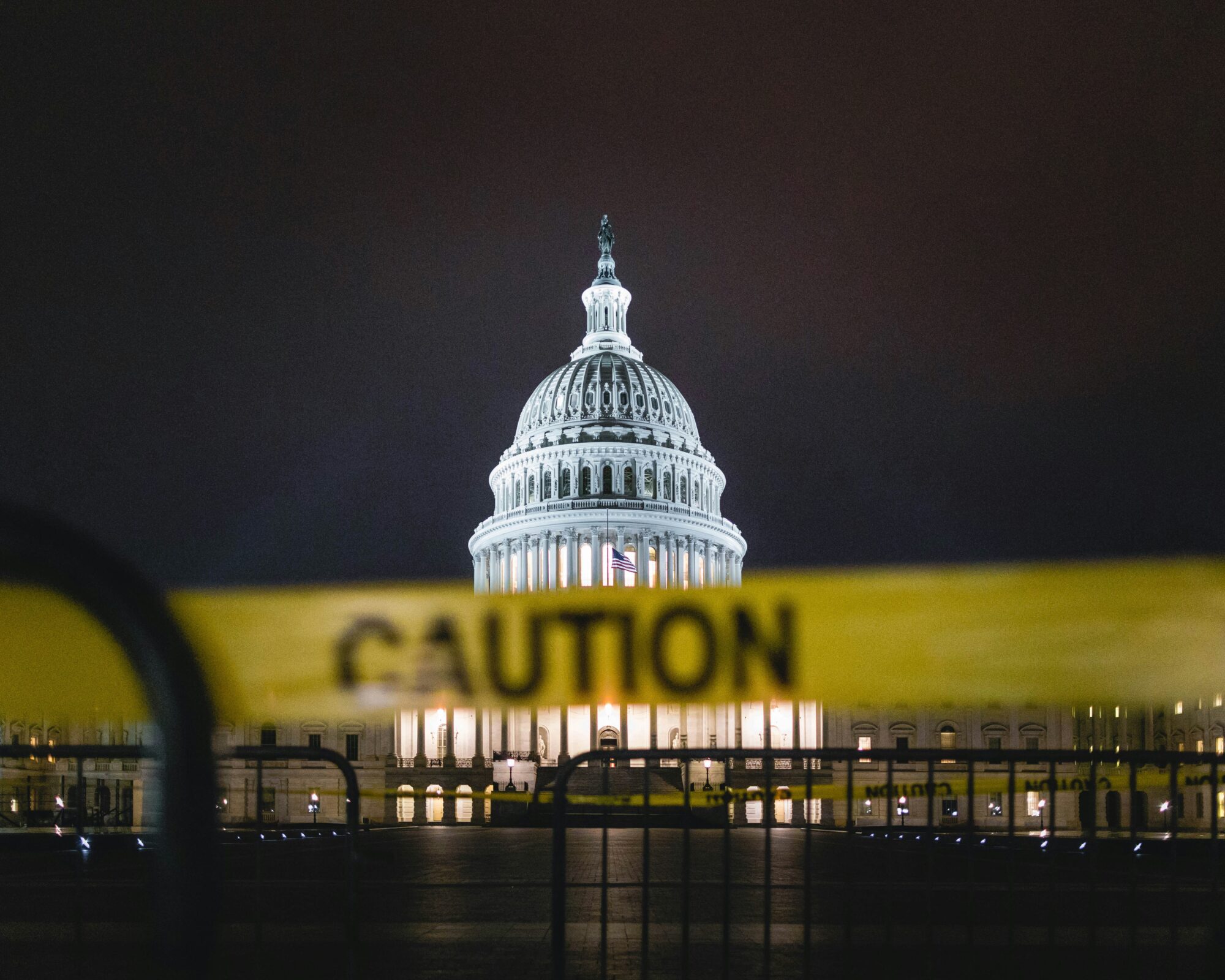
* Photo by Andy Feliciotti (Unsplash), Creative Commons Zero License
Your central idea that democratic stability depends on a shared belief in legitimacy reflects a deeper issue: the gap between institutional truth and public perception. Steven Levitsky and Daniel Ziblatt highlight mutual toleration and institutional forbearance to democratic norms. However, the claims of a “rigged” election in 2020 completely undermine both of these norms. Political opponents become hateful enemies rather than friendly competition and election rules are no longer accepted as legitimate. Your argument perfectly portrays how democracy can erode even without outstanding institutional failure. When truth becomes unstable, democratic judgement collapses, according to Hannah Arendt. Factual truth is actively becoming fragile in modern-day politics. Instead, political narratives and bias-based agendas are replacing factual evidence. Instead of being verified, truth s merely becoming politically constructed. This is completely transforming how reality is being experienced politically. If American citizens continue to collectively distrust election outcomes, electoral accountability erodes. Overall, your post emphasizes a significant issue in modern politics: the most secure democratic processes may no longer be enough if citizens cannot trust what is true.
The illusory truth effect is the most interesting part of this post because it shifts the question away from why people are gullible and toward why repetition works regardless of accuracy. When you add the elite amplification argument on top of that, the structural advantage sits entirely with misinformation. The closing point is also worth emphasizing. Secure elections and legitimate elections are not the same thing, and that gap is where democratic erosion actually happens.
*additon to the above comment* Institutions can function exactly as designed and still fail to maintain public trust if the information environment surrounding them is broken enough, which is what makes the 2020 case so useful for understanding how modern democratic erosion actually works.