 Mobilization of the youth for political gains is not a foreign concept for politicians. The Global Youth Participation Index puts global election and mobilization participation in 140 different countries at 54/100. Even though 54 is a “failing” grade, where just over half of those who are eligible are participating, some countries might be reconsidering mobilizing Gen Z.
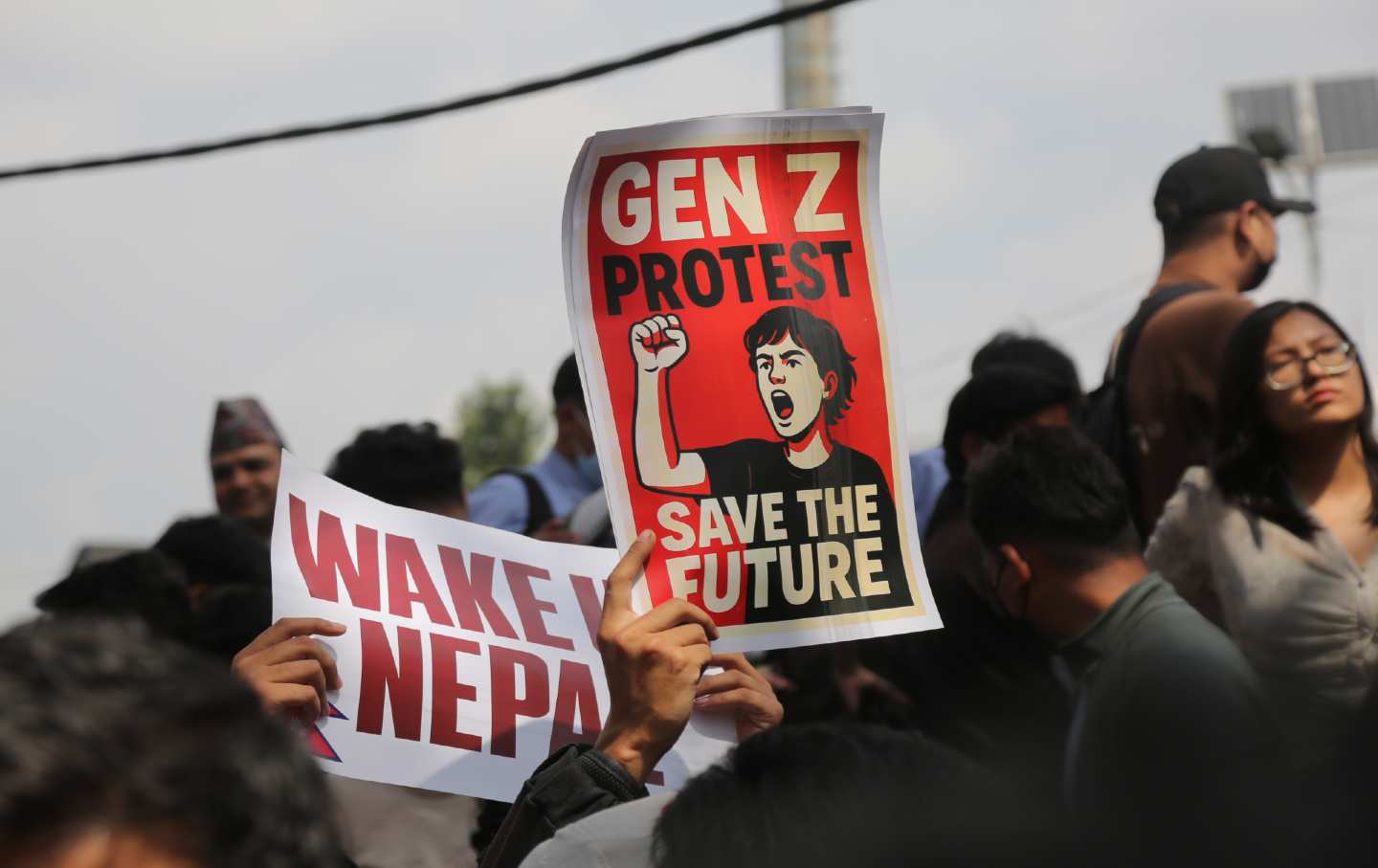
Across the globe, mass protests have been popping up all over the world. Gen Z has been on the forefront. Nepal, Bangladesh, Morocco, and many other countries have been witness to the 90s and 2000s kids standing up to government corruption.
With nicknames such as “generation anxiety” and “iGeneration,” it seems that this demographic has been given the technological tools and fear for their future to stand on their own soap box. They will be heard. There will be change. It starts now.
So why now? For a generation that cannot escape a constant stream of news, how do we determine what the breaking point is? The answer is, we know. Gen Z has been saying what it is they want for their future. The institutions are not listening. The next move: make it impossible to be ignored.
Reports from V-Dem have shown that 2024-present day has had major backslides in democratic institutions. 2025 has been determined to be the “year of protest.” There were over 148,000 protests across 70 different countries that held anti-government or anti-corruption sentiment.
If this corruption is so serious, what does it look like?
Corruption is not one-size-fits-all. It could be inappropriate use of taxpayer dollars, violation of human rights, election fraud and manipulation, or an office going beyond its allotted power. Either way, the government is not functioning properly and it is directly impacting the citizens of that given country.
Let’s look at some examples.
Montenegro 2020: it was revealed in the “envelope affair” that government officials had been taking bribes. Duško Knežević, a business man, claimed he provided funds to the Democratic Party of Socialists. These funds were used to help rig campaigns. It gave the impression of a free and fair election, when behind the scenes votes were being bought.
Bangladesh 2024: Prime Minister Sheikh Hasina, who had been in a position of power for 15 years, allegedly was a part of a major embezzlement scheme. The embezzlement is estimated at a conservative total of $16 billion dollars out of the country.
Indonesia 2025: After many instances of unlawful use of force by police, Indonesia has been violating human rights. Between August 25th and September 1st, thousands of protesters criticized the House of Representatives. During these protests, 4,000 people were arrested, more than 900 were assaulted with rubber bullets, water cannons, or tear gas, and at least 10 people died.
Is this generation going to save Democracy?
The last few years have shown a rapid decline in global democracy. V-Dem 2026 report notes that 74% of the global population in 2025 lived in autocratic regimes. For those who favor a democracy and what it has to offer, those numbers are startling. In 2005, only 50% of the global population lived in autocratic regimes.
Many of these protests, both big and small, have been overwhelmingly rooted with Gen Z. People always wonder what a protest can do. How is a mass assembly of people truly going to change the structure if the people in office have the power?
Gen Z does not give up. Bangladesh is a great example. In 2024 there was a student-led protest that was successful in removing Hashia’s government. In place, there was an interim government that had an anti-corruption goal. In February of 2026, the first election was held since the student revolution. This election had the biggest turn out in the country’s history, with the median age being 25.
Once one starts, others follow. Nepal had an anti-corruption mass protest in September of 2025. They were standing against the government ban on social media platforms and long term inequality. In February 2026, Balendra Shah, a 35 year old former rapper and mayor, won the election.
Gen Z has started doing what has been asked of the youth for a long time. Time and time again, politicians, lobbyists, and just in conversation say that the youth are not involved enough. Now that the youth is starting to show up, are these institutions regretting asking?
Even though each country has their own unique forms of corruption, there is one common message for Gen Z. “We are here and we will make a change.” With democratic values, human rights, and transparency being at the forefront, it appears we might be at the beginning of a global democratic resurgence.
This is an extremely intriguing post, particularly in how it shifts the traditional narrative- from teenage apathy to youth-driven resistance-and connects it to larger democratic tendencies. Your use of protest statistics and global examples creates a solid case that Generation Z is not only participating, but actively impacting political results.
Another intriguing conflict in your post is whether institutions are actually “regretting” adolescent engagement or adapting to control it. In certain circumstances, such as the persecution you describe in Indonesia, governments use coercion rather than accommodation. This is related to Nancy Bermeo’s observation that democratic backsliding nowadays frequently entails subtle and not-so-subtle efforts to suppress resistance without completely abandoning democratic structures. As a result, youth involvement can simultaneously spark democratic renewal and authoritarian retribution.
Your conclusion about a “global democratic resurgence” is convincing, but it begs a fundamental question: what happens after the protests? As scholars such as Guillermo O’Donnell have noted, democracy is built not only on participation but also on robust, responsible institutions. Do you believe Gen Z movements are developing the organizational and institutional ability required to sustain democracy after initial successes, or does enthusiasm fade after immediate aims are met?