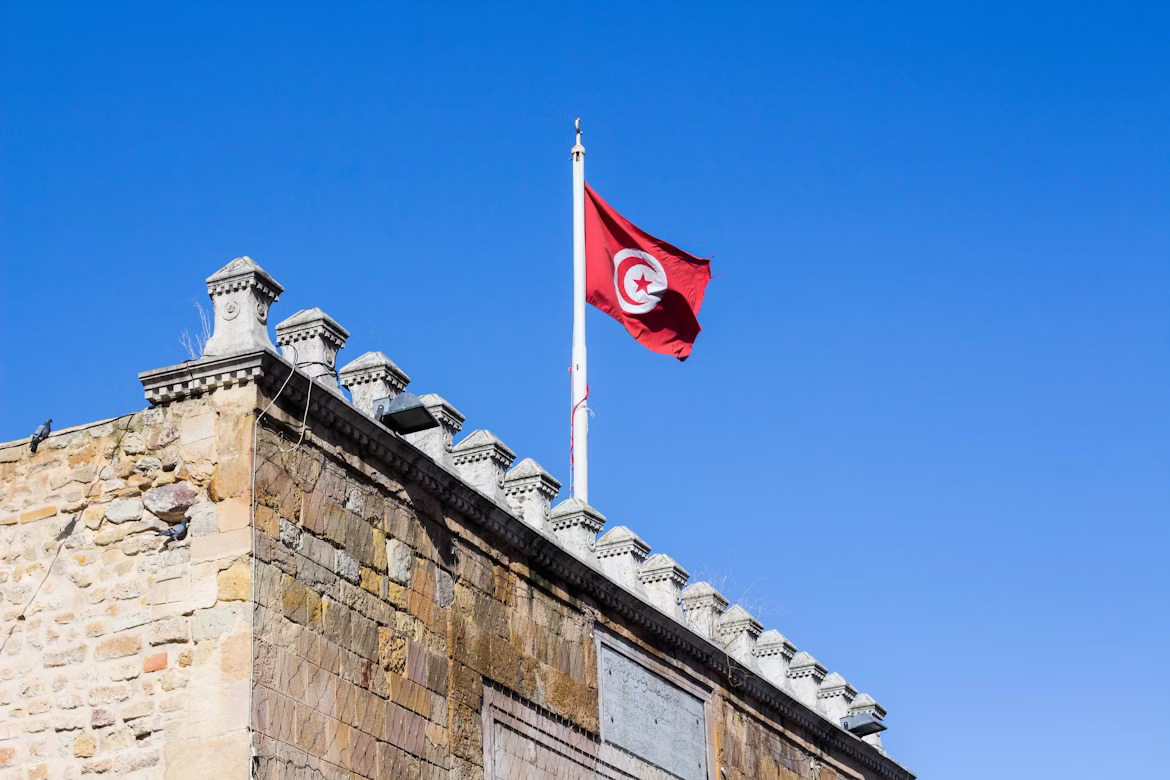
Photo by Brahim Guedich, Nov. 20, 2023; Unsplash license
On April 24, 2026, Tunisian President Kais Saied’s government suspended the Tunisian League for Human Rights (LTDH). This organization shared the 2015 Nobel Peace Prize for its role in saving the country’s democratic transition. The same day, authorities detained Zied el-Heni, the editor-in-chief of an independent news site, for a Facebook post criticizing a judicial ruling.
The suspension was framed as an administrative order, while the arrest invoked a cybercrime statute. Though neither move was framed as inherently political, the two actions together mark a notable milestone: Tunisia is no longer a democracy in any meaningful sense. It has become a competitive authoritarian regime, and the methods Saied deployed last week match precisely what scholars have identified as the defining mechanism of modern democratic backsliding.
The Mechanics of Legal Authoritarianism
Steven Levitsky and Lucan Way coined the term competitive authoritarianism in 2002 to describe hybrid regimes that hold elections but manipulate institutions so heavily that opposition cannot meaningfully compete. These regimes look democratic on the surface, but function very differently underneath. Tunisia has been drifting toward this category since Saied’s 2021 self-coup, when he suspended parliament and began ruling by decree. April 24 marks the most recent point deepening this drift.
The LTDH suspension is the more institutional of the two moves. The Tunisian League for Human Rights was founded in 1976 and is one of the oldest rights organizations in Africa and the Arab world. In 2015, alongside three other Tunisian civil society groups, it received the Nobel Peace Prize for its role in steering the country’s democratic transition following the 2011 revolution. The Saied government did not dissolve the LTDH outright; instead, it cited technical compliance issues to suspend the organization’s activities for one month. The LTDH itself called the suspension legally baseless and described it as part of an increasingly systematic effort to curb civil society and independent voices.
Banning the LTDH outright would generate international outcry and provide legal grounds for challenge. A one-month administrative suspension is harder to challenge in court and much easier to extend. This is exactly the pattern Levitsky and Daniel Ziblatt describe as the defining feature of contemporary democratic erosion: subtle, often legal weakening of critical democratic norms and institutions orchestrated by those in power under the guise of necessary reform.
Zied el-Heni’s arrest follows the same logic. El-Heni, a veteran journalist who has faced legal trouble before for his commentary, posted on Facebook criticizing a recent court decision against another journalist, Ghassen Ben Khelifa, who had just been sentenced to two years in prison. For that post, el-Heni was summoned by a cybercrime unit and then detained, with his trial scheduled for April 30. The legal vehicle being used against him, Article 86 of the telecommunications code, was not designed for press freedom cases, but is being used as one regardless.
This matters because of what it conceals. If the journalist had been arrested under a statute explicitly restricting journalistic freedom, the case would be an internationally legible attack on the press. Using a cybercrime law instead reframes the same act as a routine criminal investigation.
Saied has built the architecture for this kind of regime methodically over five years. Saied has restructured the electoral commission and personally appointed all seven of its members. The independent judiciary has been steadily hollowed out. He has detained opposition candidates ahead of elections, and Freedom House rates Tunisia’s “free and fair elections” score as a 0/4. What has been largely underwhelming is the operational deployment of these tools against the institutions that anchor civil society until now.
The Threshold Question
There is an objection worth taking seriously. One might argue that a single week of repressive actions does not constitute a regime change. The LTDH has not been permanently closed, and Tunisia still holds elections. By that logic, the events of April 24 are bad but not categorical.
This objection misunderstands how competitive authoritarianism works in practice. The category does not require that every civil society group be closed or every journalist be jailed. It requires establishing a credible expectation that critics can be silenced at any time through ostensibly neutral legal mechanisms. The LTDH suspension and the el-Heni arrest established that expectation in a way no prior single action did. They are public demonstrations that the cost of organized opposition is now arrest or shutdown, even for the most established and internationally legitimate actors.
The implications extend beyond Tunisia. The country was the only Arab Spring country to produce a working democracy. For nearly a decade, its survival served as evidence that a democratic transition was possible in the region. Its collapse now serves as evidence of the opposite. Saied has shown that a democratically elected leader can dismantle a Nobel-recognized civil society infrastructure within a single week, using little more than a cybercrime statute and an administrative suspension order. Other elected leaders watching from elsewhere will be paying close attention.
0 Comments