One of the main campaign promises made by the Trump campaign was to bring prices down for everyday Americans. He promised (and failed to deliver) sweeping economic reforms, the implementation of protectionist policies, and a return to an era of “America First” manufacturing. While his promises resonated with the millions of Americans struggling to make ends meet, his implementation of these policies has not just been lackluster but harmful to America’s economic future as a whole. Now, with the escalation of a major conflict between the United States and Iran threatening to torpedo an already volatile market, many economists predict another recession in the next few months. But how does economic mismanagement and an oil blockade have anything to do with failing checks and balances?
How We Got Here
Three months after President Trump was sworn into office, he announced a series of unprecedented foreign tariffs on a date he named “Liberation Day.” Invoking the International Emergency Economic Powers Act after having declared a national emergency surrounding America’s trade deficit, President Trump rattled off country after country in an erratic press conference at the White House. These tariffs stunned experts, who didn’t see how broad, untargeted global tariffs that affect nearly every nation in the world—both friend and foe—could possibly be good policy. Traditional thinking around tariffs indicates that they are a tool to be used in specific, targeted instances, often either against foreign adversaries (as Trump did against China in his first administration) or to promote some kind of domestic manufacturing base. Certainly, announcing tariffs against the majority of the world’s imports into the United States has not had the effect that Trump envisioned it would. Prices on nearly everything have increased substantially since the implementation of Trump’s tariff plan, and that’s not a coincidence.
The Court Responds
Ten months after their implementation, the Supreme Court struck down Trump’s tariffs as unconstitutional. In a 6-3 decision, the court ruled that Trump overstepped the power given to him under the IEEPA, though they refused to rule on whether or not American companies and businesses should be refunded the duties collected on them while the tariff plan was in effect. In a dissenting opinion, Justice Kavanaugh indicated that the federal government might be required to return the money it collected unlawfully, a process he said, “could be difficult.” Perhaps the understatement of the year, Your Honor. Immediately following the decision, Trump responded by giving a press conference in which he indicated his disappointment with the court’s decision. He then indicated that he would attempt to continue enforcing the tariffs even after the court ruled against him.
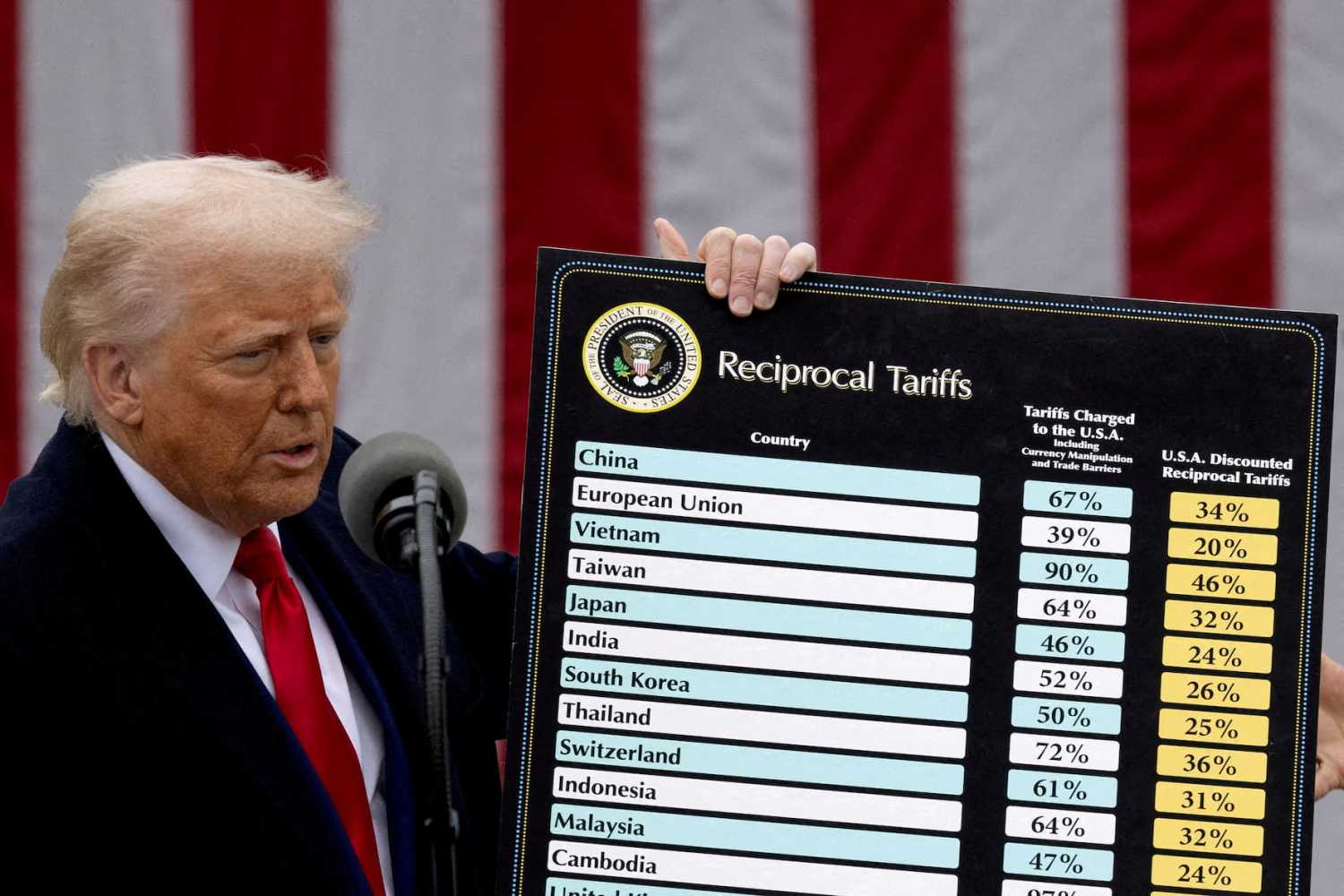
Trump announces his global tariffs initiative aiming to bring manufacturing back to the United States
Okay? That’s Not Any Crazier Than Anything Else He Says
The fact that such a combative and disrespectful response didn’t generate more controversy, especially from members of Congress, is extremely concerning. Not only does it reinforce Trump’s lack of respect for checks and balances (a fact we already knew), but it also shows a worrying trend in which the president is increasingly tempted to act on those impulses and use executive power to completely supersede judicial or legislative authority. Further, his subordinates, cabinet members, and supporters are all willing to go along with the farce so long as they can use it as a way to curry favor with the president. Now, one might think that this is simply the next in a long line of dubiously legal moves from the president. I believe it represents something more: a complete change in course from Trump I to Trump II. No longer is the president interested in stacking the courts and the legislature with political loyalists. His recent actions indicate he doesn’t even consider the other branches of government to be his equals, worthy of devoting time to.
The Executive Branch Aligns With Trump
The “Do It Anyway” model doesn’t just apply to Trump himself, either. His subordinates have adopted the same imprudent and callous model of leading. In a recent hearing in which Tulsi Gabbard, the Director of National Intelligence, was brought before the Senate, Senator Ossoff was stunned by her impertinence. Again and again, the senator asked Ms. Gabbard whether Iran posed a real, credible threat to the United States at the time that the president (without congressional approval) attacked Iran. She refused to answer him, even going so far as to tell him it wasn’t her responsibility to assess national security threats. As the Director of National Intelligence. Huh? This is the problem. When the Attorney General, Pam Bondi, appeared before the Senate, she said with a straight face that there’s not a single document in the Epstein Files that suggests that Trump committed a crime. The only reason Bondi can argue such a ridiculous position is that she knows she won’t face a single perjury charge. There is no taking them seriously. No serious, professional person could stand before the Senate and argue that the main reason their job exists “isn’t in their job description” unless they believed they would face absolutely no repercussions whatsoever. She truly seemed to believe that Congress is powerless to stop Trump and, by extension, powerless to hold her accountable.
I think that your post really highlights the extreme disregard for institutional checks that have existed for almost 250 years. In any other administration there would be extreme pushback on the blatant disregard for judicial rulings and congress. But in this age where Congress is stacked with Trump loyalist and the Supreme Court can only send a strongly worded letter, Trump has only been embolden.
You also give a great breakdown of the detrimental economic policy that this administration has laid out. And this only furthers the weakening of vertical accountability as US citizens have to now do more with less.
I really appreciate your point on executive overreach being treated as normal political behavior and the major implications of such. The fact that Trump has the power to challenge the authority of Congress only gives his followers and subordinates more reason to turn their backs on the checks that existed long before their terms. Of what use are meticulously designed policy rulings and procedural checks when the executive branch can simply refuse to cooperate? Congressional oversight has started to feel almost more symbolic than effective.
It also makes me more concerned about the economic implications tied to this issue. Tariffs and military escalations should not just be treated as independent policy decisions for politicians to manipulate based on personal interests. When a single extra digit being applied to tariffs directly affects the lives of American citizens (from the prices of groceries to fluctuating stocks) even being able to remedy the problem later may already be too late. I think your post really shows that failing checks and balances don’t just weaken democracy in theory but also allow real and lasting economic harm to occur before we have the chance to intervene.