There is a peculiar irony at the heart of what is happening to NATO right now. The United States, the alliance’s founding architect and long-time guarantor, has spent the better part of the last decade making clear that it is running out of patience with the arrangement. What began as a dispute over burden-sharing has curdled into something more destabilizing: a slow but unmistakable withdrawal from the very idea of collective Western defense. For European capitals, it has been a rude awakening.
The instinct is to read America’s backsliding as an unambiguous disaster for Western security, and in certain respects, it is. The deterrent that kept Russian expansionism in check for seventy years was underwritten by the credibility of American military commitment. But the full picture is more complicated.
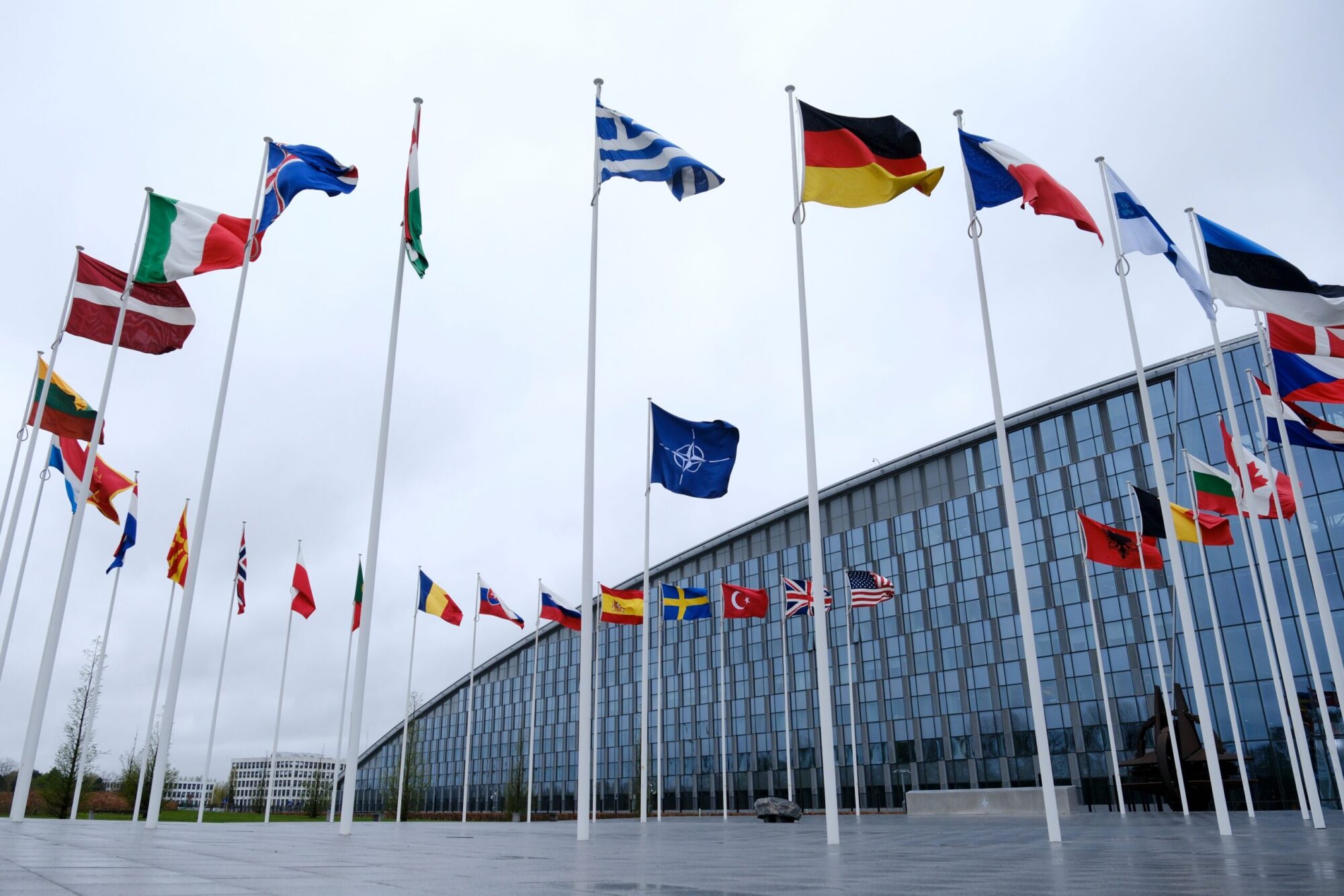
NATO Headquarters in Brussels, Belgium
Pressure has a way of producing institutional change that comfortable dependency never could. And if Europe is finally being forced to take its own defense seriously, the long-term consequences may be more generative than the short-term disruption suggests.
The Dependency That Made Europe Comfortable and Complacent
For most of the Cold War and its aftermath, Western European democracies operated under an implicit bargain: America underwrites continental security, and Europeans focus their energy on economic integration and democratic institution-building. By most measures, it worked. The EU grew into the world’s largest single market. Wars between member states became unthinkable. Democratic norms spread east.
The cost was a creeping atrophy in Europe’s capacity to defend itself. Defense spending stagnated. European militaries became, in many cases, supporting actors to American-led operations rather than independent actors. This wasn’t just a budget problem. It reflected a political culture that had quietly internalized American protection as a permanent and costless feature of the international order.
The Numbers Are Already Changing
What the past few years have shown is that external pressure forces a kind of response that even long-standing diplomatic norms can’t achieve. Since Russia’s full-scale invasion of Ukraine in 2022, and accelerated by Washington’s growing unreliability, European defense spending has risen at rates that would have been politically unimaginable five years ago. According to a recent SIPRI report, European military spending rose 14% in 2025 alone, reaching $864 billion and making Europe the primary driver of record global military expenditure.
Germany is the most striking example. A country whose postwar identity was built in part around the explicit rejection of militarism amended its constitution to exempt defense spending from its strict debt rules and now plans to nearly double its defense budget to €162 billion by 2029. As Chatham House notes, this represents a genuine cultural and political shift, not just a line-item adjustment. Poland, Sweden, and Finland have moved with similar urgency. At the 2025 NATO Summit in The Hague, every single alliance member met NATO’s 2% GDP spending target for the first time since the alliance was founded.
The EU’s ReArm Europe plan, launched in March 2025, aims to mobilize up to €800 billion in additional defense investment by 2030, the most ambitious coordinated defense push in the bloc’s history. These are not small adjustments. They are structural changes, and they are happening because Europe has little choice.
Democratic Resilience as a Strategic Asset
The implications go beyond defense budgets. One of the underappreciated consequences of American disengagement is the pressure it places on European democracies to answer questions they have been avoiding for a long time: What does Western liberal democracy actually stand for? What is it willing to defend, and at what cost? For most of the post-Cold War era, these questions could be deferred because the answer was effectively outsourced to Washington.
Democracies that are required to defend themselves, to make genuine public arguments for why collective defense is worth the cost and why the rules-based international order serves ordinary citizens, are democracies that are forced to build civic strength that comfortable dependency tends to hollow out. Political scientists have long argued that democratic backsliding is most likely in environments where institutions are not actively challenged and therefore not actively defended. The urgency now confronting European democracies may be exactly what is needed to reinvigorate a democratic culture that has grown a little too comfortable.
The Russian Threat
For much of the past two decades, the European project has been under sustained pressure from multiple directions at once: the financial crisis, Brexit, the rise of far-right nationalist parties, and persistent disagreements over fiscal policy and rule-of-law enforcement. These centrifugal forces are real, and they have raised legitimate questions about whether European integration can hold.
Here is the thing about shared threats: they tend to suppress internal divisions in ways that good-faith diplomacy often cannot. The Russian threat has already demonstrated this, bringing historically fractious European partners into closer alignment on sanctions, military aid, and the broader question of what Europe’s eastern border ultimately means. American disengagement adds urgency to this process by removing the option of free-riding. When there is no guarantee that Washington will show up, the logic of deeper integration becomes considerably harder to resist. The Bruegel think tank estimates that defending Europe without the U.S. would require 300,000 additional troops and an annual spending increase of at least €250 billion. Those numbers make a compelling argument for coordination over national silos.
An Uncomfortable Reality Moving Forward
None of this is to minimize the real risks. The window of vulnerability created by American disengagement is genuine, and Russian miscalculation during a period of NATO uncertainty is not a theoretical abstraction. Critics also rightly point out that without coordination, national spending surges risk producing fragmentation rather than collective strength, a concern analysts at CSIS have raised explicitly.
But the longer arc of what is happening may ultimately be more constructive than the immediate disruption suggests. Europe is being forced, for the first time in living memory, to answer foundational questions on its own terms. What is it willing to sacrifice to defend its way of life? What kind of power does it want to be in the world? These are not “comfortable” questions. They are, however, the right ones. A Europe that has to answer them honestly, through genuine strategic necessity rather than the comfortable assumption that someone else will handle it, may well emerge from this moment more coherent, more resilient, and more genuinely sovereign than before. The country whose retreat poses the greatest immediate threat to European security may also be, inadvertently, the catalyst for the most significant strengthening of that security in a generation. History has a way of working like that.
0 Comments