
On February 4, 2024, Nayib Bukele was reelected as President of El Salvador for a second consecutive term. Bukele claimed that he had received over 85% of the vote nationwide. To an outsider unaware of El Salvador’s constitutional technicalities, this election may seem like a clear democratic mandate. Objectively, the nation was pleased with the first government of Bukele, given his large vote share, which was slightly less than he claimed, at 83%, but what is important is that, in the first place, he was not meant to be on the ballot.
The constitution of El Salvador had previously banned the reelection of incumbents and former presidents, as the highest law of the nation intended that each President serve one term of 5 years and then leave public office, or at least that role. Of course, this is not the current case in El Salvador, as Bukele has not stepped down and has been in office since 2019. To retain power, the administration and allies of Bukele have removed the checks and balances that restrained executive power in El Salvador, not through an overnight military coup, but through institutions and mechanisms that make the actions legal. Bukele remains a highly popular leader, with strong approval ratings, which suggests that executive consolidation of power can be achieved while retaining significant public support. Nations will choose authoritarian leadership, surrender checks and balances, and constitutional continuity, for a popular leader.
Prior to the administration of Nayib Bukele, El Salvador had some of the highest rates of crime throughout the world. Gangs such as MS-13 had control over significant territory throughout the nation. Violence and danger ravaged the nation, and leaders failed to stop the crisis. Throughout Niyab’s first campaign, the President promised to address the violence nationwide immediately. For example, in March 2022, violence, inspired by violent gangs, occurred throughout the country.
Bukele responded by asking the legislature to grant the President emergency powers to address the situation, which led to a significant decrease in reports of gang violence, allowing citizens to exercise their daily lives with significantly less violence. These emergency powers, though they removed the element of violence, gave the executive significant, unchecked power.
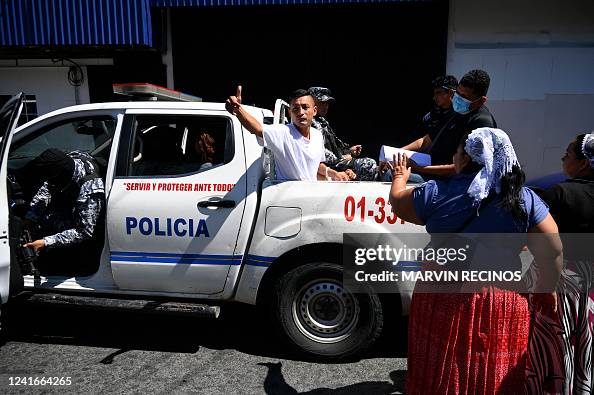
The government implemented a policy of mass arrests, often warrantless, which overwhelmed the already overcrowded and inhumane prisons. During this time, the police were authorized to arrest citizens, often only on suspicion of gang affiliation, with no counsel. Over 80,000 Salvadorians were arrested during this period, which is still ongoing, resulting in the nation holding the title of the highest rate of incarceration. Over 500 detainees have died in custody due to the conditions of the nation’s prisons, and thousands of innocent individuals have been arrested, with no due process.
The homicide rate in the nation has significantly dropped as a result of this crackdown, and gangs have lost significant influence and territory in El Salvador. The primary goals of the crackdown were achieved, a poignant reason why Bukele retains high approval ratings. Democratic erosion does not occur because citizens decide to blindly lose their civil liberties and institutional democratic norms; they choose their safety and lives, resolving the immediate danger rather than long-term democratic stability.
Executive aggrandizement is the process by which a democratically elected executive leader chooses to weaken the nation’s checks and balances without fully suspending the very institutions that brought them to power. Leaders use legal mechanisms and influence to dismantle the nation’s democratic institutions from the inside, which is when democratic erosion occurs. For example, after Bukele’s political party won a supermajority in 2021, they instantly fired the nation’s independent attorney general and members of the El Salvadoran Supreme Court, and replaced them with more favorable figures. Months later, the Supreme Court of El Salvador issued a major ruling, interpreting the nation’s constitution to allow consecutive elections of incumbent presidents.
Although all of these actions were protected by the law, due to the supermajority requirement, there were enough members of parliament to fire both the nation’s attorney general and the Supreme Court justices. The new Court was able to interpret the nation’s Constitution as it wanted, resulting in a favorable ruling for the Bukele administration and allowing him to run for reelection. Throughout the 2022- present state of emergency, the government accused investigative journalists of espionage, targeting them for their reports of human rights violations. The legislature also approved significant changes to the way elections are held in El Salvador, redistributing parliamentary seats, punishing opposition parties, and advantaging the ruling government.
Bukele won reelection in a landslide in 2024, with a strong public mandate, thanks to a Supreme Court and Election Council appointed by his administration. A high vote count is not the same as a healthy democracy with strong checks and balances, a free media, and strong civil liberties. Any checks that Bukele could receive from national courts have been altered by a packed court in the President’s favor, and the media is threatened with legal action by the government if any criticism is reported, as was the case in 2022. El Salvador should be treated internationally as a warning to democracy about how charismatic leaders who retain popular support can gain access to weakening democratic institutions.
0 Comments