
Can a nation surrounded entirely by autocratic giants keep its democracy alive when internal corruption threatens to pull it apart? Sitting directly between Russia and China, Mongolia stands as one of the most remarkable political anomalies of the post-Cold War era. Following its peaceful 1990 revolution, the country broke away from decades of single-party rule to construct a vibrant multiparty system. Long-term data from the V-Dem Institute shows how Mongolia rapidly transformed from a closed autocracy into a top-tier electoral democracy, consistently maintaining high marks for civil liberties, press freedom, and open elections.
Yet, democratic survival in a hostile geopolitical neighborhood requires continuous internal self-correction. In recent years, increasing public outrage over high-level corruption, economic inequality, and legislative gridlock threatened to destroy popular faith in democratic rule. Facing severe public discontent, many newly formed democracies fall into executive overreach, concentrating power in the presidency, suppressing alternative voices, and removing institutional safeguards. Mongolia took the opposite path. In May 2023, lawmakers enacted significant constitutional and electoral reforms that expanded parliament and introduced proportional representation. Mongolia’s bold self-correction offers a vital lesson for comparative politics: democracies facing systemic decay can prevent backsliding not by concentrating executive authority, but by intentionally broadening legislative representation and decentralizing power.
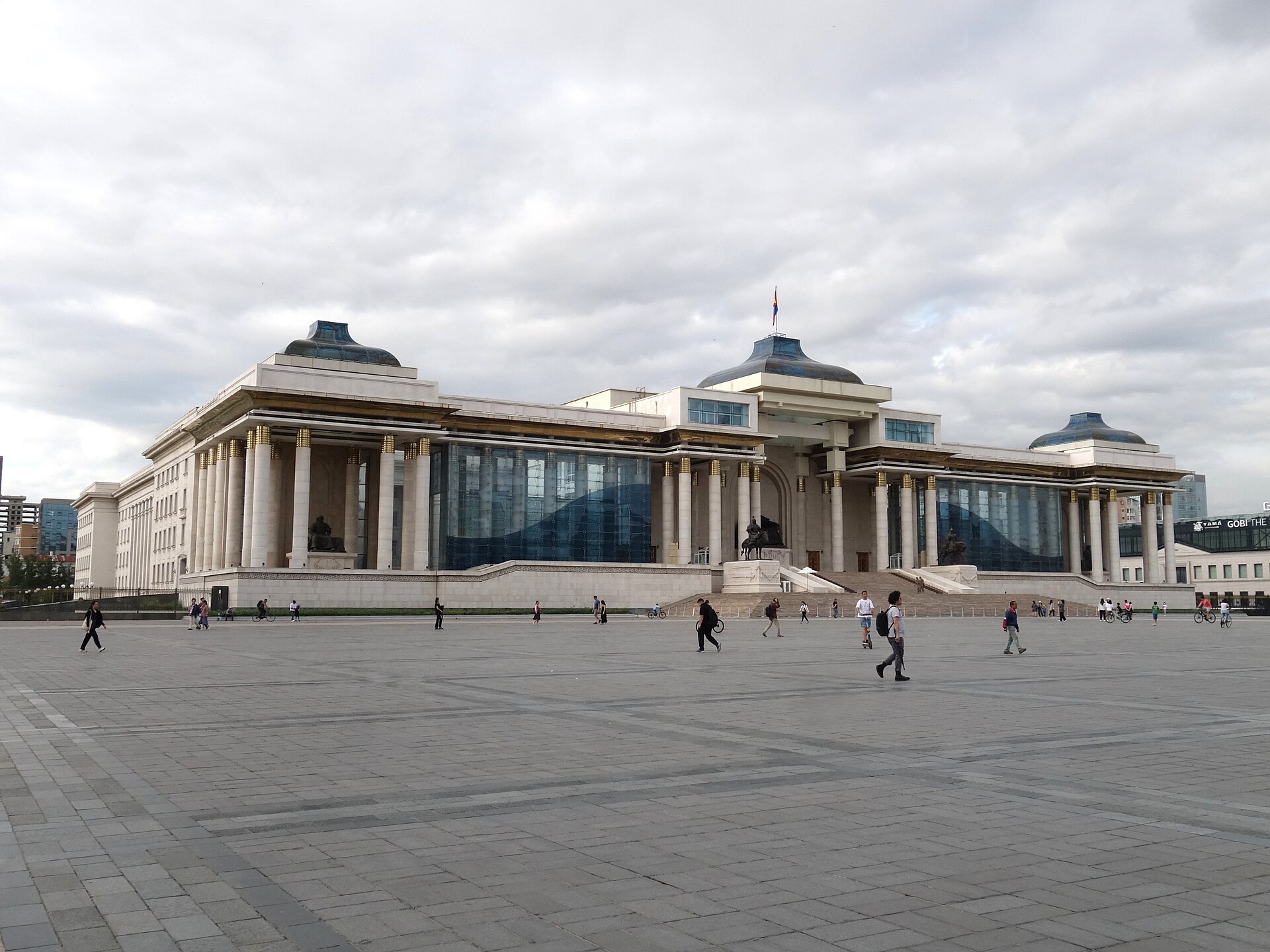
The Roots of Crisis: Wealth, Discontent, and Elite Capture
Understanding why Mongolia’s 2023 reforms matter requires examining the systemic vulnerabilities that endangered its democratic stability. In Seymour Martin Lipset’s classic theory of modernization, economic growth, urban development, and rising education create a middle class that stabilizes democratic competition. However, when economic expansion is driven primarily by concentrated natural resource extraction, as in Mongolia’s mining boom, the financial rewards often flow directly into narrow political and corporate networks. Rather than benefiting the wider public, resource rents reinforced clientelist networks that further widened the gap between everyday citizens and governing institutions.
This wealth concentration generated severe political distortions. Under Mongolia’s traditional majoritarian electoral setup, running for parliamentary office required staggering campaign funds. Affluent business figures and well-connected party elites easily bought up local single-member districts, effectively locking out minor political parties, youth movements, and female leaders. As Freedom House highlighted in its annual reports, while elections remained competitive, deep-seated corruption and economic inequality repeatedly tested the country’s democratic resilience.
When individuals decide that democratic politics exclusively benefits well-connected insiders, popular support for democratic standards declines. Left unresolved, public dissatisfaction provides fertile ground for anti-system populists who promise quick results by demolishing institutional barriers.
How Democracies Perish: Subversion from Within
In modern comparative politics, democracies rarely fall to violent military coups. Instead, as political scientist Nancy Bermeo documents, modern backsliding occurs through gradual, legalistic subversion. Candidates manipulate election rules, centralize executive power, and undermine accountability mechanisms while maintaining an illusion of legality. Legal scholars Aziz Huq and Tom Ginsburg call this process “constitutional regression”, which is a slow, imperceptible erosion of competitive elections, speech rights, and institutional checks.
As Steven Levitsky and Daniel Ziblatt demonstrate in How Democracies Die, democratic backsliding frequently begins when political elites secretly remove unwritten norms of mutual tolerance and institutional forbearance. When parliamentary structures become unresponsive or captured by private interests, voters grow disillusioned with legislative deliberation altogether and become far more accepting of executive power grabs in exchange for decisive policy action.
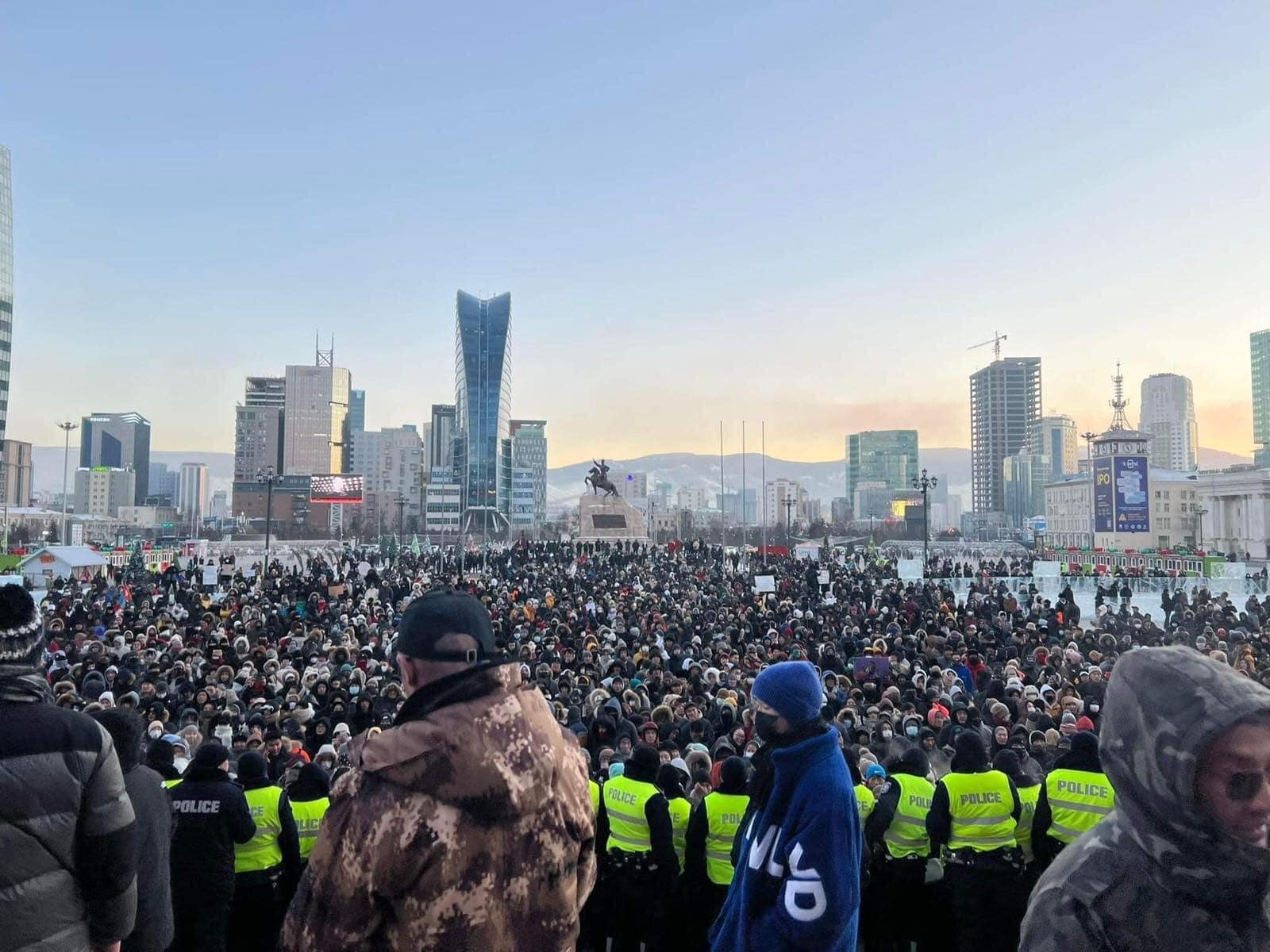
Prior to 2023, Mongolia was showing concerning signs of this trap. Mass street protests erupted outside the parliament building in Ulaanbaatar following revelations that billions of dollars in state coal revenues had vanished into private pockets. Within the legacy 76-seat assembly, small political majorities could easily hijack legislative committees, shield allies from prosecution, and block key policy reforms.
Historical Foundations: Choosing Parliament Over Autocracy
Mongolia’s structural response to this crisis stems from its distinct democratic history. As political scientist M. Steven Fish emphasizes, Mongolia’s initial post-communist success was deeply unexpected. Despite severe economic hardship, geographic isolation, and no prior history of democratic governance, Mongolia built a surprisingly durable system by choosing a strong parliament over a powerful executive.
Fish notes that while neighboring post-Soviet Central Asian states constructed hyper-presidential regimes that quickly degenerated into dictatorships, Mongolia made lawmaking discussions a central part of its government. This constitutional design forced political elites to practice power-sharing, build cross-party coalitions, and process conflict openly in parliament. The 2023 reforms directly honor this tradition: when faced with a crisis of public trust, Mongolian leaders chose to revitalize legislative representation rather than grant emergency powers to the executive.
Inside the 2023 Reforms: Mechanics of Democratic Shielding
To fix its unrepresentative parliament, the Mongolian legislature passed major constitutional amendments in May 2023. As analyzed by Bolor Lkhaajav in The Diplomat, the reform fundamentally restructured the State Great Hural along two main lines: first, expanding assembly size from 76 to 126 seats; second, introducing a mixed electoral model where 78 members are elected via local single-member districts and 48 members are selected through party-list proportional representation.
From an institutional design perspective, this structure serves as an active shield against backsliding. As Jennifer Gandhi observes, how an assembly is organized affects whether it truly represents the people or simply approves decisions without questioning them. Increasing parliament to 126 seats reduces the influence of individual wealthy groups and makes it harder and more costly for powerful businesspeople to control parliamentary committees.
Simultaneously, party-list proportional representation lowers the entry costs for non-traditional candidates. By requiring both genders to alternate directly down proportional candidate lists through zipper quotas, the reform gave women, younger policy experts, and new political parties an institutionalized path into parliament, ensuring structural inclusion rather than relying on party elites’ benevolence.
In theoretical terms formulated by Robert Dahl, a stable polyarchy requires both broad inclusiveness (participation) and energetic public contestation (competition). By pairing direct local accountability with proportional entry, the 2023 reforms expand both dimensions simultaneously. This institutional restructuring reinforces horizontal accountability—the capacity of state networks to oversee and constrain elite power internally. Expanding the legislative body prevents individual oligarchic coalitions from dominating key oversight committees, ensuring that the assembly remains a venue for genuine deliberation rather than private interest capture.
Conclusion: What Mongolia Teaches the World
In Anna Lührmann and Staffan Lindberg’s global study of democratic decay, it warns that today’s “third wave of autocratization” is uniquely dangerous because it operates under legal guises. Elected authoritarian leaders use weaknesses in the political system to gradually gain more power. Mongolia shows how democratic systems can resist this and protect democracy. This proactive adaptation fits the core insight of political theorists Philippe Schmitter and Terry Lynn Karl: democracy is not a static set of rules, but an evolving matrix of institutional practices tailored to solve specific social conflicts. Democratic durability depends on a system’s ability to reform its internal mechanics when power becomes concentrated or exclusionary.
To be sure, formal constitutional fixes cannot solve every problem overnight. Wealthy elites may still attempt to dominate internal party nomination lists, and structural political reforms cannot instantly shield Mongolia from foreign economic pressure or regional autocratic powers. Nevertheless, by responding to political frustration with institutional expansion rather than executive repression, Mongolia has demonstrated that democratic institutions can successfully adapt to survive.
As tracking tools from V-Dem and Freedom House confirm, maintaining a healthy liberal democracy is never a finished product. In an era of global democratic backsliding, Mongolia proves that when a government responds to political crisis by opening its doors wider to its citizens, democratic governance can remain, in every true sense, “the only game in town”.
0 Comments