
A Democracy with a Boundary
What does an election mean to someone who cannot vote for the government shaping their life? Israeli citizens can vote for national leaders. Palestinians in the occupied territories generally cannot, even when those leaders exercise power over their lives. The gap exposes a democratic problem that domestic election results cannot resolve.
I argue that pressure on independent oversight inside Israel compounds an existing accountability gap for Palestinians under Israeli power. People excluded from national elections depend more heavily on other restraints on government. Weakening those restraints therefore threatens them especially. Israel can retain competitive elections while its wider exercise of power becomes less democratically accountable.
This claim would weaken if judicial changes preserved independent review in practice and Palestinians gained effective remedies against Israeli decisions. Meaningful self-government or equal representation would reduce the underlying gap. The argument concerns overlapping limits on accountability; it does not claim that judicial reform caused the occupation.
When Elections Are Not Enough
Electoral democracy centers on competitive elections. Liberal democracy also requires civil liberties, minority rights, and institutions that limit government power. This distinction explains why a government can win an election and still damage democracy afterward.
Freedom House’s 2026 Israel report, covering developments in 2025, rates the country “Free” at 73 out of 100. It records a March 2025 judicial appointments overhaul, scheduled to take effect after the next elections. The law replaces two bar association representatives with political appointees. The report also records the government’s attempted dismissal of the attorney general, which the Supreme Court overturned in December 2025.
Nancy Bermeo’s On Democratic Backsliding provides a framework for understanding this tension. Her concept of executive aggrandizement describes elected leaders weakening institutions that constrain their authority. Applied here, the question is whether changes to judicial appointments reduce independent scrutiny of government decisions. The court’s intervention also cautions against declaring that democratic checks have already disappeared.
This connects directly to our Week 6 discussion of stealth authoritarianism. In Stealth Authoritarianism, Ozan O. Varol examines how apparently legitimate legal mechanisms can help perpetuate political power. His framework asks us to examine what a law does, rather than treating its legal form as proof of democratic legitimacy. My application is that an appointments law deserves scrutiny if it makes judges more dependent on the politicians whose decisions they review. A controversial reform is not automatically authoritarian; its effects on independent oversight matter.
The mechanism matters: politicians who influence the selection of judges can potentially shape how their own decisions are reviewed. The attorney general ruling supplies important counterevidence, however. An institution that successfully blocks government action still exercises independence. The case shows a struggle over restraints on power, rather than their complete disappearance.
V-Dem’s November 2024 analysis reinforces the concern. Drawing on indicators through 2023, it reports Israel’s downgrade from liberal democracy and identifies deteriorating judicial and civil liberties indicators. This is evidence of an earlier trend, not a measurement of every development in 2026. Together, these sources support a qualified conclusion: electoral competition survives, while liberal safeguards face serious pressure.
Who Can Hold Power Accountable
The connection to Palestinian freedom begins with a limit in the democracy ratings themselves. Freedom House assesses Israel, the West Bank, and Gaza separately. Its Israel score explicitly excludes Israeli military and settler actions in the occupied territories. That separation is useful for comparing conditions, but a score for Israel alone cannot answer how democratic the broader relationship of power is.
It is also important to distinguish Palestinian citizens of Israel from Palestinians in the occupied territories. Palestinian citizens can vote in Israeli national elections, although unequal treatment remains a concern. Palestinians in the West Bank and Gaza face different governing arrangements and lack that national electoral voice. Their exclusion is not merely another example of recent backsliding: it is a longstanding problem of political membership and self-determination.
Freedom House’s West Bank report makes the inequality concrete: Israeli settlers retain citizenship rights, while Palestinian residents face military restrictions and limited political rights. The Palestinian Authority also represses critics and operates without a functioning legislature. Local Palestinian administration therefore does not establish either democratic self-government or accountability for Israeli power.
Here the course distinction between electoral and institutional accountability becomes useful. Voters can remove leaders; independent courts can review their decisions. Most Palestinians in the occupied territories lack the first route against Israeli leaders. Pressure on the second route consequently matters beyond Israel’s electorate. This is a mechanism to investigate, not proof that every judicial change has already reduced Palestinian access to justice.
Gaza makes the limits of political choice particularly stark. Freedom House’s 2026 Gaza report assigns the territory 2 out of 100 and classifies it as “Not Free.” It describes the absence of elections since 2006, Hamas’s suppression of criticism, and the hardships imposed by Israel’s blockade and military actions, alongside Egypt’s tight border controls. Responsibility is therefore distributed among several actors. Supporting Palestinian freedom must include opposition to authoritarian Palestinian governance as well as Israeli domination.
The United Nations humanitarian office’s data portal tracks casualties, demolitions, displacement, and Gaza crossings. These records do not independently establish a regime classification. Their democratic relevance is practical: displacement and restricted access can make it harder to meet, organize, and sustain political participation. Formal rights mean less when exercising them becomes unsafe or inaccessible.
What Free Palestine Should Demand
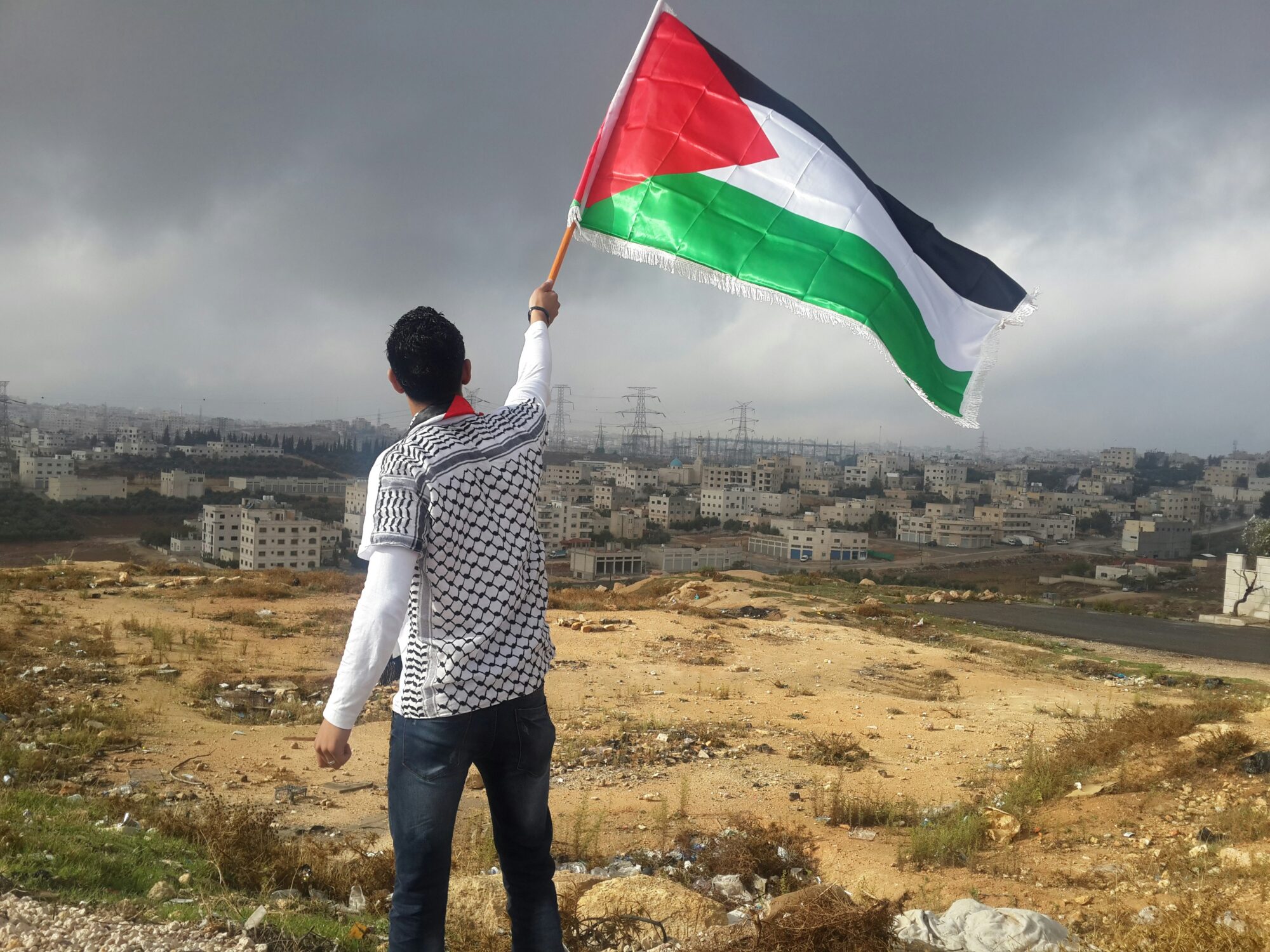
For me, “Free Palestine” means Palestinian self-determination, equal civil and political rights, and an end to indefinite occupation and political domination. It also means accountability for violence against civilians. Those principles require rejecting antisemitism, hostage-taking, and attacks on civilians, including Hamas’s October 7 attacks. Israeli civilians’ security and Palestinian freedom both deserve protection.
The strongest objection is that democracy should be assessed within citizenship boundaries, while military restrictions answer genuine security threats. Israel’s competitive elections and the Supreme Court’s intervention support taking its democratic institutions seriously. Yet this defense leaves a question unanswered: how can people subject to sustained Israeli power challenge it? Security measures require independent review, and Palestinian administration must provide meaningful self-government rather than merely manage life under external constraints.
A two-state settlement and a single state with equal citizenship offer different institutional possibilities. Neither becomes democratic simply because of its name. A Palestinian state would need accountable government and protections for dissent. A shared state would require equal voting rights and legal protection. The standard is whether the arrangement actually gives people political agency and limits those who govern them.
Democratic Renewal Requires Wider Accountability
The Supreme Court’s December 2025 intervention shows that Israeli institutions can resist government pressure. That resistance matters especially when people affected by state power cannot vote its leaders out. It also establishes a standard for judging future reforms: do they preserve effective, independent challenges to government decisions?
For me, Palestinian self-determination and Israeli democratic renewal are connected goals. Both require a meaningful voice and restraints on those who govern. A serious Free Palestine position should demand those protections from Israeli leaders, Hamas, and any future Palestinian government. Israel’s elections remain meaningful. Their democratic promise will remain incomplete while people subject to its sustained power lack an effective way to contest that power.
References
Arioli, S. (2024, November 28). Democracy in decline in Israel. V-Dem Institute.
Bermeo, N. (2016). On democratic backsliding. Journal of Democracy, 27(1), 5–19.
Freedom House. (2026a). Israel Freedom in the World 2026 country report.
Freedom House. (2026b). Gaza Strip Freedom in the World 2026 country report.
Freedom House. (2026c). West Bank Freedom in the World 2026 country report.
United Nations Office for the Coordination of Humanitarian Affairs. (n.d.). Occupied Palestinian Territory data.
Varol, O. O. (2015). Stealth authoritarianism. Iowa Law Review, 100, 1673–1742.
0 Comments