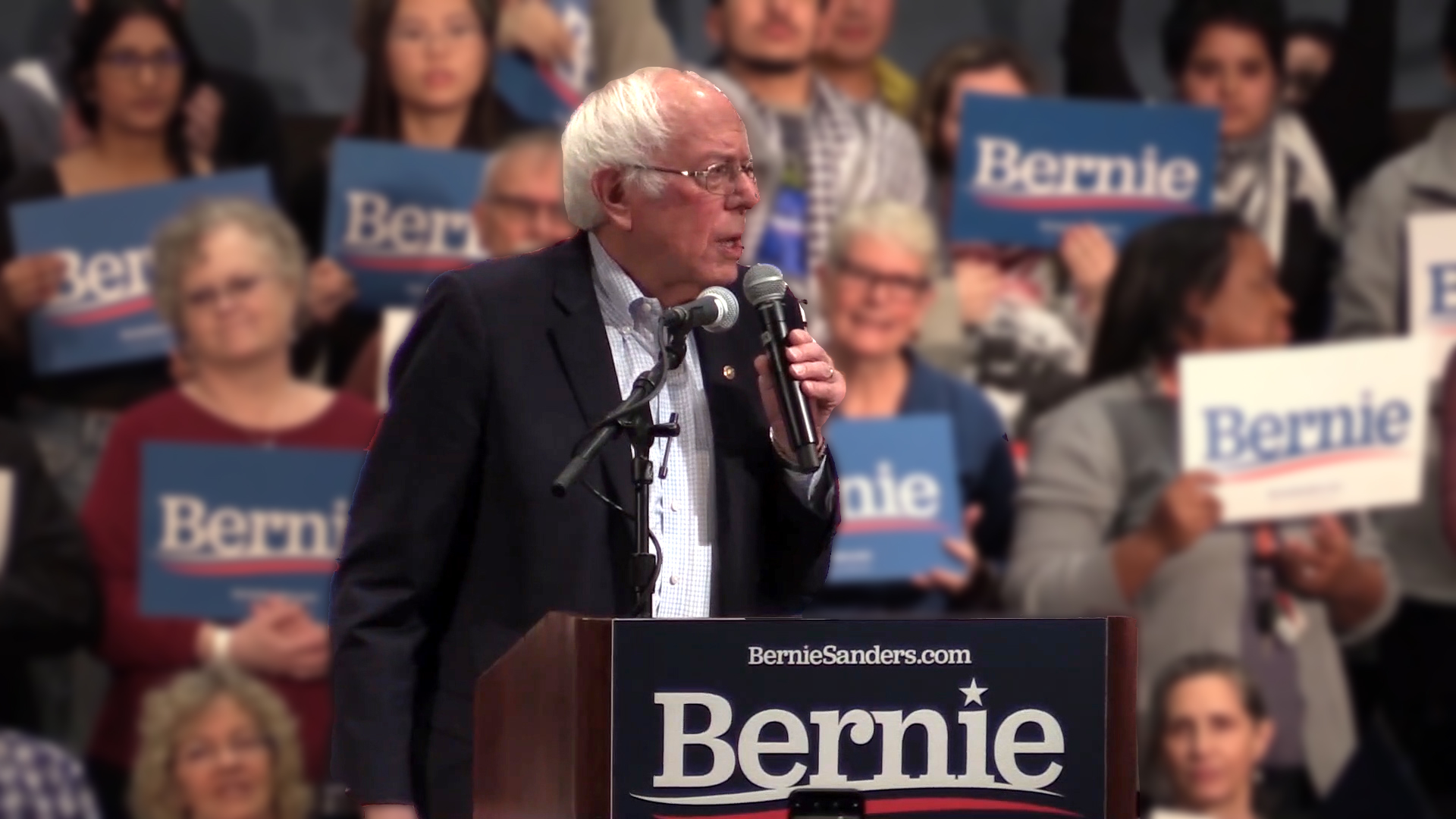
 Economic populism powered the blue wave of the United States’ 2026 midterms. Both moderate and progressive Democrats united around a narrative blaming Republican corruption for unaffordable goods.[1] Some Democrats, like Gina Hinojosa, Governor-elect of Texas, have embraced the populist label.[2] The effect of this populist swing has been to reduce the power of President Trump and his party, an important step to slowing democratic erosion by his administration.[3]
Scholars of democratic erosion have described populism as a kind of Manichean counterpart to democracy. Ginsburg and Huq call it “democracy’s dysfunctional cousin;”[4] Muller calls it democracy’s “permanent shadow.”[5] The blue wave raises an important theoretical question: under conditions of populist democratic erosion, can reclaiming populism be helpful for opposition movements, or is it evidence of a boomerang effect whereby the opposition also becomes antidemocratic? I will argue that populism is not inherently undemocratic nor antipluralist; rather, pro-pluralist forms of populism can be a powerful tool against anti-pluralist forms of populism.
I will rely on the definition of populism delineated by political scientists Mudde and Kaltwasser: as “a thin-centered ideology that considers society to be ultimately separated into two homogeneous and antagonistic camps, ‘the pure people’ versus ‘the corrupt elite,’ and which argues that politics should be an expression of the volonté générale (general will) of the people.” By “thin-centered,” Mudde and Kaltwasser mean that the term can be applied to many different kinds of political movements and actors, whether left or right. The key feature of populism is the construction of “the people” as a morally pure and monolithic whole, and the mobilization of their will against corrupt elites. Its opposite is pluralism, which views citizens as being made up of polycentric interest groups who compete and compromise for power.
Mudde and Kaltwasser argue that populism can be both “a friend and a foe of (liberal) democracy, depending on the stage of the process of democratization.” Ginsburg and Huq (2020) agree that “populism has a double-edged character” vis-a-vis democracy. While populism can legitimize erosion of horizontal accountability, it can also act as a democratic corrective under the right circumstances by giving voice to underrepresented constituencies and increasing vertical accountability.
Muller (2016), on the other hand, argues that populism is inherently bad for democracy. To do this, he clarifies that not all appeals to “the people” are populist; rather, populists must “claim that a part of the people is the people and that only the populist authentically identifies and represents this real or true people.” This exclusivism explains why populism is bad for democracy: a head of state who claims to be the only true representative of the people will inevitably turn autocratic, justifying any act and delegitimizing any opponent by the will of “the people.” To that end, Muller argues that movements fighting for political inclusion under authoritarian regimes are not populist, since they do not claim to be the only representatives of the people. For example, the chants of “we are the people” in East Germany in the fall of 1989 were actually antipopulist, since they lived under a regime that falsely claimed to represent them.
Muller’s argument unduly narrows populism into a straw man. A sole representative need not be a feature of populism. A populist leader may agree that politics should be an expression of the general will of “the people” to hold elites accountable, but stop short of claiming that only they can speak for the people. The absurdity of this transposition is clear when you hold it up to other ideologies: Muller’s argument is akin to claiming that all technocrats must believe that they are the only qualified experts, or that all Christian politicians must also be Christian nationalists. Any theory of political legitimacy will have extremist wings, this does not mean the extremists define the theory.
If Muller is wrong about the East German protestors — if they were, in fact, populists under Mudde and Kaltwasser’s definition — this says something more interesting about the role of populism in opposing democratic erosion. Under an authoritarian regime whose claim to legitimacy is populist, reclaiming the logic of populism can be an especially powerful tool for opposition movements. It attacks the legitimacy of the regime and can siphon support from citizens accustomed to the language and logic of populism by reframing it against an antidemocratic regime.
The Trump Administration has been such a regime, defined by authoritarian populism that scapegoats minorities like transgender people and immigrants.[6] As a countermeasure, James Talarico’s campaign slogan “the biggest divide in this country isn’t left versus right; it’s top versus bottom,” exemplifies the reclaiming of populist rhetoric by Democrats. Both Talarico’s populism and Trump’s populism loosely fit Mudde and Kaltwasser’s definition: they blame a corrupt elite for an economy rigged against the people. Critics of populism may fear that the Democratic turn towards economic populism is an example of the boomerang effect described by Levitsky and Ziblatt (2018): that by adopting populist rhetoric, they will inadvertently contribute to the erosion of democratic institutions. However, there are important differences in these two populist iterations. A recent paper by political scientists Culpepper and Lee (2026) distinguishes between populism that scapegoats minorities and is hostile to pluralism, and populism that scapegoates billionaires and corporations and is friendly to pluralism.[7]
Culpepper and Lee (2026) argue that “what makes ‘bad’ populists bad is their choice of immigrants and minorities as targets for opprobrium, because that choice threatens to undermine the pluralist character of liberal democracy,”[8] whereas Democrats like Talarico promote pluralism by uniting the bottom against the top. This is what it looks like for populism to increase vertical accountability without sacrificing a commitment to liberal democracy.
Works Cited
Culpepper, Pepper, and Taeku Lee. “When Populism Can Be Good.” Journal of Democracy 37, no. 2 (April 2026): 78–90. https://dx.doi.org/10.1353/jod.2026.a986021.
Ginsburg, Tom, and Aziz Huq. How to Save a Constitutional Democracy. Chicago: University of Chicago Press, 2020.
Human Rights Watch. “US Democracy in Decline Under Trump.” June 25, 2026. https://www.hrw.org/feature/2026/06/25/us-democracy-in-decline-under-trump.
Mudde, Cas, and Cristóbal Rovira Kaltwasser. Populism: A Very Short Introduction. New York: Oxford University Press, 2017.
Müller, Jan-Werner. What Is Populism? Philadelphia: University of Pennsylvania Press, 2016.
Thulin, Lila. “There’s a Term for Trump’s Political Style: Authoritarian Populism.” Berkeley News, January 21, 2025. https://news.berkeley.edu/2025/01/21/theres-a-term-for-trumps-political-style-authoritarian-populism/.
Wallace-Wells, Benjamin. “How Democrats are Reclaiming the Politics of Populism.” The New Yorker, November 2, 2026. https://www.newyorker.com/news/the-lede/how-democrats-are-reclaiming-the-politics-of-populism
Taladrid, Stephania. “Gina Hinojosa’s Populism for Democrats.” The New Yorker, October 24, 2026. https://www.newyorker.com/news/the-lede/gina-hinojosas-populism-for-democrats
[1] Benjamin Wallace-Wells. “How Democrats are Reclaiming the Politics of Populism.” The New Yorker, November 2, 2026.
[2] Stephania Taladrid. “Gina Hinojosa’s Populism for Democrats.” The New Yorker, October 24, 2026.
[3] Human Rights Watch, “US Democracy in Decline Under Trump,” June 25, 2026, https://www.hrw.org/feature/2026/06/25/us-democracy-in-decline-under-trump.
[4] Tom Ginsburg and Aziz Huq, How to Save a Constitutional Democracy (Chicago: University of Chicago Press, 2020).
[5] Jan-Werner Müller, What Is Populism? (Philadelphia: University of Pennsylvania Press, 2016).
[6] Lila Thulin, “There’s a Term for Trump’s Political Style: Authoritarian Populism,” Berkeley News, January 21, 2025, https://news.berkeley.edu/2025/01/21/theres-a-term-for-trumps-political-style-authoritarian-populism/.
[7] Pepper Culpepper and Taeku Lee, “When Populism Can Be Good,” Journal of Democracy 37, no. 2 (April 2026): 78–90, https://dx.doi.org/10.1353/jod.2026.a986021.
[8] Culpepper and Lee, “When Populism Can Be Good.”
0 Comments