by Alexa Smith | Feb 12, 2026 | Boston University, Featured
On January 31, 2026, Tunisian President Kais Saied extended the country’s state of emergency once more, now marking ten consecutive years of its being in effect. While he initially framed this as a temporary measure when he first extended it in 2021, its continual...
by Gracen Lashnits | Feb 12, 2026 | Boston University
On January 14, 2026, Tunisia celebrated 15 years since it ousted authoritarian leader Zine El Abidine Ben Ali. The Jasmine Revolution, named after the country’s national flower, was the catalyst for a series of uprisings throughout the Arab world in pursuit of a...
by Yusra Konain | Dec 12, 2025 | Georgia State University Perimeter College
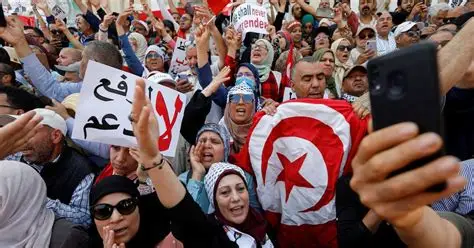
When Tunisia’s citizens overthrew their dictator in 2011, the world hailed Tunisia’s emergence from this uprising as the only country to become a true democracy. For several years, Tunisia served as solid evidence that democracy was a realistic outcome of...
by Ayoub Yassine | Oct 16, 2023 | Boston University
Africa as a whole has faced many challenges, notably colonization, which impeded the progress of many of its nations. The legacy of colonization persists, with numerous African countries still influenced by their former European rulers which led several of them to...
by WYNE EI HTWE | Oct 12, 2023 | School of Public Policy, Chiang Mai University
In the aftermath of the Arab Spring, Tunisia emerged as a beacon of hope for democracy in the Middle East. It was hailed as the success story, the nation where popular protests led to the toppling of a longstanding autocrat and the birth of a fledgling democracy....