Mano dura translates to “iron fist,” broadly defined as strong-armed, anti-crime policies that much of Latin America has implemented over recent decades in response to massive rises in gang violence.
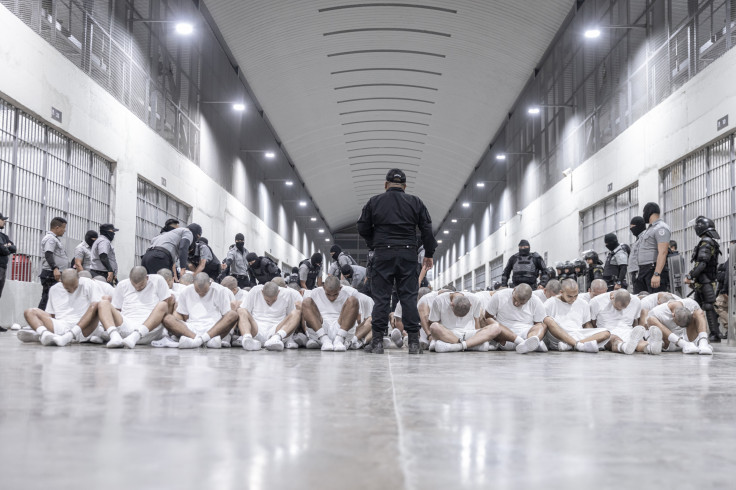
The presence of gangs has long dominated the quality of life in much of Latin America. In particular, the world experienced shock when El Salvador revealed its new Terrorism Confinement Center (CECOT), which contained thousands of tattooed men with shaved heads and shackles in 2022. The state of emergency declared by President Nayib Bukele enabled security forces to operate without judicial oversight while making more than 80,000 arrests during his anti-gang campaign. The number of homicides in El Salvador decreased from 2,398 in 2019 to 114 in 2024, which resulted in a murder rate of 1.9 per 100,000 inhabitants (https://tinyurl.com/3r65ustc).
To understand the root of this, one must examine the small country’s history, notably its civil war. The U.S.-backed government fought against Soviet- and Cuba-backed leftist guerrillas during the 1980-1992 conflict, which resulted in 75,000 deaths and forced hundreds of thousands to leave their homes. The majority of Salvadorans who fled their homeland during the civil war period, around 300,000, settled in Los Angeles’ poor, violent neighborhoods of Pico-Union and Westlake. The Salvadoran youth population established gangs as protective groups and to have a sense of identity. Mara Salvatrucha, or MS-13, originated in Los Angeles during this time (https://tinyurl.com/22wujtyc).
The United States’ deportation policies, led by the Clinton and Bush administrations during the 1990s and 2000s, forced most of MS-13 and Barrio 18 members to return to El Salvador, which faced ongoing postwar instability. The combination of weak police forces and corrupt courts allowed these extradited nationals to wreak havoc. These gang members brought their California-developed organizational systems and combat methods to a nation where social gaps created an environment where these organizations could thrive (https://tinyurl.com/mr38tf7e). The homicide rate in El Salvador reached 106 deaths per 100,000 people by 2015, which made it one of the deadliest countries worldwide.
A second lens examines the history as well. Multiple Latin American nations, along with Salvadoran governance, face ongoing problems due to their historical weaknesses and institutional corruption. The Spanish colonial period from 1492 to the early 1800s established a system where wealthy elites controlled most land while excluding vast numbers of people from economic participation. The United States supported governments that fought communism through repression, even though these governments destroyed their institutional frameworks. The transition to democracy in the 1980s and 1990s left security forces with military training rather than police skills, and parties that operated through patronage systems rather than policy platforms, as well as weak tax systems that failed to support social services (https://tinyurl.com/5fnmvee2). Research about state capacity in Latin America demonstrates that these countries lack effective law enforcement and public service delivery capabilities, which fall below typical developing nation standards. A state loses its authority to govern when criminal organizations start providing financial benefits and maintaining order in the community.
El Salvador operated as a relatively democratic nation during the 2010s. The country maintained free and fair elections, which led to mostly peaceful transfers of power between different parties. However, the gangs operating in numerous neighborhoods maintained control over the population through their ability to impose rules and extract payments, and determine business operations and street safety. The government implemented standard security measures and gang truce negotiations, but these strategies only resulted in short-term reductions in murder rates. The breakdown of gang truces led to increased violence throughout the country. The daily existence of numerous organized gangs resembled a system of rule by armed groups instead of liberal democratic governance.
The concepts developed by Guillermo O’Donnell help us understand this situation. O’Donnell’s “brown areas” of democracy exist when law enforcement fails to reach certain regions, and rights exist at a minimal level. People in these areas maintain formal democratic status, but actual power rests with clientelist leaders and abusive police forces and MS-13 and Barrio 18 gangs in El Salvador. The acceptance of this situation leads to democratic deterioration through grassroots actions. A person who pays gang extortion to survive lacks freedom even though she exercises her right to vote (https://tinyurl.com/35smp62u).
The security plan of President Bukele works to restore state authority in areas that have become “brown” zones (https://muse.jhu.edu/article/175988). The state of emergency, which President Bukele established in March 2022, has been extended 43 times since its initial implementation. The Salvadoran regime allows police to make arrests without court supervision while restricting communication access and speeding up court proceedings. The new order established CECOT as its central facility to house thousands of prisoners. Bukele maintains high popularity ratings in his home country despite the expenses he has incurred. The approval ratings of Bukele according to CID Gallup polls have remained between 80% and 90% throughout 2023–2025. The June 2025 El País summary reported his approval rating at 85%. The polls show Bukele holds a position among the most popular leaders in Latin America and worldwide, with some surveys indicating support levels exceeding 90%. The public supports both the gang crackdown and the state of exception and mega-prison facilities at similarly high levels, according to pollster findings. The public supports these measures because they represent the main demands of Salvadoran citizens.
Bukele uses O’Donnell-style “delegative democracy” to execute any necessary measures for achieving order in his violence-plagued public, backing his crisis-solving measures without facing substantial institutional constraints. The outside world views this situation as somewhat authoritarian control. Multiple nations across the region adopt similar security approaches with different levels of force application. Honduras established its own state of emergency against extortion since 2022 by suspending constitutional rights in major cities and deploying military forces, and establishing an island prison facility with Bukele-style features. The Ecuadorian government declared gang activities as an internal armed conflict while transferring prison control to military forces and constructing a supermax facility with El Salvador’s CECOT design elements (https://tinyurl.com/ybk33zsb). The Guatemalan government passed a new anti-gang law, which classifies MS-13 and Barrio 18 as terrorist organizations while creating a dedicated prison facility for gang members based on Salvadoran security strategies. The Panamanian government launched “Operation Panama 3.0” as a gang-focused initiative that draws inspiration from Bukele’s approach while officials from Panama visit San Salvador to study the model. The Dominican Republic security officials and lawmakers also visited El Salvador to study Bukele’s security model, which they plan to adopt for their future security reforms. The Salvadoran security model serves as a reference point for Costa Rican and Panamanian elites who debate the extent of their security reforms without violating their established rule-of-law systems. The Argentine government constructed a new supermax prison facility near Rosario while its security minister, Patricia Bullrich, declared her intention to implement Bukele’s security model. The Peruvian government has repeatedly activated states of emergency while deploying military forces to combat crime, and multiple politicians have emerged to claim they will become the “Peruvian Bukele.” Experts warn that most countries without El Salvador’s specific conditions will struggle to replicate the Salvadoran model, yet the security approach combining emergency states with military control and prison expansion has become a leading security model in Latin American politics (https://tinyurl.com/ysxdtrnw).
The combination of strong anti-gang operations with temporary civil liberty restrictions could enhance democracy in the long run when these measures successfully eliminate criminal organizations and their governance systems, and then the emergency powers are returned to normal. However, this is no guarantee by any means. Research can prove to be incorrect when executives maintain their special powers after gang organizations weaken or when the anti-gang operations fail to decrease criminal control. The public will lose their rights without obtaining any actual safety benefits when critics prove correct about the dangers of harsh law enforcement tactics.
The current situation in El Salvador exists between two opposing positions. The reduction of homicides and crime overall has been significant, while numerous neighborhoods that used to be under gang control now experience much-improved safety levels. The country faces two major issues: its prisons are at maximum capacity, and NGOs face persecution, while public concern grows about presidential criticism. The story of MS-13 and Bukele demonstrates that democratic breakdowns start in areas where violence has left communities without protection. The outcome of current forceful security measures will determine whether they protect democracy from its “brown areas” or establish a new system of control. El Salvador’s democratic future depends on how its institutions will function if and when the state of emergency ends, and what the post-gang era will bring to Salvadoran society.
The El Salvador case raises many questions for the cost that citizens may pay for stability and reduced crime. Suspension of civil liberties, while it may make it easier to stabilize crime, opens exposure to wrongful detainment and treatment. At its very worst, temporary suspension could further devolve into stifling opposition and competition. The more executive aggrandizement and suspension of civil liberties is normalized, the greater the risk increases of all-out authoritarianism. Despite Bukele’s measures producing positive outcomes by reducing crime, which is popular among citizens, the precedent set by imposing these measures is dangerous. Historically, there have been many authoritarian leaders who shared in having high approval ratings and public support, such as Hugo Chavez. Creating a “savior” image is a common tactic used by authoritarian leaders.
Other Latin American countries who draw inspiration from this model, likewise, share the imminent danger of entering a point of no return. The problem with sacrificing democracy from stability is that it normalizes authoritarian behavior in democratic states. Arguably, the most temporarily stable state is an autocratic one, where citizens have no civil liberty protections and competition is stifled. But what democracy offers is more important than temporary stability and political popularity.
It’s interesting to learn more about El Salvador’s governmental structure specifically in the context of crime and the rule of law. The concept of “brown areas” from O’Donnell seems like an accurate way to describe the democratic deterioration occurring due to a lack of civil and social control. President Bukele’s state of emergency does seem to make sense to a degree given the amount of violence but it doesn’t seem like a long term solution and I wonder if additional policy work and research has been done to instate reforms that would have a longer-term impact. Additionally, I wonder how truly popular Bukele’s measures are.
In my opinion, a lot of this has to with living in a survival state. Due to the prevalence of violence in El Salvador it makes complete sense that a typical democratic system may not be possible and frankly citizens may not want to support this either. The outside world’s opinion seems easy to impose from afar without having to deal with the daily violence citizens face. What seems most concerning to me is the adaptation of these authoritarian, delegative democracy practices being adopted by other countries more broadly. Are citizens in these countries living in as clear danger or is this simply an excuse for authoritarian leaders to take over and impose greater control?
Hi Milan, I appreciate your perspectives and insights on El Salvador’s new anti-gang policies, and I wanted to provide my own insight as to why I believe Burkele’s policies will be ineffective.
I believe the root of gang violence in El Salvador ultimately comes down to a failure in social contract theory.
The primary attractors of gang participation are the protection and opportunity for social mobility that being a part of a gang provides. According to social contract theory, these are both securities that should be provided by the state. However, in the direct aftermath of a civil war–highly influenced by imperialist proxy fighting–the state of El Salvador did not have the capacity to provide its end of the social contract. Therefore, civilians in a politically unstable atmosphere turned to the most accessible form of safety–gang membership.
Although in the short term it seems like El Salvador’s population has responded positively towards Bukele’s actions, I wonder if/when the human rights violations and executive aggrandizement of Bukele’s initiatives will catch up. The suspension of due process and the continuous renewal of the state of emergency signify a degradation of democratic institutions that may end up harming the civilian population more than helping.
Ultimately, Bukele’s anti-gang initiatives fail to address the root causes of membership, and instead of investing in education, healthcare, or security, the CECOT prison only creates a new threat that civilians may need protection from in the future.