 Democracy is often framed as a straightforward process in which citizens elect their leaders and political authority reflects popular will. Yet the presence of elections alone does not guarantee democratic rule. When political choice is engineered rather than genuine, elections become performative exercises rather than mechanisms of accountability. This is the situation unfolding in Myanmar. Although elections are scheduled for late 2025 and early 2026, they have not secured democracy in any meaningful sense. Instead, they operate as tools of authoritarian entrenchment.
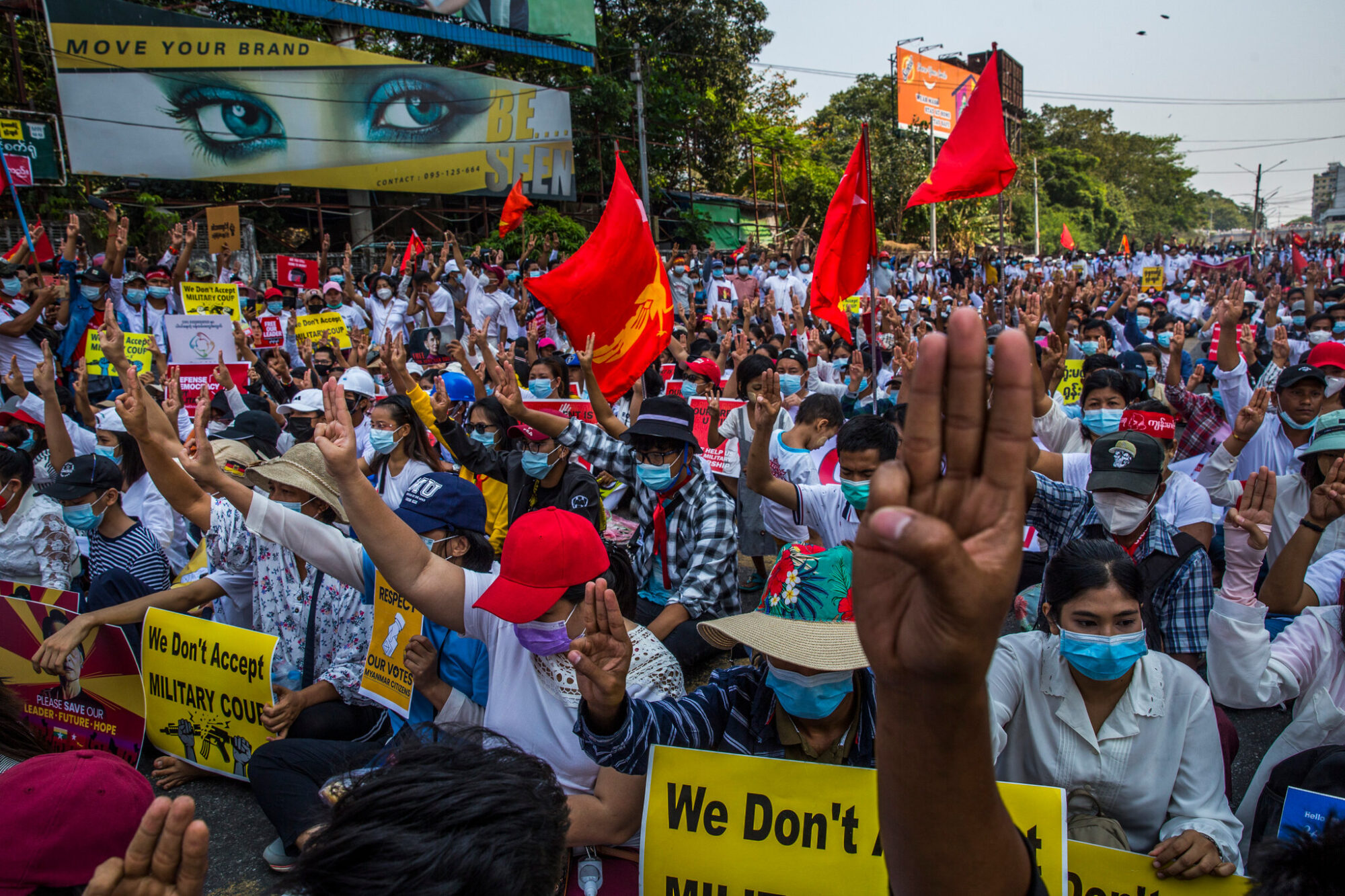
These elections were presented as a pathway back to democracy following the military coup of February 1, 2021, which overturned the results of the 2020 general election. This produced a decisive landslide victory for Aung San Suu Kyi and the National League for Democracy (NLD). The military justified its seizure of power by alleging widespread electoral fraud, claims that were rejected by the Myanmar Union Election Commission and international election observers. Despite these, the coup effectively nullified the electorate’s mandate.
More fundamentally, the act of holding elections does not in itself confer political legitimacy. Democratic legitimacy requires the genuine consent of the governed, not merely the appearance of participation. In Myanmar, electoral processes fail to produce legitimacy because electoral rules are structurally manipulated, meaningful political competition is eliminated, and political participation is constrained through coercive repression. Under these conditions, elections serve to consolidate power rather than to challenge it.
Exclusion of Genuine Political Competition
Electoral competitiveness is a core pillar of electoral legitimacy, grounded in the principle that political power must be open to contestation. In Myanmar’s current electoral landscape, this condition has been deliberately dismantled. The National League for Democracy (NLD), which secured decisive victories in both the 2015 and 2020 general elections, has been formally banned from participating. Its leadership, including Aung San Suu Kyi, remains imprisoned or otherwise rendered politically incapacitated.
Beyond the NLD, opposition figures have been excluded through legal provisions that disqualify individuals convicted of politically defined crimes. These laws function less as safeguards of electoral integrity and more as instruments of political screening, allowing the regime to eliminate challengers while positioning itself as both arbiter and aggrieved party. As a result, Myanmar’s political arena is not merely constrained but devoid of meaningful political contestation.
Voters are left with a narrow and heavily curated set of choices dominated by military-aligned parties and candidates. The absence of credible opposition removes the element of contestation that gives elections their democratic meaning. Without genuine competitors, elections lose their capacity to generate consent. Where dissent is criminalized and alternatives are systematically erased, claims to popular legitimacy collapse.
Coercion, Repression, and Consent
Free elections presuppose fundamental political freedoms, including freedom of expression, association, opposition, and criticism. In Myanmar, these conditions are systematically denied. To seize more power, the military junta has deployed sweeping legal measures to criminalize dissent and suppress criticism of the electoral process. Civil society actors, journalists, and ordinary citizens face arrest, prolonged detention, and in some cases capital punishment for political expression, including online activities. Myanmar’s prisons are filled with political detainees whose only offense was voicing opposition.
Independent media and civil society organizations have also been effectively silenced. Internet shutdowns, censorship, and state propaganda restrict access to information and prevent open political deliberation. At the same time, armed conflict continues across large parts of the country, further eroding the possibility of nationwide participation. In many regions, the military is unable to conduct voting at all due to its lack of territorial control.
Hence, elections cannot function as expressions of popular consent. Participation is instead shaped by fear, coercion, and resignation, transforming voting into an act of survival rather than a democratic choice. When participation is compelled by threat and violence, elections lose their voluntary character and become simulations of democracy that preserve ritual while abandoning consent.
So Why Do Elections Still Happen?
If these elections lack legitimacy, the question follows naturally: why conduct them at all? The answer lies in the politics of perception. Elections serve as instruments of symbolic legitimacy rather than democratic renewal, particularly in the international arena. By labeling a controlled political process as an election, the military junta seeks to project an image of normalcy, hoping to secure international acceptance, reduce external pressure, and gain diplomatic recognition or at least tacit tolerance. Some regional and international actors appear willing to engage with this narrative.
Yet appearance cannot substitute for legitimacy. A regime that seized power through a coup, silences critics, bans opposition parties, manipulates electoral rules, and represses dissent cannot claim democratic authority through procedural formalities alone. Declaring turnout figures does not erase the absence of consent. Even the reported voter turnout of over 50 percent in the initial phase must be treated with skepticism. Large portions of the country were unable to participate due to ongoing conflict and a lack of military control. Participation was further shaped by screening, intimidation, and exclusion. Under such conditions, turnout figures reflect administrative control rather than political choice. What is presented as participation is, in reality, a managed performance designed to legitimize authoritarian rule rather than to express the will of the people.
What This Means for Democracy
The situation in Myanmar exposes the limits of elections when they are detached from democratic substance. Elections are often treated as the culminating ritual of democracy, the moment when ballots are translated into political authority. Yet legitimacy does not emerge from procedure alone. It is relational and contingent on public belief that political participation matters, freedoms are protected, and power is accountable to society as a whole. When these conditions are absent, elections lose their democratic meaning.
Myanmar’s current electoral process lacks legitimacy because it is structured around the priorities of the military rather than the consent of the people. Voting has not constrained authoritarian power. It has reinforced it. Without genuine political competition, freedom of expression, and inclusive participation, elections do not safeguard democracy. They merely provide a facade that conceals its erosion.
Where Do We Go From Here?
The lesson for democracy advocates in Myanmar and beyond is unambiguous: elections alone do not produce democratic governance. Without free media, protected civic space, and meaningful political freedoms, electoral processes risk legitimizing authoritarian rule rather than challenging it. International solidarity with independent journalists, civil society organizations, and grassroots pro-democracy movements is therefore more critical than ever. Equally important is sustained global pressure to resist political exclusion, institutional manipulation, and attempts to normalize authoritarian control through electoral rituals.
Democracy is not a singular event but a continuous process grounded in participation, contestation, and the protection of rights. Myanmar’s elections do not signal a democratic return; they reveal how easily democracy can be rebranded in form while emptied of substance, and how urgently its core must be defended against authoritarian rule.
0 Comments