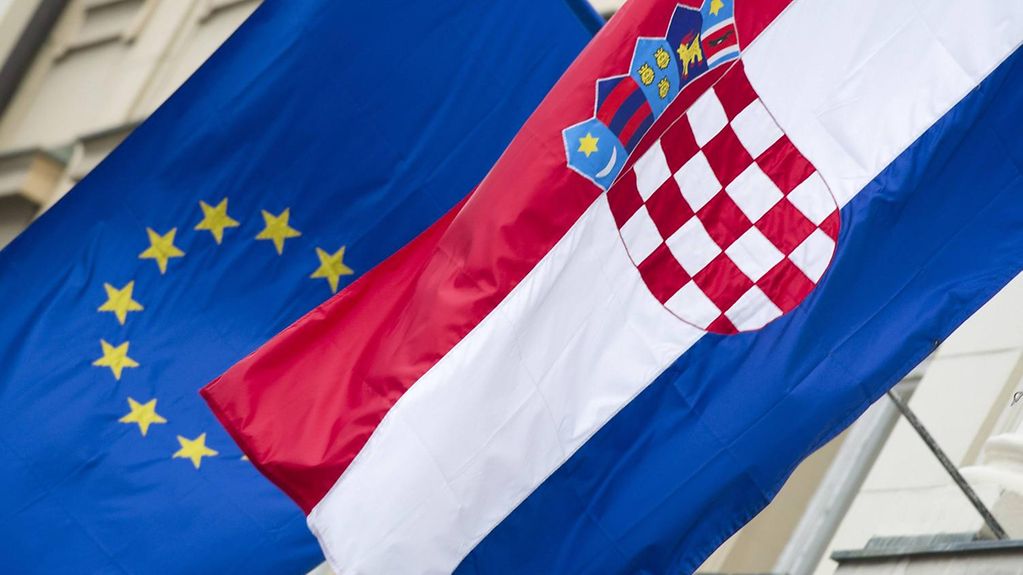
 More than a decade after joining the European Union, Croatia still struggles with corruption, weak courts, and low public trust. This raises a puzzle: if EU membership is supposed to lock in democratic stability, why do these problems persist?
The answer lies in a key limitation of EU influence. While the EU can push countries to reform before accession, it has far less leverage afterward. As a result, democratic institutions can weaken over time, even within the EU. Croatia illustrates this dynamic through persistent corruption, uneven rule of law, and declining public trust.
The persistence of these problems reflects a deeper limitation in how the EU promotes democracy. While the EU exerts strong pressure on countries to reform before accession, its leverage declines significantly after membership is granted. As Milada Anna Vachudova argues, the incentive structure changes once a country joins: governments no longer face the same external pressure to maintain reforms. In Croatia’s case, this has allowed existing institutional weakness, particularly corruption and weak enforcement of the rule of law, to persist. Although the EU continues to monitor member states through mechanisms such as rule of law reports, it has limited ability to impose meaningful consequences. As a result, monitoring does not necessarily translate into accountability, and democratic backsliding can occur gradually without triggering strong external intervention.
The EU is often seen as one of the most effective external forces for promoting democracy. Countries seeking membership must meet strict political criteria, including stable democratic institutions, rule of law, and protections for civil liberties. This process creates strong incentives for governments to implement reforms. Scholars, such as , argue that the EU has historically been successful at encouraging democratic change in candidate countries by making membership conditional on reform. In theory, this means that once a country like Croatia joins the EU, its democratic institution should be relatively strong and stable.
However, in practice, Croatia’s experience tells a different story. Corruption is an ever present issue, even after the EU accession. According to the data from Transparency International, Croatia continues to rank below many other EU member states in perceived levels of public sector corruption. Senior government officials are repeatedly involved in high-profile scandals, often resulting in resignations without any broader systemic reform. One instance of this is the scandal regarding the health care minister in 2024. Former Healthcare Minister Vili Beroš, the directors of two hospitals in Croatia’s capitol, and two other companies were suspected of accepting and giving bribes, abusing their power, and money laundering.
These patterns suggest that corruption is not simply a series of isolated incidents, but rather a more deeply rooted feature of the political system. The persistence of these issues raises questions about the EU’s ability to enforce the democratic standards it requires for membership.
Concerns about the rule of law further reinforce this pattern. Reports from the European Commission have consistently highlighted inefficiencies within Croatia’s judicial system, including slow court proceedings and challenges in effectively prosecuting corruption. While formal legal structures are in place, their uneven implementation undermines accountability and public trust. In this sense, Croatia demonstrates a key feature of democratic erosion: institutions still exist, but they function less effectively over time. This gap between formal rules and actual practice weakens the overall quality of democracy.
Public trust is eroding and for good reason. This lack of trust is caused in part by the ongoing corruption, but also due to censorship and pressure on journalists and slow-reconstruction in the wake of earthquake damage. While freedom of expression is technically guaranteed in Croatia, journalists investigating corruption or crime often are met with hostile environments, censorship, and pressure, which diminishes the freedom the press actually has. Independent media faces strategic lawsuits (SLAPPs), while public broadcasters seem to be government mouthpieces. All in all, these pressures undermine media independence and further erode public trust in government.
Furthermore, Croatia was struck with a 6.4 magnitude earthquake in December of 2020 near Petinja, causing mass chaos and destruction across the city. Six years later, a third of the damage is still under construction. A report from 2023 noted that the Croatian government had only had six houses rebuilt in over two years since the earthquake hit and they had to rely on civil society organizations for aid, showcasing the lack of action from the government and leading to more distrust from the Croatian people.
Croatia’s trajectory also reflects broader patterns identified in the literature on democratic erosion. As Nancy Bermeo argues, modern democratic backsliding rarely occurs through sudden breakdowns such as coups. Instead, it often unfolds gradually through the weakening of institutions over time. This is evident in Croatia, where formal democratic structures remain intact, but their effectiveness has declined. Rather than a clear authoritarian shift, the country exhibits subtle forms of institutional deterioration, including inconsistent enforcement of anti-corruption laws and declining public trust. This gradual process makes democratic erosion more difficult to detect and address, particularly for external actors like the European Union. As a result, Croatia illustrates how democratic decline can persist within formally democratic systems without triggering strong international intervention.
Croatia’s experience highlights an important lesson about democratic erosion. Membership in the European Union is not enough to guarantee the long-term strength of democratic institutions. While the EU is effective at encouraging reform before accession, it is far less successful at sustaining those reforms afterward. As a result, Croatia illustrates how democratic erosion can occur even within established democratic frameworks, not through sudden collapse, but through the gradual weakening of institutions over time. This also raises important questions about whether the EU can effectively safeguard democracy within its existing member states.
0 Comments