American Intervention in Venezuela: An Erosion of Democratic Norms
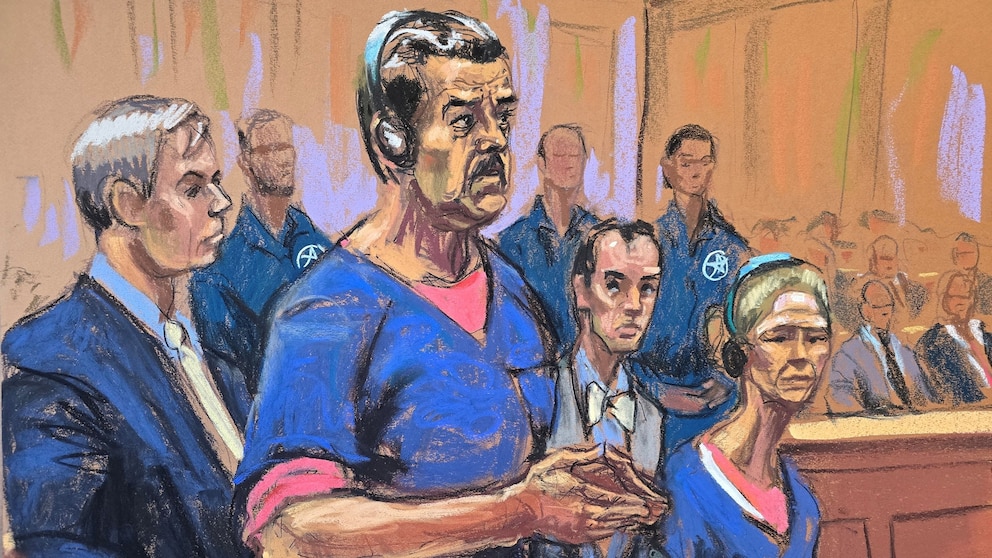
In the early hours of January 3, 2026, U.S. military forces conducted an “intervention” in Venezuela’s sovereign territory, seizing and essentially extraditing the acting head of state, Nicolás Maduro. So, what was the purpose of this, and how will it affect our democracy? For simplicity’s sake, the words incursion, intervention, action, etc., will be used synonymously. Now, this action is not the first of its kind committed by the United States Government; still, it is crucial to examine the underlying reasoning behind it and its relation to the post-Second World War “global world order”. This “order” and the democratic norms that accompany it were set aside for this action, and though it remains part of a broader pattern of ignorance, it cannot go unaddressed.
HISTORICAL CONTEXT
Before understanding the consequences of the recent United States incursion in Venezuela, it is key to first look at the previous postmodern examples of the United States’ acts of war, and the only other example of a capture and extradition of a sitting head of state, and their subsequent reasons and explanations. The only and most notable example is President Bush Sr.’s 1990 forced extradition of Panamanian leader Manuel Noriega, also known as ‘Operation Just Cause’. Important contributing factors to this incursion include the fact that the United States Government sought and obtained a jury indictment before the action, and following the indictment, the Noriega Regime not only declared a state of war on the United States but also was responsible for the killing of a United States Marine. It gets trickier to understand once the 1973 War Powers Resolution is considered. Bush did not consult Congress before military action, but reported within 48 hours, which remains in line with the War Powers Resolution. It remains that Bush had an indictment, the direct killing of a US service member, and a Panamanian declaration of war behind him. Since World War 2 Congress hasn’t declared war on any foreign nation, despite tens of military offensive campaigns. The executive has found broad leeway in its right to do so, and since the September 11th attacks, through the Authorization for Use of Military Force (AUMF), has reasoned it to be even broader.
THE PURPOSE
The Trump administration’s reasoning for the capture of Nicolás Maduro relies on the claims that he was both leading a state-run drug cartel that was funneling deadly drugs into America, as well as a criminal syndicate focused on importing dangerous and violent criminals to the United States.
DEFINTIONS
For the following examination, two terms must be understood: stealth authoritarianism, and executive aggrandizement. The former refers to the use of seemingly legal mechanisms to hide anti-democratic practices under a mask of legality. The latter is a form of democratic backsliding where political leaders consolidate power in the executive while weakening checks and balances. This often occurs in the same vein as stealth authoritarianism, under the guise of legality.
VENEZUELA
The seizure of Nicolás Maduro under the direction of Donald Trump can be understood through the lens of stealth authoritarianism, the action masquerading as a sequence of legally framed but substantively unfounded actions. While Trump formally continued a national emergency originally declared in 2015 under Barack Obama, an emergency grounded in concerns over human rights abuses, political repression, and corruption in Venezuela. This legal framework is now used to justify a military operation premised on entirely different claims, namely that Maduro was orchestrating drug trafficking and criminal networks into the United States. The shift from a human rights-based emergency to a narcotics-based justification for extraterritorial force creates a disconnect between the stated legal authority and the actual use of power. This is compounded by the timing of indictment proceedings, as the expansion and emphasis of criminal charges following Maduro’s capture show that legal justification followed executive action rather than constrained it. Taken together, the reliance on an inherited emergency declaration, the use of contested and unfounded claims, and the sequencing of indictment after capture exemplify how formal legal tools are being used to legitimize actions that extend beyond their original scope, which aligns with the core definition of stealth authoritarianism. Further, executive aggrandizement becomes evident in the expansion of unilateral presidential authority in ways that weaken meaningful checks from Congress. In this scenario, the classification of a cross-border military operation as a form of “police action” further blurs the line between domestic law enforcement and traditional uses of military force, complicating how such actions are evaluated under the War Powers Resolution. The Resolution, already broad as it is, was designed to regulate the deployment of armed forces in situations resembling war; reframing military intervention as a policing measure allows the executive to operate in a legal gray area while still meeting minimal procedural requirements. This ambiguity stretches the intent of the Constitution’s allocation of war powers, particularly if Congress is effectively sidelined in decisions that resemble acts of war in practice, even if they are labeled otherwise.
DEMOCRATIC EROSION
The seizure of Nicolás Maduro shows how democratic erosion has emerged over multiple administrations through incremental shifts in the interpretation and application of pre-existing legal authorities. Through reliance on states of emergency, acting before legal recourse is sought, and mischaracterizing military intervention as a form of police action, the executive has expanded its operational power while maintaining a formal adherence to legal procedure. When legal rationale follows executive military action rather than works to constrain executive action, and when congressional oversight is limited or non-existent in practice, the balance of power between branches becomes increasingly uneven. In this context, the concern is not an immediate breakdown of democratic institutions, but rather the gradual normalization of practices that concentrate authority within the executive and weaken the institutional constraints and balance of powers designed to regulate it.
0 Comments